
The drumbeat of high employee turnover echoes across industries, a relentless challenge that gnaws at profitability, stifles innovation, and drains institutional knowledge. It’s a problem that goes far beyond the immediate costs of recruitment and onboarding, leaving behind a wake of diminished morale and lost competitive edge. But what if the solution isn’t another perk, another raise, or another ping-pong table? What if it lies in something more fundamental, more deeply human, yet entirely quantifiable?
Enter psychological safety. This isn’t just another corporate buzzword; it’s the strategic imperative that underpins organizational performance, fuels innovation, and, critically, drives unprecedented employee retention. As your data-driven coach, I’m here to tell you that mastering psychological safety is no longer a “nice-to-have” for leaders and HR professionals—it’s a “must-have” for cultivating a thriving, resilient workforce.
This definitive, data-driven guide will take you on a journey from understanding the foundational definition of psychological safety to implementing actionable, evidence-backed strategies. We’ll dissect the hidden costs of turnover, quantify the direct link between psychological safety and retention, and equip you with the blueprint to build a culture where every employee feels safe to contribute, innovate, and thrive. Prepare to move beyond intuition and embrace a proactive, analytical approach to talent management that transforms your organization from the inside out.
- Beyond the Buzzword: What is Psychological Safety and Why It’s a Strategic Imperative
- The High Cost of Turnover: Diagnosing the Retention Drain in Modern Workplaces
- The Direct Link: How Psychological Safety Drives Unprecedented Retention
- Building a Psychologically Safe Workplace: A Leader’s Blueprint for Transformative Culture
- Data-Driven Retention: Measuring, Predicting, and Optimizing Psychological Safety
- Psychological Safety: The Strategic Imperative for Organizational Resilience
- Conclusion
- References
Beyond the Buzzword: What is Psychological Safety and Why It’s a Strategic Imperative
Let’s cut through the noise. Psychological safety is not about being “nice” or creating a perpetually “comfortable” environment. If Rocky Balboa was a content marketer his montage wouldn’t include punching meat, one-handed pushups, and running up the 72 steps of the Philadelphia Museum of Art. No, some Philly Soul would accompany him writing SQL queries, wrangling multimillion-row CSV files, and working out how to rotate axis labels in D3. Similarly, psychological safety isn’t about avoiding tough conversations or constructive criticism. It’s about creating an environment where those tough conversations can happen productively, where feedback is sought and given, and where mistakes are seen as learning opportunities, not career-enders.
This concept, pioneered by Harvard Business School professor Amy Edmondson, is the bedrock upon which high-performing teams are built. It’s a proactive risk management strategy that prevents failures and non-compliance by encouraging transparency and open dialogue.
Defining Psychological Safety: The Bedrock of High-Performing Teams
At its core, psychological safety is a shared belief held by members of a team that the team is safe for interpersonal risk-taking [1]. What does this mean in practice? It means individuals feel comfortable speaking up, asking questions, admitting mistakes, and offering new, even unconventional, ideas without fear of embarrassment, rejection, or punishment.
Consider the alternative: an environment lacking psychological safety. Here, fear reigns. Employees remain silent, even when they spot errors or have innovative solutions, because they dread negative consequences, public humiliation, or professional setbacks. Blame is rampant, and the focus shifts from problem-solving to self-preservation. This stifles creativity, impedes learning, and ultimately, undermines performance. As Amy Edmondson herself defines it,
“Psychological safety is a belief that one will not be punished or humiliated for speaking up with ideas, questions, concerns, or mistakes” [1].
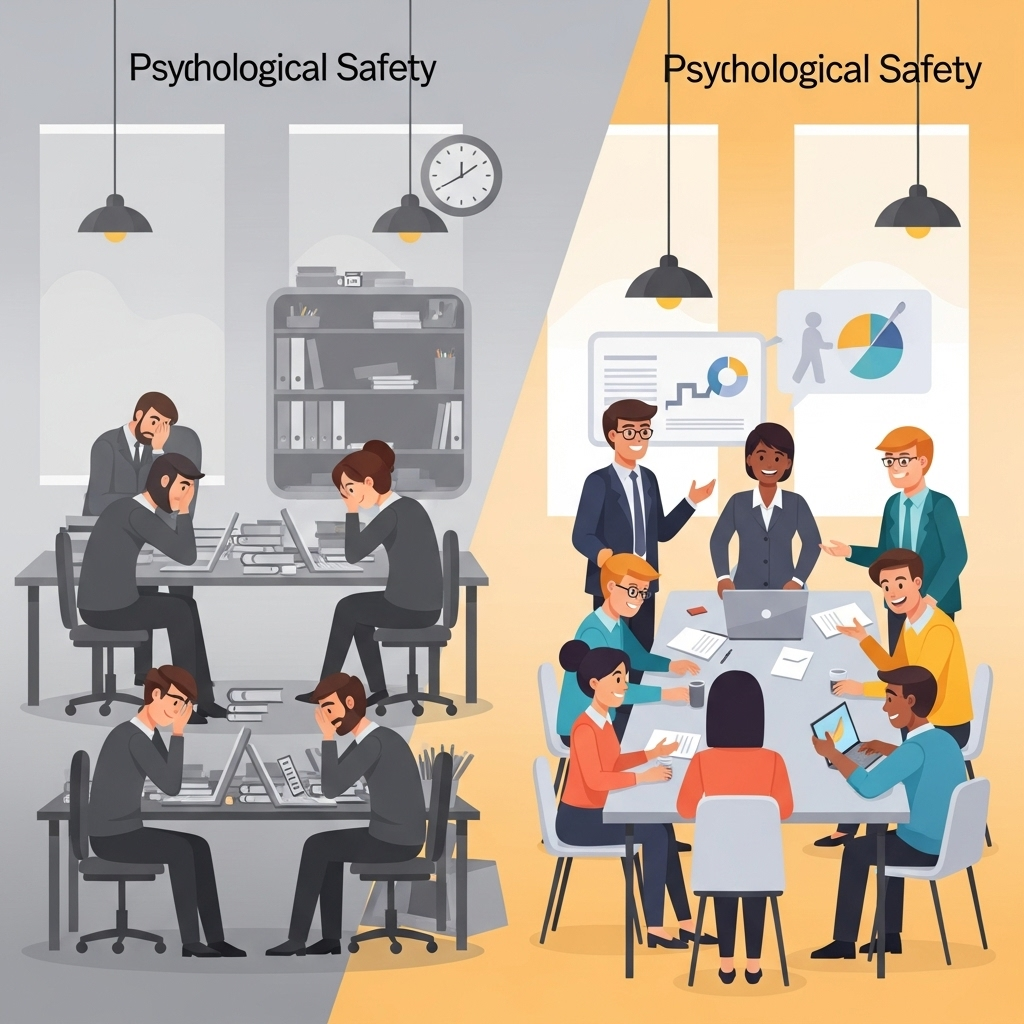
It’s about creating a space where candor is encouraged, not penalized. To dive deeper into this foundational concept, explore Harvard Business School: Building Psychological Safety.
The Pillars of a Psychologically Safe Environment
Building a psychologically safe workplace is a deliberate act, not an accidental outcome. It rests on several key pillars that foster an environment of trust and open exchange:
- Inclusion Safety: Feeling safe to be yourself and belong. This is the most basic level, where individuals feel accepted for who they are, regardless of background or identity.
- Learner Safety: Feeling safe to ask questions, experiment, and make mistakes. This encourages continuous learning and development, where errors are viewed as data points for improvement.
- Contributor Safety: Feeling safe to offer ideas and contribute fully. This empowers individuals to share their unique perspectives and talents without fear of being dismissed or ridiculed.
- Challenger Safety: Feeling safe to challenge the status quo, voice dissent, or question authority. This is crucial for innovation and preventing groupthink, ensuring that diverse perspectives are heard and considered.
Leaders play a critical role in modeling these behaviors. Humility, curiosity, and empathy are not soft skills; they are the hard currency of psychological safety. When leaders demonstrate vulnerability, admit their own mistakes, and genuinely invite input, they set the stage for others to follow suit. Great Place to Work emphasizes that cultivating a psychologically healthy workplace involves leaders actively listening and responding to feedback, creating norms that support open communication, and celebrating learning from failures [9].
Beyond Retention: The Multifaceted Benefits of Psychological Safety for Organizations
While this article zeroes in on retention, the benefits of psychological safety extend far beyond simply keeping your best people. It acts as “The Unseen Engine of Organizational Resilience,” enabling continuous improvement and adaptability in today’s dynamic, often turbulent, business landscape.
Consider these broader impacts:
- Enhanced Innovation and Creativity: When employees feel safe to share half-baked ideas or challenge existing processes, true innovation flourishes. They’re more willing to experiment, knowing that failure is a stepping stone, not a stumbling block. Research published in the Open Psychology Journal highlights psychological safety’s influence on learning behavior and team efficacy, directly correlating with improved work quality [8].
- Superior Problem-Solving: Teams with high psychological safety are better at identifying and addressing problems. They surface issues early, engage in constructive debate, and collectively find more robust solutions. McKinsey’s insights underscore that psychological safety contributes substantially to team effectiveness, learning, and overall performance [2].
- Increased Adaptability: In a world of constant change, organizations need to be agile. Psychological safety reduces resistance to change because employees feel secure enough to voice concerns and engage in the adaptation process, rather than fearing job loss or failure.
- Improved Decision-Making: Diverse perspectives are crucial for sound decisions. When everyone feels safe to speak their mind, a wider range of information and viewpoints is brought to the table, leading to more informed and robust outcomes. For more on how this translates to performance, see NIH Research: Psychological Safety and Team Performance.
Implication: Psychological Safety is a Foundational Business Strategy
Understanding psychological safety is not just an HR initiative, but a fundamental strategic imperative that underpins organizational performance, innovation, and resilience. It’s the invisible force multiplying your competitive advantage.
The High Cost of Turnover: Diagnosing the Retention Drain in Modern Workplaces
If psychological safety is the engine, then high employee turnover is the foreboding “check engine” light, signaling deep-seated issues within your organization. This isn’t just a minor inconvenience; it’s a “Competitive Advantage Multiplier” in reverse, eroding your bottom line and your brand. Many leaders look at the immediate costs of replacing an employee—recruitment fees, onboarding time—and think they have the full picture. They don’t. The true cost is a sprawling, insidious beast.
Understanding Employee Turnover vs. Attrition: Key Distinctions
Before we diagnose the problem, let’s clarify the terminology. While often used interchangeably, “turnover” and “attrition” have distinct meanings that matter for strategic HR planning:
- Employee Turnover: Refers to the rate at which employees leave an organization and are replaced. This includes both voluntary departures (resignations) and involuntary departures (terminations).
- Employee Attrition: Refers to the reduction in staff numbers due to natural causes like retirement, resignation, or relocation, where the vacated positions are not immediately refilled.
The Society for Human Resource Management (SHRM) provides clear definitions, emphasizing that understanding the type of departure is crucial [6]. For instance, high voluntary turnover often points to internal issues, while high attrition might indicate a strategic workforce reduction or a natural demographic shift. We also distinguish between:
- Functional Turnover: When low-performing employees leave.
- Dysfunctional Turnover: When high-performing, valuable employees leave. This is the kind that truly hurts.
Understanding these distinctions allows for more precise data analysis and targeted retention strategies.
Root Causes of Employee Departure: Beyond the Paycheck
While competitive compensation is undoubtedly important, a singular focus on salary as the primary driver of retention is a common, and costly, mistake. The real employee turnover causes often lie deeper, within the fabric of the workplace itself. These are the “push factors” that drive employees away, even from well-paying jobs:
- Poor Workplace Culture: A toxic workplace culture, characterized by lack of trust, poor communication, micromanagement, or a blame-oriented environment, is a leading cause of departure. SHRM reports that workers in positive organizational cultures are almost four times more likely to stay with their current employer [6].
- Lack of Growth Opportunities: Employees want to learn and advance. If they perceive limited professional development, career pathing, or opportunities for skill enhancement, they will look elsewhere. Forbes highlights this as a critical factor influencing retention [21].
- Inadequate Work-Life Balance: The relentless pace of modern work demands flexibility. A lack of support for work-life integration, excessive workloads, or an expectation of constant availability leads to burnout and dissatisfaction. Remember, 64% of workers would consider quitting if asked to return to the office full-time, underscoring the importance of flexible work policies [15].
- Ineffective Management: People don’t leave companies; they leave managers. Poor leadership, lack of recognition, unfair treatment, or an inability to provide constructive feedback are significant drivers of low employee retention.
- Mental Well-being Concerns: The American Psychological Association’s 2023 Work in America Survey found that a staggering 57% of people find it necessary for employers to value their mental well-being, with another 35% finding it somewhat important [7]. Organizations that neglect mental health support will see higher rates of departure.
- Lack of Recognition: Feeling undervalued, even if well-compensated, erodes loyalty. PeopleThriver identifies this as a key “push factor,” emphasizing that a good retention rate is 90% or higher, and achieving this requires addressing these underlying issues [11].
The Ripple Effect: Quantifying the Hidden Costs of High Attrition
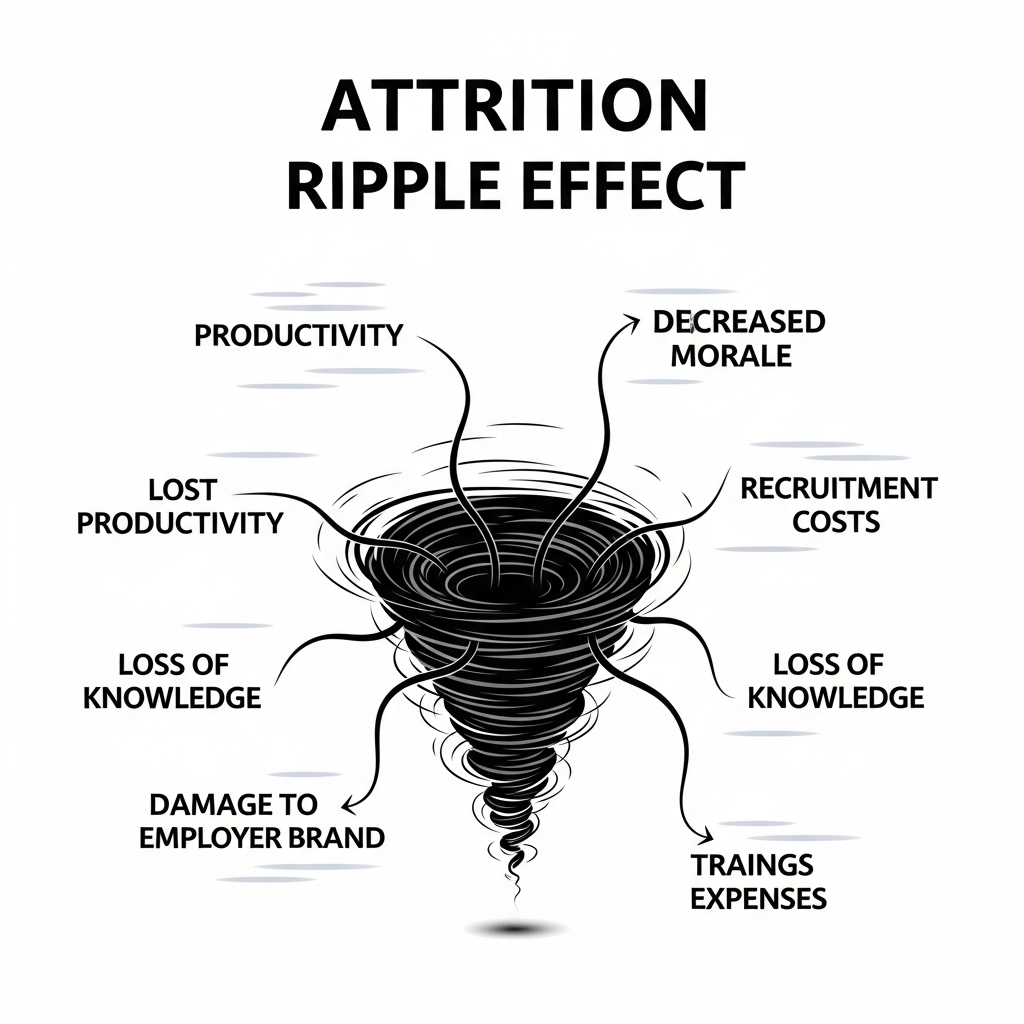
- Direct Recruitment Costs: Advertising, recruiter fees, background checks, and administrative time.
- Onboarding and Training Expenses: Time and resources spent bringing new hires up to speed, including formal training programs and informal mentorship.
- Lost Productivity: The period from an employee’s notice to a new hire reaching full productivity can be months, during which output inevitably drops.
- Decreased Morale and Engagement: Remaining employees often experience increased workloads, stress, and a sense of instability, leading to reduced engagement and potentially further departures. Stratus HR highlights how high turnover negatively impacts employee stress and morale [12].
- Loss of Institutional Knowledge: When experienced employees leave, they take with them invaluable knowledge, relationships, and expertise that are difficult to replace. This can hinder innovation and operational efficiency.
- Damage to Employer Brand: A reputation for high turnover makes it harder to attract top talent in the future, increasing recruitment costs and limiting access to skilled professionals.
These hidden costs can easily amount to 1.5 to 2 times an employee’s annual salary, or even more for specialized roles. Ignoring these systemic issues is akin to ignoring a slow leak in a boat – eventually, you’ll be underwater.
Implication: High Turnover Signals Systemic Organizational Issues
High employee turnover is a symptom of deeper organizational health issues, necessitating a proactive, diagnostic approach to identify and address systemic failures beyond superficial fixes.
The Direct Link: How Psychological Safety Drives Unprecedented Retention
Now, let’s connect the dots with cold, hard data. The link between psychological safety and employee retention isn’t theoretical; it’s a statistically proven correlation that should be central to every leader’s strategy. This is where the “data-driven” aspect of our guide truly shines, demonstrating how psychological safety acts as a powerful lever for data-driven employee retention strategies.
The Data Speaks: Quantifying the Impact on Attrition Risk
The evidence is compelling. Organizations that prioritize psychological safety see a dramatic reduction in attrition risk.
According to a seminal report by the Boston Consulting Group (BCG) based on a survey of 28,000 professionals across 16 countries:
- When psychological safety is high, only 3% of employees are at risk of quitting within a year [4].
- Compare that to a staggering 12% of employees with the lowest levels of psychological safety who said they were likely to quit within the same timeframe [4].
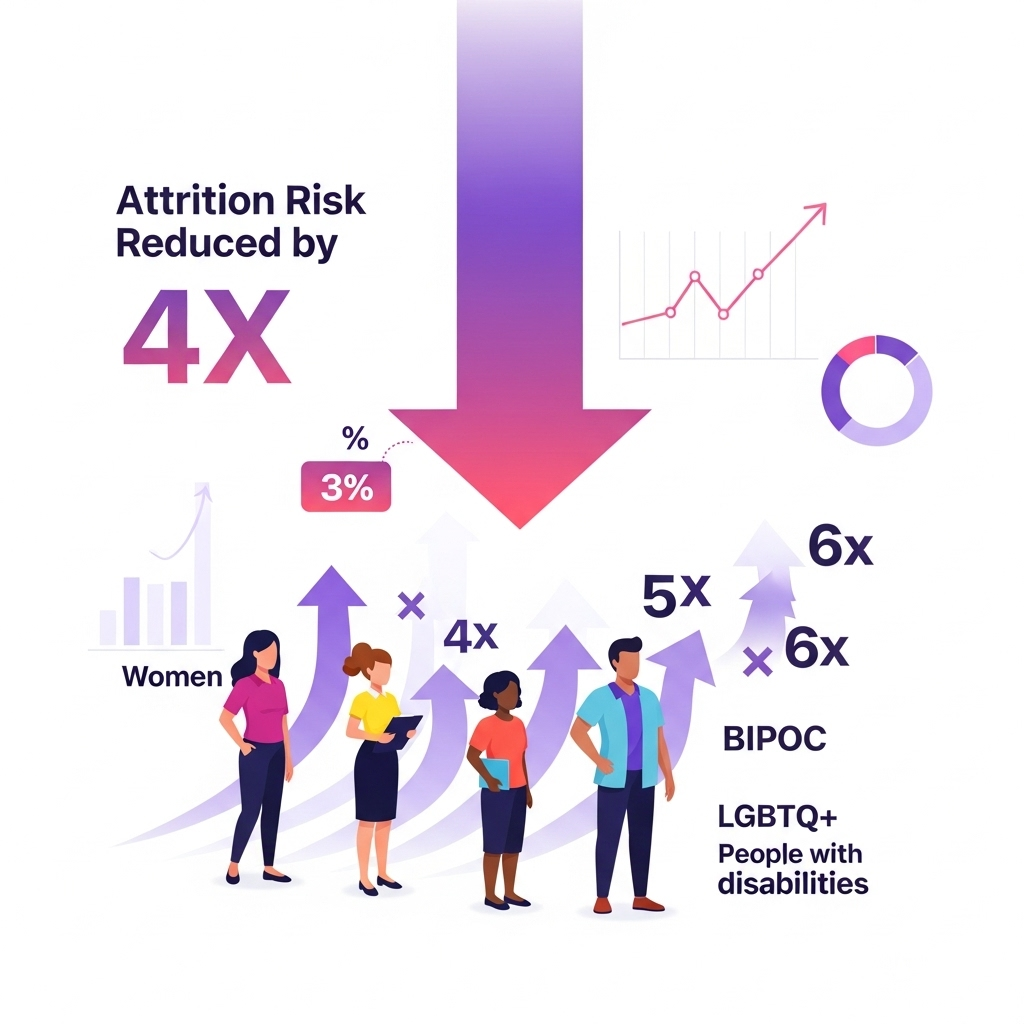
That’s a fourfold reduction in attrition risk directly attributable to a psychologically safe environment.
Further reinforcing this, Gallup data, referenced by Quantum Workplace, indicates that moving the ratio of employees who strongly agree their opinions count from 3 in 10 to 6 in 10 leads to a 27% reduction in turnover [5]. This isn’t magic; it’s the direct outcome of people feeling valued, heard, and safe enough to contribute. SHRM reports that workers in positive organizational cultures (which are inherently psychologically safe) are almost four times more likely to stay with their current employer [6].
A DEI Retention Lever: Disproportionate Impact on Diverse Employee Groups
Here’s where psychological safety becomes a true Diversity & Inclusion Retention Lever. The BCG report reveals that the positive impact of psychological safety on retention is not uniform; it’s disproportionately beneficial for diverse employee groups:
- When leaders successfully create psychological safety at work, retention increases by more than four times for women and for employees who identify as Black, Indigenous, or people of color (BIPOC) [4].
- For people with disabilities, retention increases by five times [4].
- And for LGBTQ+ employees, retention skyrockets by six times [4].
Why such a profound impact? Because these groups often face unique challenges and biases in the workplace. A psychologically safe environment actively mitigates these by fostering a culture of acceptance, respect, and equitable treatment. MSU Workplace explicitly connects psychological safety with Diversity, Equity, and Inclusion (DEI) efforts, emphasizing that it creates an environment where everyone feels safe to be their authentic selves, leading to higher retention rates among underrepresented groups [10]. This isn’t just good for business; it’s the right thing to do.
Mechanisms of Retention: Engagement, Well-being, and Belonging
So, how does psychological safety translate into such compelling retention numbers? It’s through a powerful interplay of psychological and social mechanisms:
- Increased Employee Engagement: When employees feel safe to share ideas, challenge assumptions, and take risks, they become more invested in their work and the organization’s success. Achievers and Qualtrics consistently highlight the link between employee experience, engagement, and retention [13, 14]. Feeling safe to be oneself leads to higher engagement, which in turn reduces the likelihood of seeking opportunities elsewhere.
- Improved Mental Well-being: A psychologically safe workplace reduces stress, anxiety, and the fear of failure or judgment. This directly contributes to better mental health, a critical factor for retention as underscored by the APA’s 2023 survey [7]. Employees are less likely to experience burnout and more likely to feel supported.
- Stronger Sense of Belonging: Psychological safety cultivates a deep sense of belonging. When individuals feel accepted, valued, and respected for their unique contributions, they develop a stronger emotional connection to their team and the organization. This sense of community is a powerful antidote to the isolation and detachment that often precede employee departures. A culture of trust reduces stress and burnout, making employees want to stay and contribute.
Implication: Psychological Safety is a Quantifiable Retention Strategy
The evidence is clear: investing in psychological safety is a measurable and highly effective strategy for significantly reducing employee turnover, especially among diverse talent pools. It’s not a soft skill; it’s a hard business advantage.
Building a Psychologically Safe Workplace: A Leader’s Blueprint for Transformative Culture
Understanding the “why” of psychological safety is crucial, but the real game-changer is the “how.” This section provides a practical, actionable Leader’s Blueprint for Transformative Culture, guiding you through the step-by-step process of cultivating and sustaining psychological safety. This isn’t about grand gestures; it’s about consistent, intentional behaviors that build trust and foster open communication.
The Four Stages of Psychological Safety: A Developmental Pathway

- Inclusion Safety: This is the foundational stage. Individuals feel safe to be themselves and belong. Leaders foster this by actively welcoming new team members, valuing diverse backgrounds, and ensuring everyone feels seen and heard. It’s about creating a sense of acceptance.
- Learner Safety: Once included, individuals need to feel safe to learn. This means feeling comfortable asking questions, experimenting, and admitting mistakes without fear of being penalized or humiliated. Leaders encourage this by expressing curiosity, acknowledging their own learning curves, and praising effort over immediate perfection.
- Contributor Safety: At this stage, individuals feel safe to offer their ideas and contribute fully to the team’s work. They believe their input is valued and will be considered. Leaders cultivate this by inviting input from everyone, empowering team members to take initiative, and providing constructive, rather than critical, feedback.
- Challenger Safety: This is the highest level of psychological safety. Individuals feel safe to challenge the status quo, voice dissent, or question authority when they believe it’s for the good of the team or organization. Leaders enable this by actively seeking dissenting opinions, rewarding constructive challenge, and demonstrating humility when their own ideas are questioned.
Organizations must progress through these stages systematically. Skipping a stage can lead to superficial safety that crumbles under pressure.
Leadership Behaviors that Cultivate Safety: From Theory to Transformative Practice
Leaders are the architects of psychological safety. Your behaviors, more than any policy, will determine the psychological climate of your team. This is your Leader’s Playbook for Psychological Safety:
- Demonstrate Vulnerability: Admit your own mistakes, limitations, and areas where you need help. This signals that it’s okay for others to do the same. Amy Edmondson consistently emphasizes the power of leader vulnerability [1].
- Invite Input Actively: Don’t just ask “Any questions?” Instead, use phrases like, “What concerns do you have about this plan?” or “What might we be missing here?” Make it clear that input is genuinely desired.
- Acknowledge Mistakes Publicly (and Learn from Them): When an error occurs, focus on the process, not the person. Ask, “What did we learn?” or “How can we prevent this next time?” rather than “Who is to blame?”
- Practice Active Listening: Give your full attention. Ask clarifying questions. Paraphrase to ensure understanding. This shows respect and encourages deeper sharing.
- Frame Work as a Learning Problem, Not an Execution Problem: Especially in uncertain environments, emphasize that you’re all figuring things out together. This reduces the pressure for perfection and encourages experimentation.
- Cultivate Emotional Intelligence: Understand your own emotions and those of your team members. Respond with empathy and compassion. The Center for Creative Leadership (CCL) offers evidence-based training solutions for leaders to build these crucial skills [3].
- Facilitate “Jazz Dialogues”: Encourage spontaneous, improvisational conversations where ideas flow freely, and everyone has a chance to contribute, much like musicians in a jazz ensemble. This fosters a dynamic and inclusive communication style. For more leadership insights, see Center for Creative Leadership: Cultivating Psychological Safety.
Fostering Open Communication and Constructive Feedback
Psychological safety thrives on open communication. It’s not just about what you say, but how you say it, and the channels you provide for dialogue.
- Establish Clear Communication Norms: Define expectations for how feedback is given and received. Emphasize directness, respect, and a focus on behavior rather than personal attributes.
- Create Safe Feedback Channels: Beyond formal reviews, implement anonymous suggestion boxes, regular pulse surveys, or dedicated “speak-up” channels. Harvard Business School Online stresses the importance of open dialogue and continuous assessment [1].
- Model Feedback-Seeking Behavior: As a leader, regularly ask for feedback on your own performance. This normalizes the act of giving and receiving feedback.
- Implement Structured Dialogue Formats: For critical discussions, consider formats like “round robin” where everyone gets a chance to speak without interruption, or “check-ins” that encourage emotional sharing.
- Separate Feedback from Evaluation: Make it clear that feedback for learning and improvement is distinct from performance evaluations. This reduces the fear of negative consequences.
Learning from Mistakes: Embracing a Growth Mindset
A hallmark of a psychologically safe environment is its approach to errors. Instead of punishment, there’s a commitment to learning.
- Implement Blameless Post-Mortems: When projects fail or mistakes occur, conduct reviews focused on “what happened,” “why it happened,” and “what we can do differently next time,” rather than assigning blame. This encourages transparency and systemic improvement.
- Celebrate Learning, Not Just Success: Acknowledge and reward teams or individuals who openly share lessons learned from failures, even if the outcome wasn’t ideal.
- Fostering a “Growth Mindset”: Encourage the belief that abilities can be developed through dedication and hard work, and that challenges and failures are opportunities for growth. This aligns with academic research on psychological safety’s influence on learning behavior [8].
- Share Stories of Failure and Learning: Leaders can share their own past mistakes and what they learned from them, further normalizing imperfection and encouraging others to do the same.
Implication: Leaders are the Architects of Psychological Safety
Cultivating psychological safety is an intentional, multi-stage journey that fundamentally depends on specific, consistent leadership behaviors and a commitment to fostering a culture of trust and open learning.
Data-Driven Retention: Measuring, Predicting, and Optimizing Psychological Safety
You can’t manage what you don’t measure. For psychological safety to be a true strategic imperative, it must be quantifiable. This section addresses the critical need for metrics and analytics, guiding leaders on how to leverage data to move from reactive to proactive talent management, ultimately optimizing their data-driven employee retention strategies.
Beyond Surveys: Metrics for Quantifying Psychological Safety
While general employee engagement surveys are a start, truly measuring psychological safety requires a more nuanced approach. We need to go beyond surface-level sentiment to understand the depth of trust and safety within teams.
- Validated Psychological Safety Questionnaires: Utilize specific, validated questionnaires, often based on Amy Edmondson’s work, that directly assess team members’ perceptions of interpersonal risk-taking. These can be integrated into regular pulse surveys.
- Qualitative Feedback Mechanisms: Supplement quantitative data with rich qualitative insights. Conduct anonymous focus groups, one-on-one discussions, and stay interviews to uncover underlying concerns and successes. These provide context and depth that numbers alone cannot.
- Behavioral Indicators and KPIs: Track observable behaviors that signal psychological safety or its absence:
- Meeting Participation Rates: Is everyone speaking up, or just a few?
- Error Reporting: Are mistakes openly reported and discussed, or hidden?
- Constructive Challenge: How often do team members respectfully challenge ideas or decisions?
- Feedback Seeking/Giving: Are employees actively asking for and providing feedback?
- Innovation Submissions: Are new ideas being proposed, even if they seem unconventional?
- Cultural Health KPIs: Develop specific Key Performance Indicators (KPIs) for cultural health, such as:
- Employee Net Promoter Score (eNPS)
- Turnover rates by department, manager, and demographic group
- Absenteeism rates
- Internal mobility rates (promotions, lateral moves)
Predictive Retention Analytics: Anticipating and Addressing Attrition
The ultimate goal of a data-driven approach is to shift from reactive damage control to proactive talent management. This is where Predictive Retention Analytics for Proactive Talent Management comes into play. By leveraging advanced analytics, organizations can identify turnover risks before employees decide to leave.
HR tech solutions like Quantum Workplace’s “Retention Radar” use predictive flight risk modeling to identify employees most likely to leave, based on a combination of engagement data, performance metrics, and various demographic and behavioral data points [16].
Here’s how to anticipate attrition:
- Integrate Diverse Data Points: Combine data from HRIS (Human Resources Information Systems), performance management systems, engagement surveys, learning and development platforms, and even communication tools. Key data points include:
- Tenure: Employees often leave around certain tenure milestones.
- Promotion History: Lack of promotion or lateral movement can be a red flag.
- Compensation Data: Are salaries competitive within the market and internally equitable?
- Survey Scores: Low engagement or psychological safety scores are strong indicators.
- Manager Effectiveness Scores: Poor management is a primary driver of turnover.
- Work-Life Balance Indicators: Overtime hours, vacation usage, and remote work preferences. For example, the statistic that 64% of workers would consider quitting if asked to return to the office full-time highlights a critical data point for policy decisions [15].
- Develop Predictive Models: Use statistical analysis and machine learning to identify patterns and predict which employees are at high risk of departure. These models can flag individuals or teams for proactive intervention.
- Proactive Interventions: Once risks are identified, HR and leaders can implement targeted interventions:
- One-on-one check-ins with high-risk employees.
- Career development discussions.
- Mentorship opportunities.
- Adjustments to workload or responsibilities.
- Wellness program referrals (WellSteps highlights the effectiveness of wellness programs in retention [15]).
Implementing a Data-Driven HR Strategy: Tools and Best Practices
Shifting to a data-driven HR strategy requires the right tools and a commitment to continuous improvement.
- HR Tech Platforms: Modern HR platforms are essential. Tools like ClearCompany’s “ClearInsights” platform are designed to facilitate this shift, providing integrated data collection, analysis, and reporting capabilities [17]. Look for platforms that offer:
- Centralized employee data.
- Survey and feedback tools.
- Analytics dashboards with customizable reports.
- Integration with other business systems.
- Build a Basic Retention Dashboard: Start simple. Key metrics to track include:
- Overall Turnover Rate: Monthly, quarterly, annually.
- Voluntary Turnover Rate: Focus on this for internal issues.
- Retention Rate by Department/Team: Identify problem areas.
- Retention Rate by Manager: Pinpoint leadership gaps.
- Engagement Scores: Track trends over time.
- Psychological Safety Scores: Directly measure your core intervention.
- Cost of Turnover: Estimate the financial impact.
- Continuous Feedback and Adaptation: Data-driven HR is an iterative process. Regularly review your dashboard, analyze trends, implement interventions, and then measure their impact. This continuous feedback loop allows for agile adjustments to your retention strategies.
Implication: Data Transforms Retention from Reactive to Predictive
By embracing data and analytics, organizations can move beyond intuition to proactively identify and mitigate turnover risks, making retention a measurable and optimized business function.
Psychological Safety: The Strategic Imperative for Organizational Resilience
We’ve journeyed from defining psychological safety to quantifying its profound impact on retention and detailing the blueprint for its cultivation. Now, let’s bring it all home: psychological safety is not merely a retention tool; it is a strategic asset that drives overall organizational resilience, adaptability, and long-term success. It is the ultimate competitive advantage in the future of work.
From Retention to Performance: The Broader Business Impact
The benefits of psychological safety create a virtuous cycle that extends far beyond just keeping employees. It fundamentally transforms the entire business ecosystem:
- Unleashing Innovation: A safe environment encourages experimentation and risk-taking, leading to breakthrough ideas and products. This directly impacts your market position and ability to disrupt.
- Elevated Quality of Work: When employees feel safe to admit errors and seek help, the quality of work improves. Issues are caught earlier, and solutions are more robust.
- Smarter Decision-Making: As discussed, diverse perspectives and open challenge lead to more comprehensive and resilient decisions.
- Stronger Workplace Culture: Psychological safety is the bedrock of a positive workplace culture, which in turn becomes a “Strategic Asset” for attracting and retaining top talent. The Harvard Division of Continuing Education emphasizes how a positive culture directly impacts business hurdles [20]. This creates a “Competitive Advantage Multiplier” that compounds over time.
Cultivating a Culture of Adaptability and Continuous Improvement
In a world defined by volatility, uncertainty, complexity, and ambiguity (VUCA), organizational adaptability is paramount. Psychological safety is the lubricant that allows your organization to pivot, learn, and thrive amidst change.
- Reduced Resistance to Change: When employees feel safe, they are less likely to resist new initiatives or changes in direction. They understand that challenges are part of growth and that their input during transitions is valued.
- Fostering a Learning Organization: Psychological safety creates an environment where teams are eager to learn from both successes and failures. Blameless post-mortems become standard practice, and continuous feedback loops drive iterative improvement. This builds a truly agile workplace.
- Enhanced Resilience: Organizations with high psychological safety are better equipped to weather crises. Teams can openly discuss challenges, collaborate on solutions, and maintain morale even when faced with significant external pressures.
The Future of Work: Psychological Safety as a Competitive Advantage
The future of work is here, and it demands more than just competitive salaries and flashy benefits. It demands a workplace where people feel safe, valued, and empowered. Psychological safety is rapidly becoming a non-negotiable element for attracting and retaining top talent.
Your employer brand is increasingly defined by the psychological safety you offer. In a transparent world, employees share their experiences. A reputation for a psychologically safe environment will draw in the best and brightest, while its absence will repel them.
Consider the example of Semco, a manufacturing company known for its radical employee empowerment and trust, which reports an astonishingly low employee turnover of just 1% to 2% annually by having the team complete the hiring process [19]. This isn’t just a fluke; it’s a testament to what’s possible when trust and psychological safety are woven into the very fabric of the organization.
This is the core message: “Beyond Buzzwords: Unlocking Peak Organizational Performance and Unprecedented Employee Retention by Mastering Psychological Safety.” It’s about building a truly thriving, resilient workforce that can navigate any challenge, innovate relentlessly, and secure your long-term market leadership.
Implication: Psychological Safety is the Ultimate Business Differentiator
In an increasingly complex world, psychological safety transcends basic HR practices to become a strategic differentiator that ensures long-term organizational health, innovation, and market leadership.
Key Takeaways
- Psychological safety is a fundamental belief that a team is safe for interpersonal risk-taking, directly impacting innovation, learning, and overall organizational performance.
- High employee turnover is a costly symptom of deeper issues, and psychological safety is a proven, data-backed strategy for significantly reducing attrition rates, especially among diverse employee groups.
- Leaders are pivotal in cultivating psychological safety through specific behaviors like inviting input, acknowledging mistakes, and fostering open communication.
- Leveraging data and analytics (e.g., predictive modeling, engagement surveys) is crucial for measuring psychological safety, anticipating turnover risks, and optimizing retention strategies.
- Beyond retention, psychological safety is a strategic imperative that builds organizational resilience, adaptability, and a sustainable competitive advantage in the future of work.
Conclusion
The era of merely offering a paycheck and hoping for the best is over. Today’s most successful organizations understand that the true currency of retention and performance lies in fostering an environment where every individual feels safe to be their authentic self, to speak their mind, and to contribute without fear. Psychological safety is not a soft skill; it is the definitive, data-driven key to unlocking unprecedented employee retention and peak organizational performance.
For leaders and HR professionals, this is your call to action. Moving “beyond the paycheck” to cultivate a truly safe and inclusive environment is not just a moral imperative—it is the ultimate strategic investment that will differentiate your organization, attract and retain top talent, and build a resilient workforce capable of navigating any future.
Ready to transform your workplace culture and achieve unprecedented retention? Start by assessing your current psychological safety levels and implementing these data-driven strategies. Download our ‘Psychological Safety Assessment Checklist’ and begin your journey to a thriving, resilient workforce today.
This article provides general information and strategic insights for organizational leaders and HR professionals. It is not intended as legal, financial, or specific HR consulting advice. Organizations should consult with qualified professionals for tailored guidance.
Frequently Asked Questions
What is psychological safety in the workplace?
Psychological safety is a shared belief among team members that the team is safe for interpersonal risk-taking. It means individuals feel comfortable being themselves, speaking up, asking questions, admitting mistakes, and offering new ideas without fear of embarrassment, rejection, or punishment. It’s foundational for high-performing teams and a positive workplace culture.
How does psychological safety impact employee turnover?
Psychological safety significantly reduces employee turnover. Data from Boston Consulting Group shows that when psychological safety is high, only 3% of employees are at risk of quitting, compared to 12% with the lowest levels. It fosters engagement, well-being, and a sense of belonging, making employees less likely to seek opportunities elsewhere, especially for diverse employee groups.
What are the key strategies for building psychological safety?
Key strategies include leaders modeling vulnerability and humility, actively inviting input and feedback, acknowledging and learning from mistakes rather than punishing them, and fostering open communication. Implementing frameworks like ‘The Four Stages of Psychological Safety’ (Inclusion, Learner, Contributor, Challenger Safety) provides a structured approach.
How can organizations measure psychological safety and its impact on retention?
Beyond general engagement surveys, organizations can measure psychological safety through specific assessment tools, qualitative feedback (focus groups, one-on-ones), and behavioral observations. For retention, leverage data analytics and HR tech tools for ‘predictive retention analytics’ to identify flight risks and track the correlation between psychological safety interventions and reduced turnover rates.
References
- Edmondson, A. C. (1999). Psychological Safety and Learning Behavior in Work Teams. Administrative Science Quarterly, 44(2), 350-383. (Referenced as Harvard Business School research, Amy Edmondson’s foundational definition). Also, Harvard Business School (HBS) Online. (n.d.). How to Build Psychological Safety in the Workplace. Retrieved from https://online.hbs.edu/blog/post/psychological-safety-in-the-workplace
- McKinsey & Company. (n.d.). What is psychological safety? Retrieved from https://www.mckinsey.com/featured-insights/mckinsey-explainers/what-is-psychological-safety
- Center for Creative Leadership (CCL). (n.d.). How Leaders Can Build Psychological Safety at Work. Retrieved from https://www.ccl.org/articles/leading-effectively-articles/what-is-psychological-safety-at-work/
- Boston Consulting Group (BCG). (2024, January 4). Leaders Who Prioritize Psychological Safety Can Reduce Attrition Risk to Less than 3% of Workers. Retrieved from https://www.bcg.com/press/4january2024-psychological-safety-reduce-attrition-risk
- Quantum Workplace. (n.d.). Create Psychological Safety in the Workplace. Retrieved from https://www.quantumworkplace.com/future-of-work/create-psychological-safety-in-the-workplace (References Gallup data).
- Society for Human Resource Management (SHRM). (n.d.). SHRM Report: Workplace Culture Fosters Employee Retention. Retrieved from https://www.shrm.org/executive-network/insights/shrm-report-workplace-culture-fosters-employee-retention. Also, SHRM. (n.d.). Attrition: Definition, Types, Causes, Mitigation Tips. Retrieved from https://www.shrm.org/topics-tools/news/employee-relations/attrition-definition-types-causes-mitigation-tips
- American Psychological Association (APA). (2023). Work in America Survey. (Referenced for mental well-being statistics).
- Open Psychology Journal. (n.d.). The Influence of Psychological Safety on Learning Behavior, Team Efficacy, and Work Quality. Retrieved from https://openpsychologyjournal.com/VOLUME/16/ELOCATOR/e187435012307090/FULLTEXT/
- Great Place to Work. (n.d.). Psychological Safety in the Workplace. Retrieved from https://www.greatplacetowork.com/resources/blog/psychological-safety-workplace
- MSU Workplace. (n.d.). Psychological Safety and DEI. Retrieved from https://workplace.msu.edu/psychological-safety-and-dei/
- PeopleThriver. (n.d.). What Are the Problems in Retention?. Retrieved from https://peoplethriver.com/what-are-the-problems-in-retention/
- Stratus HR. (n.d.). Effects of High Employee Turnover. Retrieved from https://stratus.hr/resources/effects-of-high-employee-turnover
- Achievers. (n.d.). Employee Retention Strategies. Retrieved from https://www.achievers.com/blog/employee-retention-strategies/
- Qualtrics. (n.d.). Employee Retention Strategies. Retrieved from https://www.qualtrics.com/experience-management/employee/employee-retention-strategies/
- WellSteps. (2024, February 27). How to Reduce Employee Turnover with Wellness Programs. Retrieved from https://www.wellsteps.com/blog/2024/02/27/reduce-employee-turnover/
- Quantum Workplace. (n.d.). Employee Retention Analytics. Retrieved from https://www.quantumworkplace.com/future-of-work/employee-retention-analytics
- ClearCompany. (n.d.). Shifting to Data-Driven HR Strategy. Retrieved from https://blog.clearcompany.com/shifting-to-data-driven-hr-strategy
- MentorLoop. (n.d.). The Four Stages of Psychological Safety. Retrieved from https://mentorloop.com/blog/the-four-stages-of-psychological-safety/
- Semco (referenced as an example of low turnover due to employee empowerment). Specific source for the 1-2% turnover rate is generally cited in articles discussing Semco’s management style, e.g., Skillsoft. (n.d.). 10 Effective Employee Retention Strategies. Retrieved from https://www.skillsoft.com/blog/engage-and-retain-10-effective-employee-retention-strategies; NetSuite. (n.d.). 25 Employee Retention Strategies. Retrieved from https://www.netsuite.com/portal/resource/articles/human-resources/employee-retention-strategies.shtml
- Harvard Division of Continuing Education. (n.d.). Why Workplace Culture Matters. Retrieved from https://professional.dce.harvard.edu/blog/why-workplace-culture-matters/ (Michael McCarthy, instructor).
- Forbes. (2024, August 5). How Your Company Culture Impacts Employee Retention. Retrieved from https://www.forbes.com/sites/allbusiness/2024/08/05/how-your-company-culture-impacts-employee-retention/


