
In the modern professional landscape, a perplexing phenomenon has taken root: despite unprecedented investments in communication technologies, many organizations find themselves grappling with a pervasive issue—meeting overload. This isn’t just a minor inconvenience; it’s a significant drain on productivity, a silent contributor to employee burnout, and a stark manifestation of what economists term the “productivity paradox.” For hybrid teams, this challenge is amplified, as the blend of in-person and remote work introduces unique complexities in collaboration and focus.
This article serves as a definitive, data-driven blueprint for strategic transformation, peak performance, and enhanced employee well-being within hybrid work environments. We will unmask the true costs of excessive meetings, dissect the unique challenges and opportunities presented by hybrid models, and provide a comprehensive framework for strategic meeting management. By leveraging data and fostering a culture of intentional collaboration, organizations can reclaim lost time, boost output, and empower their teams to thrive. Join us on this journey to diagnose the problem and implement actionable solutions that move beyond the buzz, delivering measurable business outcomes.
- Unmasking the Productivity Paradox: The Hidden Costs of Meeting Overload
- The Hybrid Work Equation: Unique Challenges & Opportunities for Productivity
- The Strategic Blueprint: Mastering Meeting Management for Hybrid Success
- Data-Driven Transformation: Unlocking Measurable Meeting Efficiency
- Cultivating a Culture of Intentional Collaboration
- Conclusion
- References
Unmasking the Productivity Paradox: The Hidden Costs of Meeting Overload
The concept of the “productivity paradox” highlights a puzzling observation: significant investments in information technology don’t always translate into the expected gains in productivity. This phenomenon is particularly relevant in today’s digital age, where meeting overload has become a pervasive issue, leading to excessive meetings that actively hinder organizational efficiency and employee well-being.

What is the Productivity Paradox in the Digital Age?
The productivity paradox origin can be traced back to the 1980s, famously encapsulated by Nobel Laureate Robert Solow’s quip:
“You can see the computer age everywhere but in the productivity statistics” [3].
This observation pointed to the disconnect between burgeoning IT investment productivity and stagnant economic output. Early data from CS Stanford indicated that while mechanization and automation yielded a 3-4% return on investment in terms of productivity, IT investments from the 1970s to early 1990s only delivered about 1% [5].
Economist Erik Brynjolfsson of MIT is a foundational figure in understanding this paradox, noting that it’s not simply a failure of technology, but often a result of the time it takes for organizations to adapt and integrate new tools effectively [4]. Indeed, econometric studies suggest it can take between two and five years for IT investments to have a noticeable impact on organizations [6]. Stuart MacDonald further proposes a 5-stage development of the paradox, emphasizing that successful technology adoption requires significant organizational and cultural shifts, not just technological deployment [7]. In the digital age, this paradox manifests as companies adopting advanced communication tools, only to find themselves drowning in a sea of unproductive meetings.
The Silent Drain: Quantifying Meeting Overload’s Impact
The meeting cost of excessive meetings impact is staggering. Research from Harvard Business Review (HBR) reveals that a staggering 92% of employees consider meetings costly and unproductive [1]. Furthermore, approximately 70% of all meetings actively prevent employees from completing their core tasks, directly contributing to decreased productivity [1]. While the pandemic initially saw a 20% decrease in average meeting length, the number of meetings attended by an average worker surged by 13.5% [1]. This proliferation isn’t uniform; HBR also found that newly promoted managers, perhaps in an effort to assert control or ensure visibility, hold almost a third (29%) more meetings than their seasoned counterparts [1]. Microsoft research, cited by HBR, underscores this inefficiency, indicating that up to one-third of all meetings are likely unnecessary, collectively costing businesses hundreds of billions of dollars annually [2], [1].
Beyond the Clock: Meeting Fatigue & Employee Well-being
The human toll of meeting overload extends far beyond the clock, manifesting as meeting fatigue, heightened stress, and widespread burnout. An Atlassian survey found that a significant 76% of employees feel drained on days packed with meetings, and over half reported working overtime a few days a week because meetings prevented them from completing their work during regular hours [8]. This chronic exhaustion is a direct assault on employee well-being.
Virtual meetings, in particular, contribute to what is widely known as “Zoom fatigue” or technostress. As RingCentral highlights, the constant on-camera presence, intense focus on non-verbal cues, and lack of physical movement inherent in virtual calls are inherently more tiring than in-person interactions [9].
Nobo Europe further defines meeting fatigue as physical and mental exhaustion stemming from an excessive number of meetings, leading to decreased productivity and disengagement [10].
This relentless schedule erodes precious focus time; Microsoft research, cited by HBR, indicates that 68% of employees simply don’t have enough uninterrupted focus time during their workday, a critical ingredient for deep work and innovation [2], [1].
The Hybrid Work Equation: Unique Challenges & Opportunities for Productivity
The shift to hybrid work has reshaped organizational dynamics, presenting both unique challenges and significant opportunities for hybrid team productivity. While offering flexibility, this model can also exacerbate meeting overload and contribute to decreased productivity hybrid teams if not strategically managed.
Gallup data reveals a critical gap: 48% of hybrid workers are on teams that haven’t formally discussed or planned how to collaborate effectively [11]. This lack of a clear framework can lead to more, often less efficient, meetings as teams struggle to coordinate. However, hybrid work isn’t inherently detrimental to productivity. A Stanford University study, published in Nature, found that hybrid work had zero effect on workers’ productivity or career advancement for non-managers and dramatically boosted retention rates [12]. The key lies in intentional design and management, particularly regarding impact of excessive meetings on hybrid teams. Gallup research further emphasizes that routine feedback and problem-solving translate to 84% better team collaboration and 50% higher employee engagement [11]. For a broader understanding of how to maximize success in this evolving landscape, explore resources on Maximizing Hybrid Work Success.
Bridging the Distance: Communication Gaps & Coordination Complexities
Hybrid teams often face distinct hybrid communication challenges that can lead to an increase in meetings. Time zone differences necessitate careful time zone coordination, often resulting in early morning or late-night meetings for some team members, or a proliferation of meetings to accommodate everyone. Technology disparities, where some team members have less reliable internet or outdated equipment, can also hinder effective communication, making live meetings feel like the only reliable option.
Microsoft Research consistently points to inefficient meetings as a primary barrier to productivity in these distributed settings [2]. Furthermore, a perceived lack of oversight among managers can contribute to micromanagement, leading to more frequent check-in meetings that could otherwise be handled asynchronously. Addressing these gaps requires a deliberate shift towards structured communication protocols and a culture of trust.
The Double-Edged Sword: Flexibility vs. Focus Time
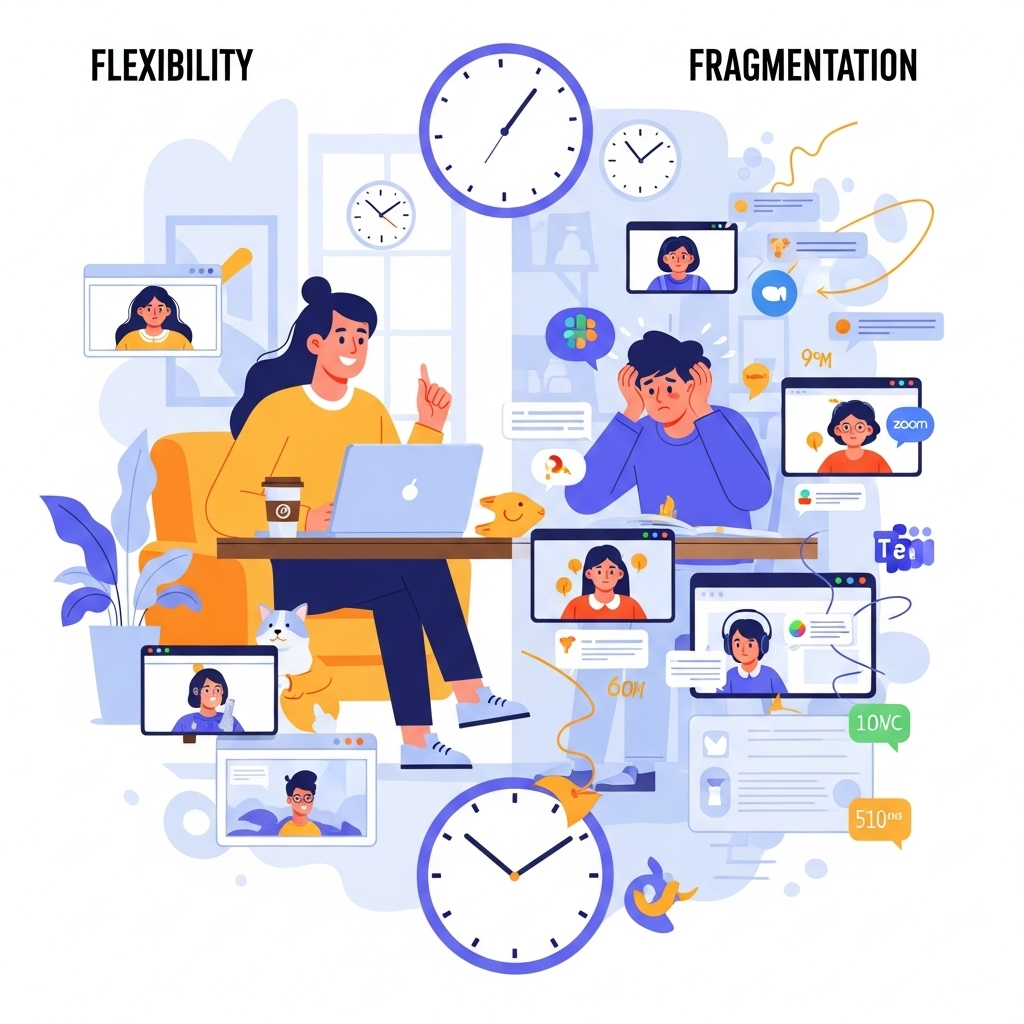
The flexibility inherent in hybrid work, while a major benefit, can become a double-edged sword if not managed with intention. The ability to work from anywhere can blur the lines between work and personal life, leading to a fragmented workday filled with interruptions. This fragmentation is often exacerbated by a constant stream of meetings, leaving little room for dedicated hybrid work focus time. As previously noted, 68% of employees across various work models report not having enough uninterrupted focus time, a figure likely higher in poorly managed hybrid environments [2]. Without clear boundaries and intentional scheduling, the flexibility can ironically lead to less focused work and increased digital fatigue.
Cultivating Connection: Leveraging Hybrid for Better Collaboration
Despite the challenges, hybrid models offer significant hybrid collaboration opportunities to foster better, more intentional collaboration. The key is to shift from a default of meetings to purposeful interaction. While only 11% of employees benefit from teams setting their hybrid policy together, Gallup identifies this approach as “most likely to be fair and positive for collaboration” [11]. This highlights a crucial opportunity for organizations to empower teams to co-create their collaboration norms, fostering greater buy-in and effectiveness.
Industrial and organizational psychologists, such as Jordan Birnbaum, affirm the benefits of hybrid work when structured well, emphasizing that increased autonomy and reduced commutes can positively influence productivity and satisfaction [13]. By focusing on outcomes rather than presence, and by strategically designing collaboration, hybrid teams can cultivate stronger connections and achieve higher output. For leaders navigating this landscape, specific Hybrid Work Tips for Leaders can provide valuable guidance.
The Strategic Blueprint: Mastering Meeting Management for Hybrid Success
To optimize hybrid meetings and reduce meeting fatigue hybrid teams, a strategic, comprehensive approach to meeting management strategies is essential. This blueprint covers the entire meeting lifecycle, from meticulous pre-meeting planning to robust post-meeting accountability, ensuring every interaction is purposeful and productive. For broader strategies on managing a hybrid workforce effectively, consider exploring resources on Managing a Hybrid Workforce.
Pre-Meeting Mastery: Setting the Stage for Success
The foundation of effective meetings is laid long before they begin. Meeting preparation is paramount, starting with defining clear meeting objectives. Every meeting should have a specific, measurable goal. Crafting a focused meeting agenda is equally crucial, outlining topics, allocated times, and expected outcomes. Winthrop University and Skillcast emphasize these foundational strategies, highlighting the importance of structure and preparation for effective meetings [15], [16].
Crucially, determine the necessary attendees. Invite only those whose presence is essential for decision-making or direct contribution. For others, consider sharing information asynchronously. Even a simple pre-meeting ritual can have a profound impact; researcher Atul Gawande found that surgical teams who introduced themselves before surgery saw a 35% drop in complications and deaths, underscoring the value of setting a clear, collaborative tone before the main event [14].
In-Meeting Excellence: Facilitating Engaging & Equitable Sessions
Hybrid meeting facilitation requires intentionality to ensure engaging hybrid meetings and equitable participation for both in-person and remote attendees. Best practices from the University of Toronto and Boston University advocate for a “one person, one screen” rule to prevent in-room participants from dominating, and encouraging “cameras on” to foster connection and engagement [17], [18].
A designated technology coordinator can be invaluable for managing technical issues, ensuring smooth transitions, and monitoring chat for remote participants’ contributions. Gartner Inc. insights also suggest rotating facilitators to distribute the responsibility and encourage diverse leadership styles [19]. Active facilitation involves drawing out quieter voices, managing time strictly, and ensuring discussions lead to clear decisions.
Post-Meeting Accountability: Driving Action & Continuous Improvement
A meeting’s value is often determined by what happens after it concludes. Effective post-meeting follow-up is critical for driving action and continuous improvement. This includes documenting clear meeting action plan items, assigning specific owners, and setting realistic deadlines. Skillcast underscores the importance of action plans and feedback for truly productive meetings [16].
Establish mechanisms for meeting feedback to continuously refine your meeting culture. A simple post-meeting survey can gather insights on effectiveness, engagement, and perceived value. This iterative approach ensures that meeting practices evolve to meet the team’s changing needs.
The Asynchronous Advantage: Shifting Defaults for Deep Work
One of the most powerful strategies to reduce meeting dependency and combat meeting fatigue hybrid teams is embracing asynchronous collaboration. This involves shifting the default communication method from real-time meetings to flexible, on-demand interactions, protecting precious deep work time.
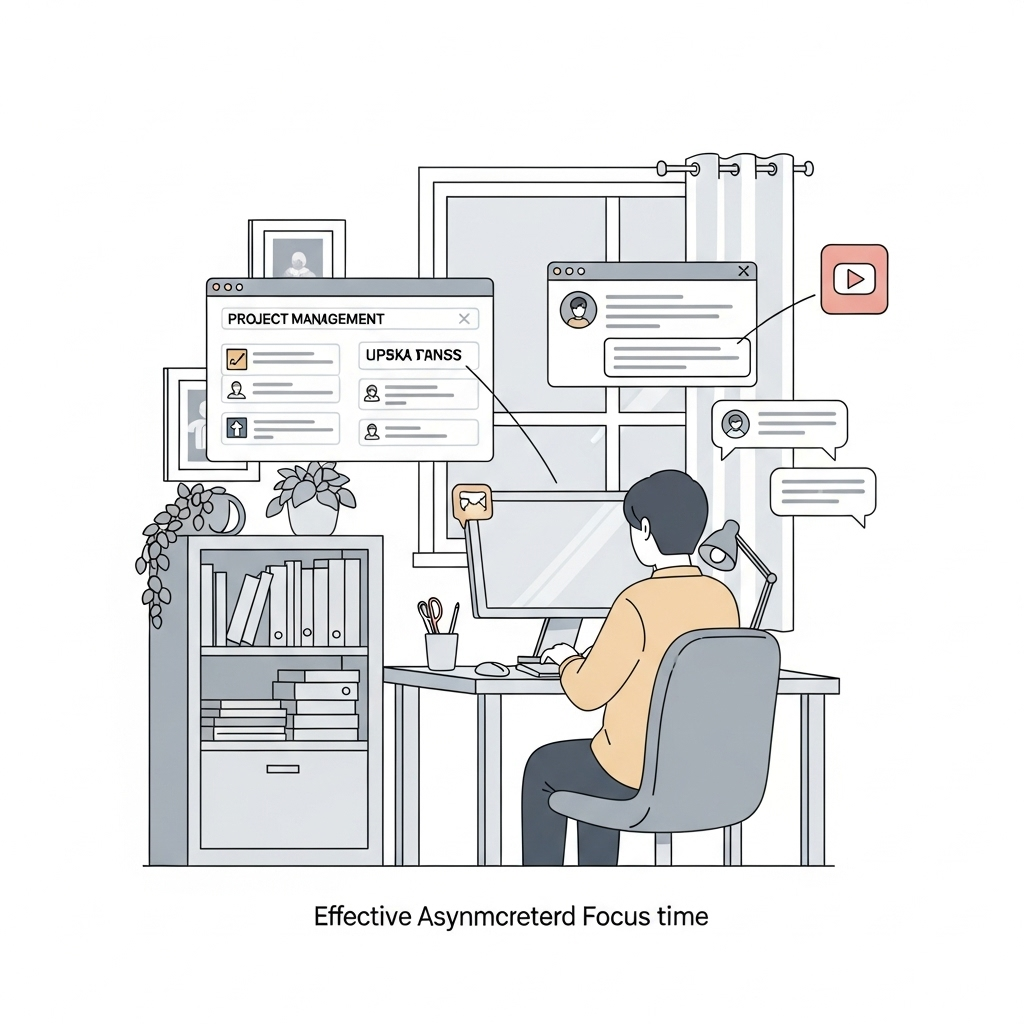
Asynchronous communication is ideal for:
- Updates: Instead of a status meeting, use a shared document or video update (e.g., via Loom, as suggested by Atlassian Blog) [8].
- Brainstorming: Collaborative whiteboards or shared documents allow team members to contribute ideas at their convenience.
- Feedback Rounds: Provide comments on documents or recorded presentations.
- Decision-making: Present options and gather votes or written input over a set period.
Tools like Microsoft Teams, Loom, and various project management platforms (e.g., Quire.io [22]) are designed to facilitate robust asynchronous workflows. By making asynchronous communication the first choice for information sharing and routine collaboration, teams can significantly reduce their meeting load, allowing individuals more uninterrupted time for focused, high-value work. This approach aligns with the growing recognition of the benefits of strategies like The Impact of Meeting-Free Days.
Data-Driven Transformation: Unlocking Measurable Meeting Efficiency
To truly conquer the productivity paradox and meeting overload, organizations must adopt a data-driven analysis meeting overload approach. This involves leveraging meeting analytics tools to diagnose inefficiencies, measure the impact of interventions, and make informed decisions, ultimately leading to measurable meeting efficiency. Experts from Fellow.ai and Flowtrace.co provide valuable insights into effective data collection and usage for meeting improvements [20], [21].
The Meeting Analytics Dashboard: Key Metrics to Track
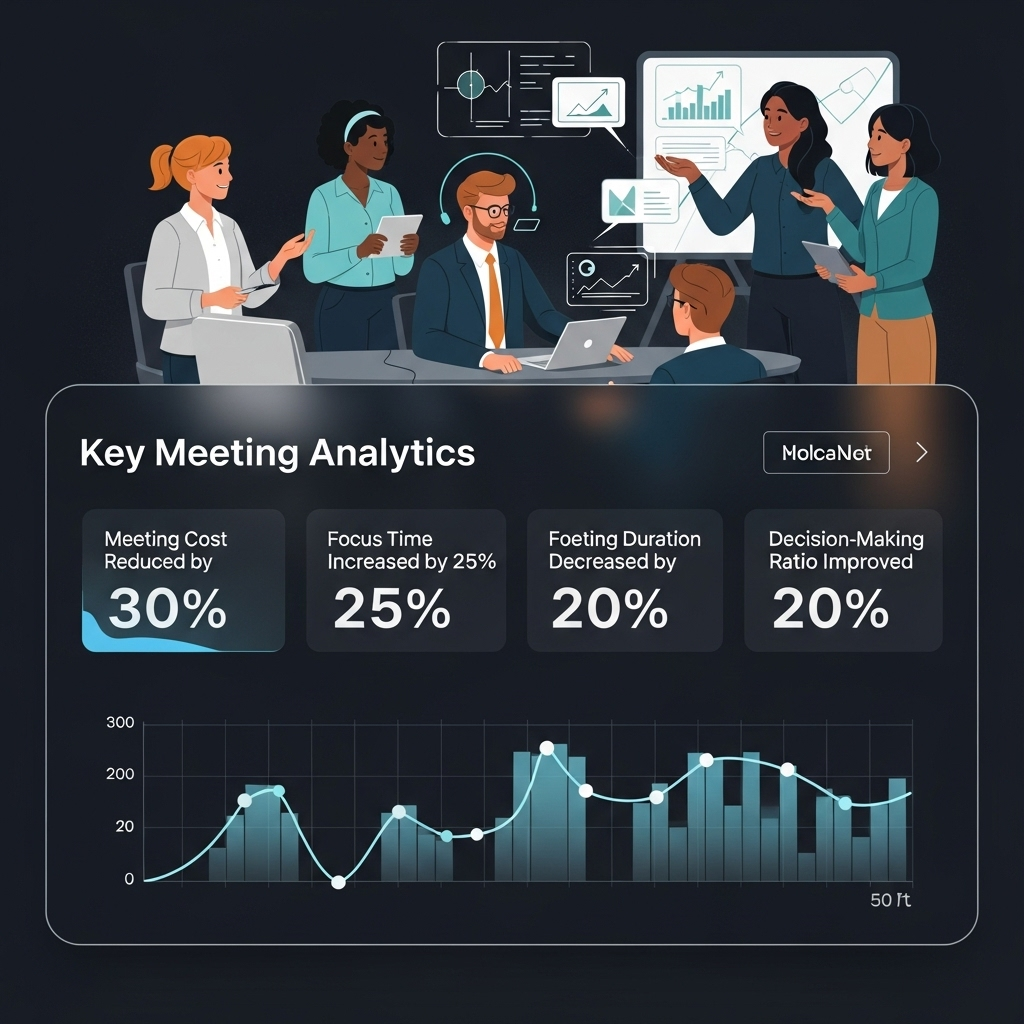
Implementing a meeting analytics dashboard allows organizations to track crucial meeting metrics and meeting KPIs. These include:
- Meeting Cost: Calculate the total cost of a meeting by multiplying attendees’ average hourly salaries by the meeting duration. This provides a tangible
quantifiable impact of excessive meetings on a company's bottom line. - Meeting Duration: Track average and total meeting time per individual and team.
- Attendance Rates: Identify habitual non-attendees or those who consistently decline, signaling potential irrelevance.
- Participant Engagement: Some tools can track speaking time, chat participation, or reactions.
- Decision-Making Ratios: How many meetings result in clear, documented decisions versus those that are purely informational or lead to more meetings?
- Meeting Recurrence: Identify frequent, recurring meetings that might be ripe for reduction or transformation.
From Insights to Action: Translating Data into Meaningful Change
The power of data-driven meeting improvements lies in translating insights into actionable meeting insights. For instance, if data reveals a specific team consistently holds long, unproductive meetings, it might indicate a need for targeted meeting facilitation training or a shift to asynchronous communication for their routine updates. If a particular recurring meeting consistently has low attendance, it’s a clear signal to re-evaluate its necessity or format.
To avoid “analysis paralysis,” focus on a few key metrics initially and iterate. Consider a hypothetical example:
a software development team finds that their daily stand-up, initially 15 minutes, has crept up to 45 minutes, costing thousands of dollars weekly in lost productivity. The data prompts them to strictly enforce time limits, use a visual Kanban board for updates, and move detailed problem-solving discussions offline, immediately reclaiming significant time.
Featuring insights from operations managers who have successfully implemented such systems can provide real-world validation.
Overcoming the Paradox: Aligning Tech Investment with Human Behavior
Revisiting the productivity paradox, data-driven insights are crucial for ensuring that technology adoption productivity genuinely leads to gains. Often, poor technology implementation contributes to the paradox not because the tools are bad, but because human behavior and organizational processes don’t adapt.
This is where effective change management paradox strategies come into play. Data can highlight where technology isn’t being used effectively or where it’s being overused (e.g., too many meetings on a new video conferencing platform). By understanding these patterns, organizations can provide targeted training, adjust workflows, and foster a culture that leverages technology thoughtfully, rather than letting it dictate collaboration. The goal is to align technological capabilities with human needs and organizational goals, ensuring that every investment truly enhances, rather than hinders, productivity.
Cultivating a Culture of Intentional Collaboration
Beyond tools and data, the most sustainable path to improve team productivity and overcome meeting overload lies in cultivating a culture of intentional collaboration and employee empowerment. This involves fostering an environment where teams are trusted, communication is open, and continuous improvement is the norm. Gallup and MIT Sloan Review research consistently highlights the importance of cultural factors in hybrid team dynamics and productivity [11], [24]. Frameworks like FranklinCovey’s 4DX (The 4 Disciplines of Execution) also provide a structured approach to enhancing team productivity by focusing on wildly important goals, acting on lead measures, keeping a compelling scoreboard, and creating a cadence of accountability [23].
Empowering Teams: Co-Creating Collaboration Norms
A critical step in fostering this culture is empowering teams to collectively define their collaboration norms and meeting policies. While only 11% of employees benefit from team-led policy setting, Gallup identifies this as the approach “most likely to be fair and positive for collaboration” [11]. This hybrid team autonomy leads to greater buy-in, engagement, and effectiveness because the rules are co-created, not imposed.
Strategies for facilitating these discussions effectively, especially for larger organizations, include:
- Workshops: Dedicated sessions where teams discuss their current meeting pain points and ideal collaboration scenarios.
- Pilot Programs: Allow specific teams to experiment with new meeting structures or asynchronous defaults and share their learnings.
- Templates: Provide a “Team Collaboration Norms Template” to guide discussions on preferred communication channels, meeting cadences, and decision-making processes.
Leadership’s Role: Modeling Intentionality & Trust
Leadership meeting culture sets the tone for the entire organization. Leaders must model intentionality by questioning meeting necessity, promoting asynchronous alternatives, and actively protecting their teams’ focus time. Gaining leadership buy-in for company-wide meeting reduction initiatives is paramount. This requires presenting the data on meeting costs and demonstrating the link between reduced meetings and improved employee well-being and productivity.
Leaders must also cultivate trust in hybrid teams. A culture of micromanagement, often driven by a fear of missing out (FOMO) on information or a need for perceived control, can lead to a proliferation of unnecessary meetings. By trusting teams to deliver outcomes and providing clear expectations, leaders can significantly reduce the need for constant check-ins. Insights from business schools like Marquette University emphasize that optimizing workplace productivity requires strong leadership that analyzes workflows and sets clear KPIs, but also empowers teams [24].
Psychological Safety: The Foundation for Open Communication
Psychological safety is the bedrock for open communication team dynamics and is particularly vital in hybrid environments. It fosters an environment where team members feel comfortable questioning meeting necessity, suggesting alternatives, and communicating productivity challenges without fear of reprisal. Google’s extensive Project Aristotle research, for example, identified psychological safety as the most critical factor for team effectiveness, enabling risk-taking, vulnerability, and open dialogue [25].
Strategies for fostering psychological safety in hybrid teams include:
- Active Listening: Leaders and peers genuinely listen to concerns about meeting load.
- Empathy: Acknowledge the challenges of meeting fatigue and fragmented schedules.
- Vulnerability: Leaders share their own struggles with meeting overload.
- Feedback Loops: Create safe channels for anonymous or direct feedback on meeting effectiveness.
- Inclusive Facilitation: Ensure all voices are heard, regardless of location or personality type.
Continuous Improvement: Iterating Your Meeting Culture
Transforming meeting culture is not a one-time fix but an ongoing process of continuous improvement meetings. It requires iterative meeting culture adjustments based on regular review and feedback loops productivity. Gallup’s research highlights that ongoing discussions throughout the year about improving hybrid teamwork are directly linked to better collaboration and engagement [11].
Implement regular “meeting audits” where teams review their meeting schedules, assess effectiveness against defined objectives, and identify opportunities for reduction or optimization. A “Meeting Audit Checklist” can be a valuable tool for this. Encourage experimentation with different meeting formats, durations, and tools. By fostering a mindset of continuous learning and adaptation, organizations can build a resilient, high-performance culture that truly values focused work and employee well-being over excessive meeting time.
Conclusion
The productivity paradox, exacerbated by meeting overload in hybrid teams, presents a significant challenge to modern organizations. However, by adopting a definitive, data-driven blueprint for strategic transformation, businesses can move beyond the buzz and unlock peak performance. We’ve explored the hidden costs of excessive meetings, from lost productivity and financial drain to the pervasive issue of meeting fatigue and its impact on employee well-being. We’ve also dissected the unique challenges and opportunities inherent in hybrid work, emphasizing the need for intentional communication and collaboration.
The strategic blueprint outlined provides actionable steps for mastering meeting management, from meticulous pre-meeting planning to robust post-meeting accountability, and crucially, leveraging the asynchronous advantage. By embracing data-driven transformation, organizations can gain measurable insights into meeting efficiency, ensuring that technology investments truly translate into productivity gains. Ultimately, overcoming meeting overload is not just about efficiency; it’s about cultivating a culture of intentional collaboration, empowering teams, fostering psychological safety, and committing to continuous improvement. This holistic approach ensures that organizations not only reclaim valuable time but also enhance employee well-being, fostering a thriving, high-performance culture ready for the future of work.
Take the first step towards transforming your organization’s meeting culture today. Download our ‘Hybrid Meeting Optimization Playbook’ and begin your journey to reclaiming time, boosting productivity, and empowering your hybrid teams for peak performance.
This article provides general business and organizational advice for improving productivity and meeting management. It is not intended as legal, medical, or individual psychological advice. Readers should consult with relevant professionals for specific situations.
References
- Harvard Business Review. (N.D.). Dear Manager, You’re Holding Too Many Meetings. Retrieved from https://hbr.org/2022/03/dear-manager-youre-holding-too-many-meetings
- Microsoft. (2022). Great Expectations: Making Hybrid Work Work – Microsoft Work Trend Index Annual Report 2022. Retrieved from https://www.microsoft.com/en-us/worklab/work-trend-index/great-expectations-making-hybrid-work-work
- Solow, R. (N.D.). [Quip on the productivity paradox].
- Brynjolfsson, E. (N.D.). [Work on the Productivity Paradox of IT]. MIT.
- CS Stanford. (N.D.). Background: The Productivity Paradox. Retrieved from https://cs.stanford.edu/people/eroberts/cs181/projects/productivity-paradox/background.html
- Wikipedia. (N.D.). Productivity paradox. Retrieved from https://en.wikipedia.org/wiki/Productivity_paradox
- MacDonald, S. (N.D.). [Work on the 5-stage development of the productivity paradox].
- Atlassian. (N.D.). [Survey data on meeting drain and overtime].
- RingCentral. (N.D.). Virtual Meeting Fatigue: Warning Signs and Tips for Prevention. Retrieved from https://www.ringcentral.com/us/en/blog/virtual-meeting-fatigue/
- Nobo Europe. (N.D.). What is Meeting Fatigue?. Retrieved from https://www.noboeurope.com/en-ie/blog/nobo/articles/what-is-meeting-fatigue/
- Gallup. (N.D.). Boost Productivity in Hybrid Teams. Retrieved from https://www.gallup.com/workplace/646949/boost-productivity-hybrid-teams.aspx
- Stanford University. (2024). Hybrid work is a win-win-win for companies, workers. Stanford News. Retrieved from https://news.stanford.edu/stories/2024/06/hybrid-work-is-a-win-win-win-for-companies-workers
- Birnbaum, J. (N.D.). [Insights on hybrid work benefits]. Industrial and organizational psychologist.
- LifeLabs Learning. (N.D.). Best Practices for Leading Effective and Engaging Hybrid Meetings. Retrieved from https://www.lifelabslearning.com/blog/best-practices-for-leading-effective-and-engaging-hybrid-meetings
- Winthrop University. (N.D.). Effective Meeting Strategies. Retrieved from https://www.winthrop.edu/uploadedFiles/clubsorgs/leadership/Effective-Meeting-Strategies.pdf
- Skillcast. (N.D.). Best Practices for Productive Meetings. Retrieved from https://www.skillcast.com/blog/best-practices-productive-meetings
- University of Toronto. (N.D.). Hybrid Meetings. Online Learning. Retrieved from https://onlinelearning.utoronto.ca/hybrid-meetings/
- Boston University. (N.D.). Hybrid Meeting Tips. TechWeb. Retrieved from https://www.bu.edu/tech/support/hybrid-meeting-tips/
- Gartner Inc. (N.D.). [Insights on equitable hybrid meeting experiences].
- Fellow.ai. (N.D.). Meeting Analytics: A Guide to Data-Driven Meetings. Retrieved from https://fellow.ai/blog/meeting-analytics-a-guide-to-data-driven-meetings/
- Flowtrace.co. (N.D.). How to Make Data-Driven Meeting Improvements. Retrieved from https://www.flowtrace.co/collaboration-blog/how-to-make-data-driven-meeting-improvements
- Quire.io. (N.D.). 10 Strategies to Make Hybrid Collaboration Effective in Your Team. Retrieved from https://quire.io/blog/p/effective-hybrid-collaboration.html
- FranklinCovey. (N.D.). The Leader’s Guide to Enhancing Team Productivity and Efficiency. Retrieved from https://www.franklincovey.com/blog/the-leaders-guide-to-enhancing-team-productivity-and-efficiency/
- Marquette University. (N.D.). Optimizing Workplace Productivity: Strategies for Boosting Efficiency. Online MBA Blog. Retrieved from https://online.marquette.edu/mba/blog/optimizing-workplace-productivity-strategies-boosting-efficiency
- Google. (N.D.). Project Aristotle.


