
The seismic shift to remote work wasn’t just a temporary pivot; it was a permanent redefinition of how we work. And with it came an amplified, often overlooked, challenge: effective virtual onboarding. Many organizations, unfortunately, are still grappling with what we call the “virtual onboarding gap.” This isn’t just about shipping a laptop; it’s about a profound disconnect. Poor virtual onboarding leads to a litany of woes: isolation, disengagement, and, most critically, high new hire turnover, directly impacting productivity and long-term retention.
This isn’t a drill. This isn’t another checklist. This definitive guide moves “Beyond the Checklist” to provide a human-centric approach to virtual onboarding. Our mission? To help you build genuine connection, accelerate productivity, and ensure long-term remote employee retention. We will dissect the critical human elements, strategic planning, technological enablers, cultural integration, and, yes, how to measure the tangible ROI of your virtual onboarding initiatives. Prepare to transform your new hire experience.
- The Virtual Onboarding Gap: Why Human Connection Matters More Than Ever
- Strategic Blueprint: Designing a Multi-Phase Virtual Onboarding Program
- Leveraging Technology & Tools for Seamless Virtual Onboarding
- Weaving Culture & Values into the Virtual Fabric
- Quantifying Success: Measuring the ROI of Human-Centric Virtual Onboarding
- References
The Virtual Onboarding Gap: Why Human Connection Matters More Than Ever
Let’s be blunt: the traditional onboarding playbook is obsolete in a remote-first world. The casual desk-side chats, the impromptu coffee breaks, the physical cues that build camaraderie – they’re gone. This vanishing act has exposed significant virtual onboarding challenges, leaving many new hires feeling adrift. The result? A poor new hire experience that undermines confidence, stifles productivity, and ultimately impacts your bottom line.
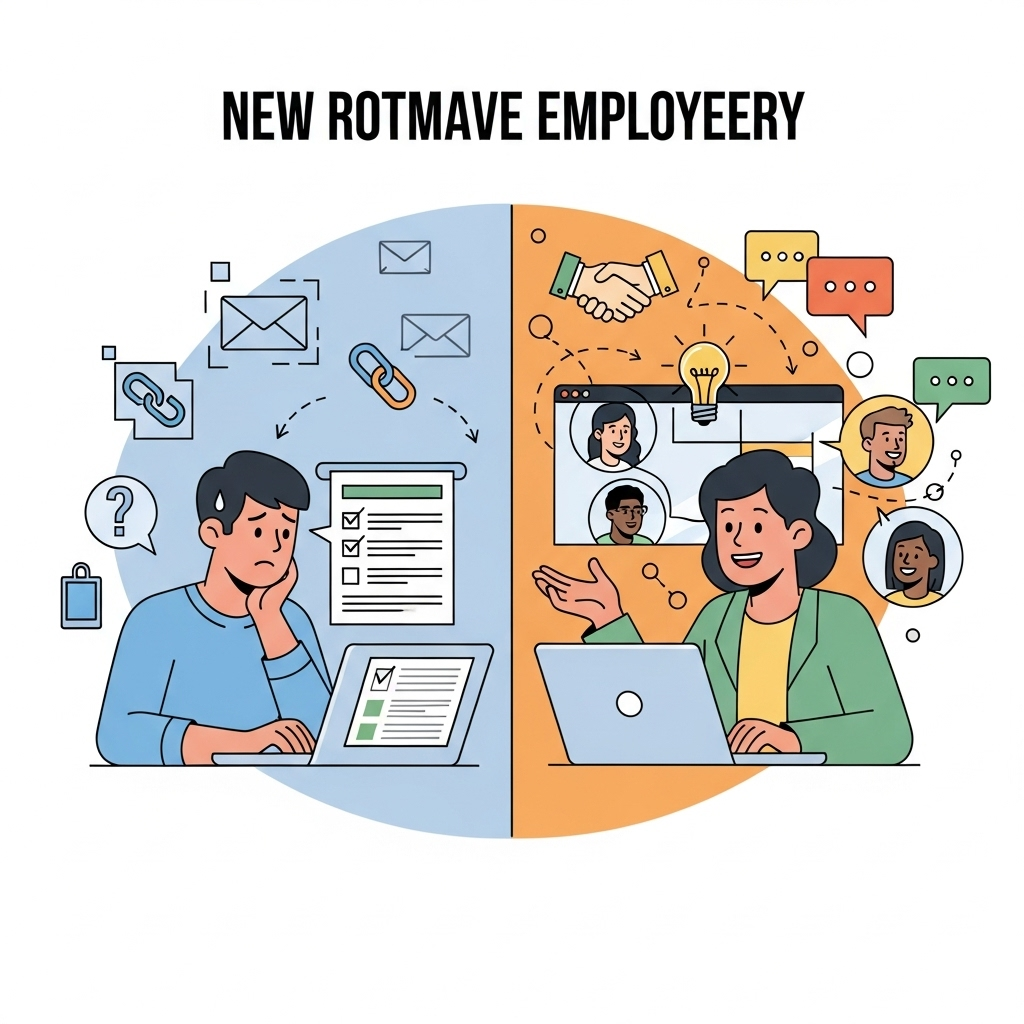
Organizational psychology has long taught us that belonging and psychological safety are foundational to employee engagement. In a remote setting, these elements don’t just happen; they must be meticulously engineered. As Harvard Business Review frequently highlights, successful remote work hinges on intentional strategies that foster connection and support, not just operational efficiency.
The Hidden Costs of Poor Virtual Onboarding on New Hire Retention
You might think poor onboarding is just a minor hiccup, a bit of administrative inefficiency. You’d be wrong. The onboarding impact of a substandard virtual experience is a quantifiable drain on resources, directly contributing to employee turnover causes and hindering new hire retention.
Consider the cold, hard data. Research by Shanker Menon, a Doctor of Business Administration from the University of South Florida, revealed a sobering truth:
“turnover intention increased when only virtual onboarding was done. However, the turnover intention was much lower for the traditional face-to-face and hybrid groups” [1].
This isn’t a subtle trend; it’s a stark warning. When new hires are left to navigate a purely virtual landscape without intentional human connection, their likelihood of leaving skyrockets. This data unequivocally underscores the urgent need to bridge the “virtual onboarding gap” with deeper, more meaningful engagement. The cost of replacing an employee can range from half to twice their annual salary. Can your organization afford to bleed talent due to a preventable lack of connection?
Beyond Logistics: Defining Human-Centric Virtual Onboarding
It’s time to shift our mindset. Human-centric virtual onboarding isn’t about ticking boxes; it’s about building bridges. It’s a holistic approach that prioritizes psychological safety, a profound sense of belonging, and genuine connection. We’re talking about creating an environment where a new hire feels seen, heard, and valued from day one, regardless of geographical distance.
Kaitlyn Pavlina’s Master of Science in Organization Development research from Pepperdine University offers crucial insights here. Her findings emphasize that:
“new hires want to connect with others, both on the individual and community levels; and new hires want their employers to be empathetic toward them, in both actions and words” [2].
This isn’t soft HR fluff; it’s the bedrock of successful remote integration. These findings directly inform our human-centric approach, demanding that we move beyond mere technical setup to actively fostering connection remote and cultivating psychological safety remote.
Implication: Prioritizing human connection in virtual onboarding is not optional; it’s essential for mitigating turnover and fostering engagement.
Strategic Blueprint: Designing a Multi-Phase Virtual Onboarding Program
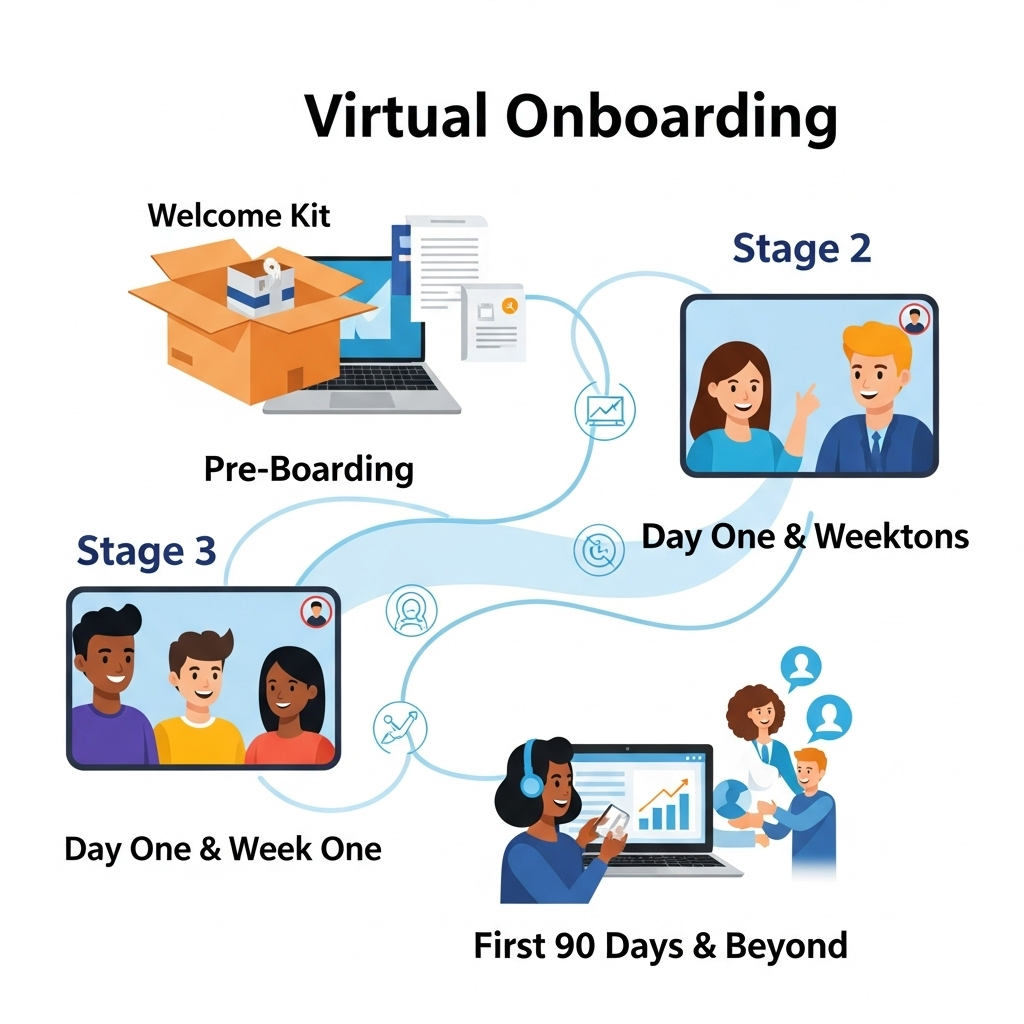
If Rocky Balboa was a content marketer, his montage wouldn’t include punching meat, one-handed pushups, and running up the 72 steps of the Philadelphia Museum of Art. No, some Philly Soul would accompany him writing SQL queries, wrangling multimillion-row CSV files, and working out how to rotate axis labels in D3. Similarly, an effective virtual onboarding program isn’t a single event; it’s a meticulously choreographed, multi-phase journey. This strategic framework moves beyond a simple checklist to a comprehensive, phased approach, addressing the need for robust planning and process design for seamless remote integration.
To truly excel, you must embrace onboarding best practices that are both structured and empathetic, ultimately improving remote new hire retention. As UC Berkeley’s Manager’s Guide to Remote Onboarding suggests, a well-defined plan is paramount, ensuring that even the crucial logistical elements identified by Pavlina are handled with precision. For a broader perspective on comprehensive best practices, consult Bridgespan’s Onboarding Best Practices Guide.
Pre-Boarding: Setting the Stage for Success
The onboarding process begins long before Day One. Virtual pre-boarding is your opportunity to create excitement and reduce anxiety. This phase includes crucial steps like completing all necessary paperwork digitally, ensuring tech setup (laptop, monitors, peripherals) is complete and shipped well in advance, and sending a personalized welcome kit. Think beyond the swag; include a detailed agenda for the first week and initial contacts. Consider assigning a “welcome buddy” or mentor during this stage – a simple yet powerful way to foster early connection and provide a friendly face for questions, drawing from successful strategies seen across leading organizations. This proactive remote new hire setup and clear onboarding communication lays the groundwork for a smooth transition.
Day One & Week One: Cultivating Immediate Connection & Clarity
These initial days are make-or-break. Your virtual onboarding Day One must be structured yet flexible, focusing on immediate connection and clarity. Outline critical activities: structured introductions to the team and key stakeholders, clear role expectations, initial training on essential tools, and fostering early team connections through informal virtual coffee chats.
Crucially, the manager’s role cannot be overstated. Pavlina’s research explicitly states that “the manager can make or break the new hire onboarding experience” [2]. Empower your managers with actionable strategies: schedule dedicated 1:1 time, provide clear guidance on initial tasks, and actively facilitate introductions. These aren’t just administrative tasks; they are acts of leadership that profoundly impact the new hire’s sense of belonging and confidence.
The First 90 Days & Beyond: Sustaining Engagement and Growth
Onboarding is not a sprint; it’s a marathon. The process extends far beyond the initial weeks, focusing on continuous learning, mentorship programs, regular check-ins, performance feedback, and deep integration into the long-term company culture. This sustained effort is vital for long-term remote retention and ensuring ongoing new hire development.
Implement structured 30-60-90 day check-ins, but don’t let them become mere formalities. Use them as opportunities to gauge progress, address challenges, and provide constructive feedback. Beyond formal processes, prioritize ongoing psychological safety checks. Encourage open dialogue, create channels for anonymous feedback, and ensure new hires feel comfortable voicing concerns. This continuous loop of support and feedback, as highlighted in resources like the South Carolina HR Tips for Remote Onboarding, is fundamental to sustained engagement.
Implication: A well-defined, multi-phase onboarding strategy is the backbone of remote new hire success and retention.
Leveraging Technology & Tools for Seamless Virtual Onboarding
Data is data. Technology, if wielded correctly, is your force multiplier, not a replacement for human interaction. This section isn’t about throwing money at every shiny new app; it’s about strategically using technology to facilitate a human-centric virtual onboarding experience, ensuring seamless processes without sacrificing personal connection. This directly answers the perennial question: “What tools and platforms are best suited for virtual onboarding?”

Think of tools like Chameleon.io for user onboarding or Wistia for video content. While designed for customers, their principles of intuitive experience design and engaging content are highly applicable to employee onboarding. The goal is to make the administrative and learning aspects so smooth that HR and managers can dedicate more energy to the human element. Technology should support, not replace, genuine human interaction.
Essential Platforms for Communication & Collaboration
In a remote setting, communication is the lifeblood of connection. Your choice of remote communication tools and virtual team collaboration platforms is paramount. Video conferencing (e.g., Zoom, Google Meet) for face-to-face interactions, instant messaging (e.g., Slack, Microsoft Teams) for quick queries and informal chats, and project management software (e.g., Asana, Trello) for task clarity and team cohesion are non-negotiable. These tools facilitate daily interactions, allowing new hires to feel part of the ongoing conversation, not just a recipient of information.
Automating Onboarding Workflows & Documentation
The “logistics matter” theme from Pavlina’s research [2] is where automation shines. Leveraging your HRIS (Human Resources Information System), e-signature platforms, and learning management systems (LMS) can dramatically streamline administrative tasks. Think automated paperwork, pre-scheduled access to systems, and self-service portals for benefits enrollment. This frees up HR professionals and managers from tedious manual processes, allowing them to focus on the high-touch, human aspects of onboarding – the very connections that drive retention. This is where onboarding automation and digital onboarding documents become strategic assets.
Crafting Engaging Virtual Training & Resources
Boring, static PDFs are the enemy of engagement. Your virtual training new hires receive must be interactive, accessible, and, dare we say, engaging. Invest in platforms that allow for multimedia content, interactive quizzes, and collaborative exercises. Develop comprehensive knowledge bases and self-service resources that empower new hires to find answers independently, accelerating their learning curve. This isn’t just about efficiency; it’s about demonstrating a commitment to their growth and providing them with the tools they need to succeed. Think beyond just “training”; think remote learning resources that are truly engaging onboarding content.
Implication: Strategic use of technology enhances efficiency and connection, but it must always serve the human-centric goals of onboarding.
Weaving Culture & Values into the Virtual Fabric
This is where many organizations stumble. How do you integrate company culture and values in a purely virtual setting? It’s a critical content gap that demands a sophisticated approach. It’s not enough to simply state your values; you must actively live them, making new remote employees feel welcome and connected from day one.
Remember Pavlina’s findings: new hires crave empathy and community-level connection [2]. This isn’t just about a “culture deck”; it’s about creating a living, breathing virtual environment. As an NCBI article on onboarding during COVID-19 highlighted, the key is to “Create structure, connect people…” This means intentional design, not accidental osmosis.
From Mission Statement to Daily Interactions: Practical Strategies
Your mission statement is great, but how does it translate into a Tuesday morning stand-up? Remote culture integration requires actionable methods. Organize virtual social events – not just mandatory happy hours, but themed virtual coffee breaks, online game sessions, or even collaborative virtual volunteer activities. Encourage storytelling, where existing employees share experiences that embody company values. Implement peer recognition programs that celebrate behaviors aligned with your culture. Consider establishing “culture champions” – existing employees who are passionate about your values and actively welcome new hires, serving as informal guides and connectors.
Fostering Psychological Safety & Inclusivity Remotely
A truly human-centric approach demands an environment where new remote hires feel safe to ask questions, make mistakes, and contribute authentically. This is the essence of psychological safety remote. Reinforce Pavlina’s insight that “new hires want their employers to be empathetic toward them, in both actions and words” [2]. This means empathetic leadership, active listening, and open communication channels. Create “safe spaces” – dedicated Slack channels, anonymous feedback forms, or specific 1:1 topics – where new hires can voice concerns or ask “dumb” questions without fear of judgment. Inclusive virtual onboarding means actively seeking out and addressing diverse needs and ensuring every new hire feels they belong.
The Manager as Culture Catalyst in a Remote Environment
We’ve said it before, and we’ll say it again: “the manager can make or break the new hire onboarding experience” [2]. In a remote setting, the direct manager becomes the primary conduit for cultural transmission. They must actively model company values, provide consistent support, and facilitate the new hire’s integration into both the immediate team and the broader company culture. This means managers need training on remote manager onboarding, understanding their manager culture role, and mastering the nuances of leading remote teams. Their daily interactions, their proactive check-ins, and their willingness to connect on a human level are more impactful than any corporate policy.
Implication: Proactive and empathetic cultural integration is vital for building strong remote teams and preventing isolation.
Quantifying Success: Measuring the ROI of Human-Centric Virtual Onboarding
You’ve invested the time, the energy, and the resources. Now, how do you prove it’s working? Moving beyond anecdotal evidence to data-driven insights is crucial. This section addresses the critical need to measure the effectiveness and return on investment (ROI) of your virtual onboarding initiatives, tackling a key identified content gap: “Specific metrics and KPIs to measure the success and ROI of virtual onboarding initiatives.”
Measuring outcomes isn’t just about justifying your budget; it validates the “accelerated productivity” and “long-term retention” aspects of your human-centric UVP. Remember Menon’s study on turnover intention [1]? That’s your benchmark. Your goal is to see a tangible reduction in turnover intention and actual turnover rates.
Key Metrics for New Hire Retention & Productivity
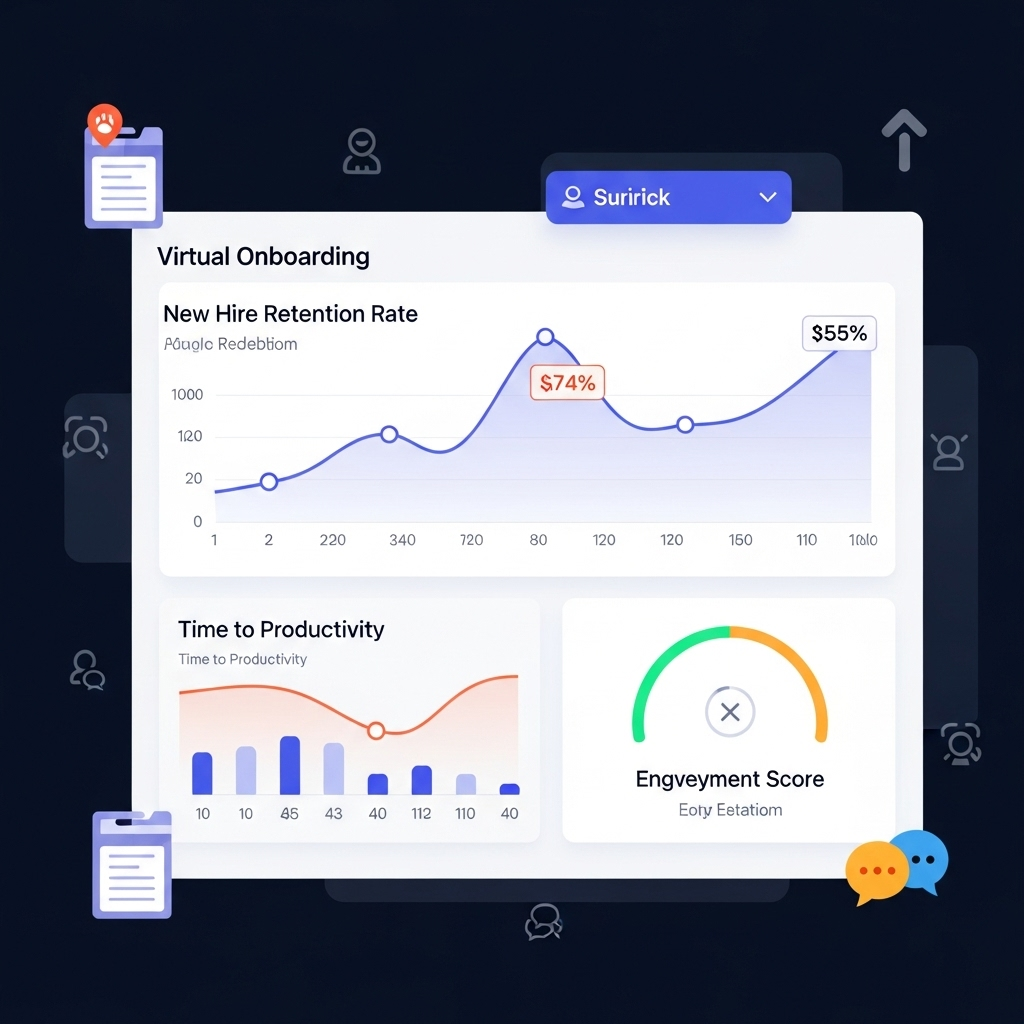
To truly demonstrate the tangible impact of effective virtual onboarding, you need specific, measurable metrics. Track employee turnover rates specifically for new hires (e.g., within the first 3, 6, or 12 months). Monitor time to productivity – how long it takes a new hire to reach full performance capacity. Implement regular new hire engagement KPIs through pulse surveys or 1:1 check-ins. Beyond these, track performance metrics relevant to the role. Are new hires hitting their targets faster? Are they contributing to team projects effectively? Analyzing these data points allows you to show a direct ROI, proving that a human-centric approach isn’t just “nice to have,” it’s a strategic imperative.
Gathering Feedback: Surveys, Interviews, and Analytics
Data is all around. To understand the why behind your metrics, you need qualitative and quantitative feedback. Implement structured onboarding feedback surveys at key milestones (e.g., 30, 60, 90 days). Conduct 1-on-1 employee onboarding interviews with new hires and their managers to gather deeper insights. Analyze new hire experience analytics from your onboarding platforms – how often are they accessing resources? Which modules are most effective? This holistic approach provides a comprehensive view of the onboarding journey from the new hire’s perspective.
Continuous Improvement: Iterating Your Onboarding Program
The best programs are never “done.” They are living, breathing entities that evolve. This is where onboarding program optimization comes into play. Use the collected data and feedback to continually refine and optimize your virtual onboarding program. Are there bottlenecks in your tech setup? Is a particular training module confusing? Are new hires still feeling isolated after the first month? Your program must be agile and responsive to evolving remote work dynamics and new hire needs. Embrace continuous improvement HR principles to ensure your adaptive onboarding strategies remain cutting-edge and effective. This iterative process is how you ensure long-term success and truly differentiate your organization.
Implication: Data-driven insights are essential for validating onboarding investments and fostering continuous improvement.
Key Takeaways
- Human-centric virtual onboarding goes ‘Beyond the Checklist,’ prioritizing psychological safety, empathy, and genuine connection to combat isolation and drive retention.
- Poor virtual onboarding directly contributes to higher new hire turnover and reduced productivity, making a strategic, multi-phase approach crucial.
- Managers play a pivotal role in the success of virtual onboarding, acting as key catalysts for cultural integration and personal connection.
- Leverage technology to streamline logistics and enhance engagement, but ensure it supports, rather than replaces, human interaction.
- Measuring the ROI of your virtual onboarding program through key metrics and continuous feedback loops is essential for demonstrating value and ongoing optimization.
The world of work has fundamentally changed, and with it, the art and science of bringing new talent into the fold. The virtual onboarding gap is real, but it’s not insurmountable. By embracing a human-centric approach – one that prioritizes genuine connection, empathetic leadership, and strategic use of technology – you can transform your new hire experience. This definitive guide isn’t just about surviving remote work; it’s about thriving, building deep connections, accelerating productivity, and driving long-term remote employee retention. The future of your workforce depends on it.
Ready to transform your virtual onboarding? Implement these human-centric strategies to build a connected, productive, and retained remote workforce. Download our comprehensive virtual onboarding checklist to get started today!
Frequently Asked Questions
What are the essential steps for effective virtual onboarding?
Effective virtual onboarding involves a multi-phase approach: thorough pre-boarding (tech setup, welcome kits), structured Day One and Week One activities (introductions, initial training, manager check-ins), and ongoing support through the first 90 days and beyond (mentorship, continuous feedback, cultural integration).
How can companies build strong relationships with remote new hires?
Building strong relationships remotely requires intentional effort. Focus on fostering psychological safety, providing opportunities for informal social connection (virtual coffee chats, team-building activities), assigning a ‘buddy’ or mentor, and ensuring managers are empathetic and actively engaged in the new hire’s experience.
What are the common challenges in virtual onboarding and how can they be overcome?
Common challenges include new hire isolation, difficulty integrating company culture, logistical hurdles, and ensuring consistent communication. Overcome these by prioritizing human connection, leveraging technology strategically, designing comprehensive multi-phase programs, and empowering managers to be active facilitators of connection and culture.
class="blockquote-special-green">How do you make new remote employees feel welcome and connected from day one?
Make new remote employees feel welcome by sending a personalized welcome kit, ensuring all tech is set up before day one, scheduling structured introductions to their team and key stakeholders, assigning a dedicated onboarding buddy, and having their manager conduct a warm, empathetic check-in early on.
This article provides general information and best practices for virtual onboarding and human resources. It is not intended as legal, psychological, or specific HR advice. Consult with qualified professionals for tailored guidance.
References
- Menon, S. (2021). Effectiveness of Virtual Onboarding (Doctoral dissertation, University of South Florida). Retrieved from https://digitalcommons.usf.edu/cgi/viewcontent.cgi?article=11263&context=etd
- Pavlina, K. (2020). Assessing best practices for the virtual onboarding of new hires in the technology industry (Master’s thesis, Pepperdine University). Retrieved from https://digitalcommons.pepperdine.edu/cgi/viewcontent.cgi?article=2167&context=etd


