
The landscape of artificial intelligence is evolving at an unprecedented pace, with each new iteration pushing the boundaries of what’s possible. Amidst this rapid advancement, the arrival of GPT-5 has sparked immense anticipation, promising a new era of AI capabilities. Yet, for many, the true significance of GPT-5 remains shrouded in marketing hype, leaving a gap between exciting announcements and a clear, in-depth understanding of its specific innovations.
This article aims to bridge that gap. We will embark on a comprehensive, technically informed, yet accessible deep dive into GPT-5’s revolutionary architecture, its much-touted ‘Ph.D-level smarts,’ and its tangible real-world impact. Join us as we explore the foundational shifts GPT-5 brings, from its core features and advanced safety mechanisms to its practical applications, accessibility, and the future of artificial intelligence models.
- GPT-5’s Core Innovations: Unpacking the Unified System & Real-Time Router
- Advanced Safety Features and Ethical Considerations of GPT-5
- Practical Applications and Real-World Impact Across Industries
- Accessibility, Availability, and Integration Strategies
- Comparative Analysis with Predecessor Models and Future Outlook
- Conclusion
- References
GPT-5’s Core Innovations: Unpacking the Unified System & Real-Time Router
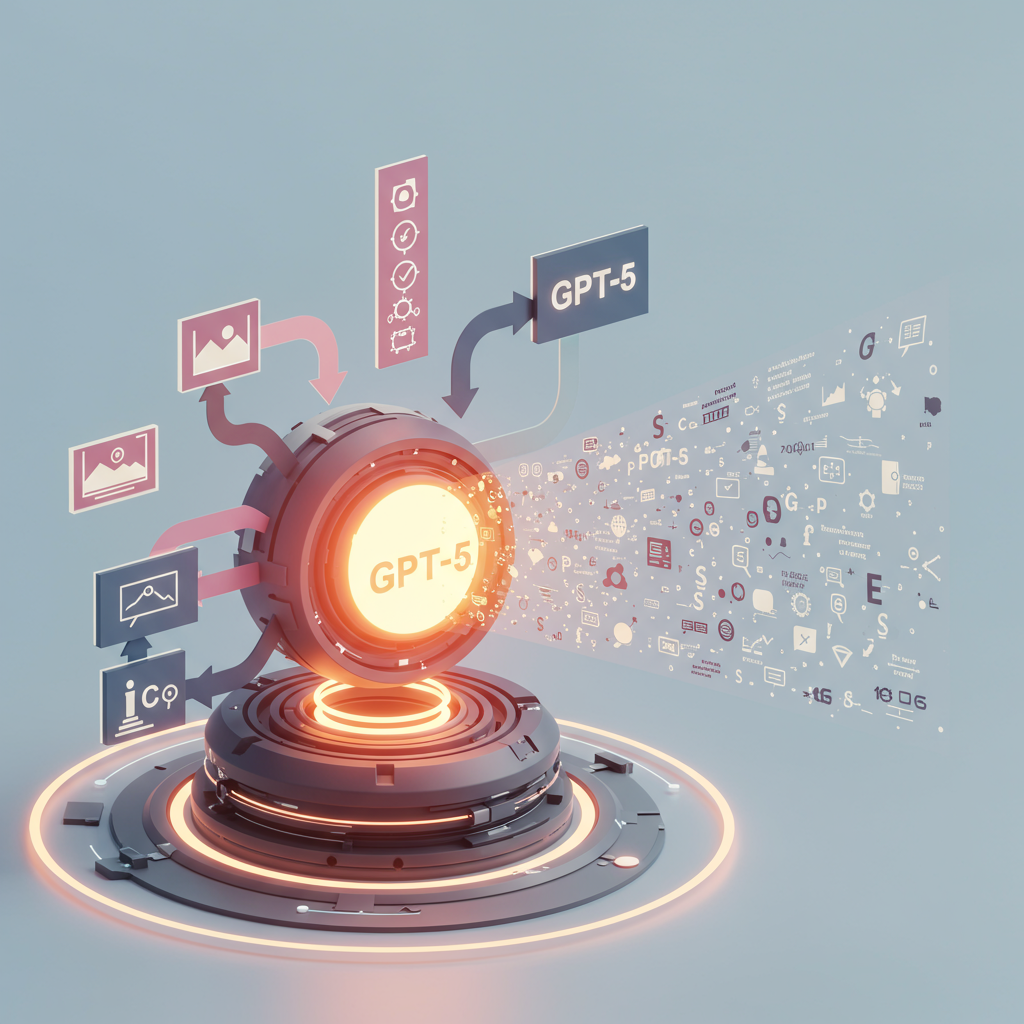
GPT-5 represents a monumental leap in AI development, moving beyond incremental improvements to introduce foundational architectural shifts. OpenAI, the visionary developer behind the model, states that GPT-5 “unites and exceeds OpenAI’s prior breakthroughs in frontier intelligence, spanning 4o, OpenAI o-series reasoning, agents, and advanced math capabilities” [1]. This integration culminates in a “unified system” and is powered by a novel “real-time router,” significantly enhancing the model’s efficiency and responsiveness. The result is a system that delivers “leaps in accuracy, speed, reasoning, context recognition, structured thinking, and problem-solving” [1]. For a more technical deep dive into its architecture and developer access, you can explore the Official OpenAI GPT-5 Developer Introduction.
The ‘Unified System’ Explained: Beyond Modalities
At the heart of GPT-5’s power is its “unified system” architecture. This unified AI system integrates diverse AI capabilities—such as multi-modal understanding (processing text, images, audio, video), advanced reasoning, and agentic abilities (performing multi-step tasks autonomously)—into a cohesive whole. Unlike previous, more siloed AI models, GPT-5’s architecture allows these components to work synergistically, leading to more consistent, powerful, and contextually aware outputs. This integration is what OpenAI refers to when it states GPT-5 “unites and exceeds prior breakthroughs” [1], signifying a new level of AI capabilities integration.
The ‘Real-Time Router’: A Game-Changer for Efficiency and Responsiveness
A critical innovation driving GPT-5’s enhanced performance is the “real-time router GPT-5.” This feature intelligently directs queries to the most appropriate internal model components or external data sources in real-time. This dynamic routing ensures that the AI efficiently utilizes its vast knowledge base and computational resources, rather than processing every query through a monolithic, one-size-fits-all pathway. The benefits are profound: significantly improved speed, heightened accuracy by leveraging specialized knowledge where needed, and optimized resource utilization, all contributing to superior GPT-5 performance and overall AI efficiency.
Unprecedented Reasoning & Problem-Solving Capabilities
The culmination of GPT-5’s architectural advancements is its “Ph.D-level smarts.” OpenAI co-founder and chief executive Sam Altman lauded the model, stating, “GPT-5 is the first time that it really feels like talking to an expert in any topic, like a PhD-level expert” [2]. This isn’t just about generating more coherent text; it signifies a profound improvement in the model’s ability to engage in complex reasoning, apply logic, and make sophisticated inferences.
GPT-5’s reasoning capabilities allow it to tackle problems that demand deep understanding and structured thinking. For instance, it demonstrates the ability to “create software in its entirety and demonstrate better reasoning capabilities — with answers that show workings, logic and inference” [2]. This means it can not only generate code but also understand the underlying logic, debug errors, and explain its solutions step-by-step. Its advanced mathematical understanding and ability to handle intricate, multi-layered problems make it a formidable tool for researchers, developers, and professionals across various domains, truly embodying AI problem-solving at an expert level.
Advanced Safety Features and Ethical Considerations of GPT-5

As AI models grow more powerful, the imperative for robust safety features and ethical frameworks becomes paramount. GPT-5 addresses these critical concerns head-on, incorporating significant enhancements aimed at reducing harmful outputs and promoting responsible AI deployment. OpenAI has consistently emphasized its commitment to safety protocols and ethical deployment [3]. This focus is crucial for navigating potential AI ethical dilemmas.
‘Safe Completions’ and Hallucination Reduction
One of the most anticipated safety improvements in GPT-5 is its ability to significantly reduce AI hallucinations and deceptive outputs. Hallucinations, where AI generates factually incorrect or nonsensical information, have been a persistent challenge in large language models. GPT-5 is designed to “suffer from fewer hallucinations… and be less deceptive” [2]. This is achieved through advanced training methodologies, more sophisticated truthfulness alignment, and mechanisms for “safe completions,” which prioritize accurate and reliable outputs. For critical applications, such as medical diagnostics, legal research, or financial analysis, this improvement in GPT-5 reliability and the generation of safe AI outputs is indispensable, ensuring that the AI’s assistance is not only intelligent but also dependable.
Addressing Misinformation and Bias in AI Generation
The proliferation of misinformation and the inherent risk of algorithmic bias are significant ethical dilemmas in the age of AI. GPT-5’s design and training data incorporate strategies and safeguards to mitigate these issues, directly addressing misinformation AI generation. OpenAI has invested in extensive research and development to identify and address sources of bias within its models, aiming for more equitable and accurate information generation [3]. This includes rigorous data curation, advanced filtering techniques, and continuous monitoring to prevent the propagation of harmful stereotypes or false narratives. While no AI system can be entirely free of bias due to the nature of its training data, GPT-5 represents a concerted effort towards AI bias mitigation and ethical AI development.
Ethical Frameworks for Responsible AI Deployment
The broader ethical considerations surrounding a powerful model like GPT-5 are vast, including its societal implications of GPT-5 and the importance of responsible AI deployment and governance. OpenAI’s approach includes developing comprehensive ethical frameworks that guide the model’s development, deployment, and ongoing use. This involves considerations around transparency, accountability, and user control. Experts like Prof. Carissa Véliz of the Institute for Ethics in AI underscore the importance of such frameworks in navigating the complex relationship between humans and increasingly intelligent AI systems, particularly regarding issues like parasocial relationships with AI [2]. OpenAI’s commitment extends to fostering a collaborative ecosystem where developers and users are empowered to deploy GPT-5 in ways that benefit humanity while minimizing potential harms, aligning with robust AI governance principles.
Practical Applications and Real-World Impact Across Industries

GPT-5’s advanced capabilities are not merely theoretical; they translate into tangible benefits and AI innovation opportunities across a multitude of industries. Its improved accuracy, speed, reasoning, and articulate writing capabilities are set to redefine how we work and interact with technology, creating significant GPT-5 impact. OpenAI’s “GPT-5 and the new era of work” initiative highlights many of these practical applications [1]. For more on how GPT-5 will reshape the professional landscape, explore GPT-5’s Impact on the Future of Work.
Transforming Productivity & Workflow Automation
GPT-5 is poised to significantly enhance individual and organizational productivity through intelligent automation and sophisticated assistance. Its leaps in accuracy, speed, and problem-solving [1] mean it can streamline tasks that previously required extensive human effort. From automating customer service interactions with unprecedented nuance to generating highly personalized marketing content, GPT-5 enables businesses to optimize workflows, reduce operational costs, and free up human talent for more creative and strategic endeavors. This represents a major step forward in AI productivity and workflow automation AI, driving substantial GPT-5 business impact.
Industry-Specific Use Cases: From Healthcare to Development
The “Ph.D-level smarts” of GPT-5 unlock a new realm of industry-specific applications:
- Healthcare: GPT-5 in healthcare can assist in medical research by rapidly analyzing vast datasets of scientific literature, identifying patterns, and even proposing potential drug candidates. Its reasoning capabilities could aid in diagnostics by correlating symptoms with complex disease profiles, offering support to clinicians.
- Education: Personalized learning experiences can be revolutionized, with AI in education adapting content and teaching methods to individual student needs, providing tailored explanations, and generating unique practice problems.
- Legal: The model can accelerate legal research by sifting through countless documents, identifying relevant precedents, summarizing complex cases, and even drafting initial legal briefs with high accuracy.
- Software Development: As noted by Sam Altman, GPT-5 can “create software in its entirety” [2]. This extends beyond simple code generation to include debugging complex systems, optimizing algorithms, and even designing entire software architectures, significantly boosting AI for developers. These are just a few examples of GPT-5 industry applications.
These detailed scenarios demonstrate how GPT-5’s advanced capabilities translate into concrete, real-world solutions.
Navigating Workforce Evolution with GPT-5
The advent of powerful AI like GPT-5 inevitably raises questions about workforce disruption AI. However, the prevailing perspective, championed by OpenAI, emphasizes a “new era of work” characterized by human-AI collaboration [1]. Rather than replacing jobs wholesale, GPT-5 will reshape job roles and skills requirements. Many routine, repetitive, or data-intensive tasks will be automated, allowing human workers to focus on higher-value activities that require creativity, critical thinking, emotional intelligence, and complex problem-solving. This shift necessitates a focus on upskilling and reskilling the workforce, fostering adaptability, and creating new roles that leverage AI as a powerful co-pilot, defining the future of work AI and strengthening human-AI collaboration.
Accessibility, Availability, and Integration Strategies
Understanding how to access GPT-5 is crucial for individuals and businesses eager to leverage its capabilities. OpenAI has made GPT-5 availability clear through various channels, and its strategic partnership with Microsoft plays a pivotal role in its widespread integration. You can find more information on OpenAI’s official site: Explore GPT-5 on OpenAI’s Official Site.
Access Tiers and Developer APIs
GPT-5 is not a free, publicly available model in the same way some earlier AI iterations might have been. Instead, OpenAI offers GPT-5 access through specific tiers:
- ChatGPT Team: Designed for small to medium-sized teams, offering enhanced collaboration and access to GPT-5’s advanced features.
- Enterprise: Tailored for large organizations requiring custom solutions, dedicated support, and robust security features.
- Edu: A specialized offering for educational institutions, enabling academic and research applications.
- OpenAI API: Developers can integrate GPT-5 directly into their applications and services via the OpenAI API [1]. This provides the most flexible access for building custom AI-powered solutions, with pricing typically based on usage (e.g., tokens processed).
For developers looking to integrate GPT-5 into their applications, the Official OpenAI GPT-5 Developer Introduction provides detailed documentation and guidance on API access and pricing models.
Microsoft’s Strategic Integration of GPT-5
Microsoft, a key strategic partner and investor in OpenAI, is at the forefront of Microsoft GPT-5 integration into its vast ecosystem of consumer and enterprise products. This integration significantly broadens GPT-5’s reach and practical utility. Microsoft’s official news confirms their incorporation of GPT-5 into various offerings [3], including:
- Azure AI: GPT-5’s capabilities are being made available through Microsoft Azure’s AI services, allowing enterprises to build and deploy highly sophisticated AI applications with the backing of Azure’s scalable and secure cloud infrastructure.
- Microsoft 365 Copilot: GPT-5’s advanced reasoning and content generation powers enhance Copilot across Microsoft 365 applications like Word, Excel, PowerPoint, and Outlook, transforming productivity for millions of users by automating tasks, summarizing information, and generating content.
This deep integration underscores Microsoft’s commitment to democratizing AI and leveraging GPT-5 to empower its user base. For more details, refer to Microsoft’s Integration of GPT-5.
Preparing Your Organization for GPT-5 Adoption
For businesses and organizations considering or planning to adopt GPT-5, strategic preparation is key. This involves several critical considerations for AI adoption strategy:
- Infrastructure & Data Governance: Assess your existing IT infrastructure to ensure it can support AI integration. Establish robust data governance policies to manage the data used by and generated by GPT-5, ensuring privacy, security, and compliance for enterprise AI.
- Talent Development: Invest in upskilling your workforce. Training programs should focus on how to effectively interact with, prompt, and oversee AI systems, fostering a culture of human-AI collaboration.
- Strategic Planning: Identify specific use cases where GPT-5 can deliver the most significant value. Develop a clear roadmap for pilot projects, phased implementation, and ongoing evaluation to maximize ROI and minimize disruption, aligning with future AI strategies.
- Ethical Guidelines: Establish internal ethical guidelines for AI use, mirroring the responsible deployment principles championed by OpenAI, to ensure that GPT-5 is used in a manner that aligns with your organizational values and societal well-being.
Proactive planning in these areas will enable organizations to seamlessly integrate GPT-5 and harness its transformative power.
Comparative Analysis with Predecessor Models and Future Outlook

To truly appreciate the significance of GPT-5, it’s essential to understand how it builds upon and surpasses its predecessors, particularly GPT-4. Furthermore, looking beyond GPT-5 provides insight into the broader trajectory of AI evolution and what the future might hold, including future AI trends and the future of artificial intelligence models. OpenAI’s statement that GPT-5 “unites and exceeds OpenAI’s prior breakthroughs” [1] encapsulates this progression and highlights the ongoing AI evolution.
GPT-5 vs. GPT-4: A Leap Forward
While GPT-4 was a remarkable achievement, GPT-5’s performance metrics demonstrate significant improvements:
| Feature/Metric | GPT-4 (General Capabilities) | GPT-5 (Key Advancements) |
|---|---|---|
| Reasoning: | General reasoning capabilities. | GPT-5 exhibits “PhD-level smarts” [2], offering more sophisticated logic, inference, and multi-step problem-solving capabilities compared to GPT-4. |
| Context Window: | Significant context handling for complex tasks. | While specific numbers are proprietary, GPT-5’s ability to handle and understand larger, more complex contexts is a core tenet of its “unified system” [1], allowing for more coherent and extended interactions. |
| Speed & Accuracy: | Good performance, but with room for improvement in real-time applications. | The “real-time router” contributes to faster processing and more accurate outputs, reducing latency and improving the reliability of generated content [1]. |
| Safety Features: | Implemented safety protocols, but hallucinations remained a challenge. | GPT-5 is designed to “suffer from fewer hallucinations… and be less deceptive” [2], a marked improvement in reliability and trustworthiness over previous models. |
| Unified Capabilities: | Often relied on specialized components for different modalities or tasks. | GPT-5 seamlessly integrates multi-modal understanding, advanced reasoning, and agentic abilities, offering a more holistic AI model comparison experience than the more segmented capabilities of GPT-4. |
These advancements signify a qualitative shift in AI capabilities, making GPT-5 a more capable and reliable tool for complex tasks.
Beyond GPT-5: The Road Ahead for AI
The release of GPT-5 is merely another milestone on the AI advancements roadmap. Looking beyond GPT-5, the future AI models are likely to continue pushing boundaries in several directions:
- Embodied AI: Integrating AI with robotics and physical systems, allowing AI to interact with the real world beyond digital interfaces.
- True Multimodality: Moving beyond simple input/output to deeper, more integrated understanding and generation across all data types (text, image, audio, video, sensor data).
- Increased Autonomy & Agency: AI systems capable of setting their own goals, learning from experience, and executing complex, multi-step tasks with minimal human intervention.
- Personalized & Adaptive AI: Models that continuously learn and adapt to individual users or specific environments, offering highly customized experiences.
These next-gen AI trends present both immense opportunities and significant challenges in terms of ethical development and societal integration.
Anticipating the Next Era of AI Evolution
The chain of events GPT-5 initiates signals a continuous and accelerating cycle of AI innovation. Its unified architecture and enhanced reasoning capabilities lay the groundwork for even more sophisticated systems. The future of artificial intelligence models will likely be characterized by increasing intelligence, autonomy, and integration into every facet of human life. This demands ongoing vigilance in ethical development, a commitment to responsible deployment, and a proactive approach to understanding and adapting to the profound changes AI will bring. The journey of AI evolution is far from over, and GPT-5 is a powerful testament to its relentless progress.
Conclusion
GPT-5 stands as a monumental achievement in the field of artificial intelligence, heralding a new era of capability and impact. Through its revolutionary “unified system” and “real-time router,” it delivers unprecedented leaps in reasoning, accuracy, and problem-solving, truly earning its reputation for “Ph.D-level smarts.” Beyond the technical prowess, GPT-5 also brings groundbreaking safety features, significantly reducing hallucinations and addressing critical ethical concerns around misinformation and bias.
This definitive guide has aimed to demystify GPT-5, translating its complex architectural innovations into practical, understandable insights. We’ve explored how its advanced capabilities translate into tangible benefits across industries, from transforming productivity and workflow automation to enabling new frontiers in healthcare, education, and software development. Furthermore, we’ve clarified its accessibility, detailing access tiers and highlighting Microsoft’s strategic integration, equipping you with the knowledge to prepare for its adoption.
You are now equipped with a deep, authoritative understanding of GPT-5’s architecture and real-world implications, moving beyond the hype to grasp its true potential. We encourage you to explore GPT-5’s capabilities, stay informed about the rapid advancements in AI, and consider how this transformative technology can be responsibly integrated into your personal or professional lives. What are your thoughts on GPT-5’s potential impact? Share your insights and join the conversation as we collectively navigate the future of artificial intelligence.
Disclaimer: This article provides general information and insights into GPT-5 based on publicly available data and expert commentary. It is not financial, legal, or professional advice. The field of AI is rapidly evolving, and information is subject to change.
References
- OpenAI. (N.D.). GPT-5 and the new era of work. Retrieved from https://openai.com/index/gpt-5-new-era-of-work/
- BBC News. (N.D.). OpenAI claims new GPT-5 model boosts ChatGPT to ‘PhD level’. Retrieved from https://www.bbc.com/news/articles/cy5prvgw0r1o, quoting Sam Altman and including insights from Prof. Carissa Véliz.
- Microsoft. (N.D.). Microsoft incorporates OpenAI’s GPT-5 into consumer, developer…. Retrieved from https://news.microsoft.com/source/features/ai/openai-gpt-5/


