
If you’re an HR professional, a talent acquisition manager, or a business leader, you’ve felt it. That gnawing frustration when the perfect candidate walks through the door, brimming with talent and experience, yet lacks the arbitrary four-year degree your job description demands. Or perhaps you’re a job seeker, staring down a posting for a role you know you could ace, only to be stopped cold by a requirement for a Master’s degree that adds zero functional value.
This isn’t just a glitch in the system; it’s a systemic crisis we call **credential inflation** and its insidious cousin, **degree creep**. Traditional hiring, obsessed with paper qualifications, is actively limiting your access to diverse, skilled talent pools while simultaneously erecting unnecessary barriers for millions of capable individuals. It’s a lose-lose scenario, driving up costs, slowing down hiring, and stifling innovation.
But here’s the playbook. This definitive guide is for both employers grappling with an evolving job market and job seekers navigating its complexities. We’re here to help you understand, dismantle, and navigate this crisis by embracing **skills-first** and **competency-based hiring**. Prepare for actionable strategies to optimize your hiring processes, broaden your talent pools, and build a more equitable, efficient, and future-ready workforce. No more punching meat, it’s time to write some SQL queries and wrangle some data.
- The Credential Inflation Crisis: Understanding Its Roots and Reach
- The Hidden Costs and Systemic Barriers of Traditional Hiring
- Rethinking Job Qualifications: A Strategic Imperative
- Embracing Skills-First and Competency-Based Hiring Methodologies
- References
The Credential Inflation Crisis: Understanding Its Roots and Reach
Let’s get one thing straight: **data is data**. And the data tells a compelling story. The phenomenon of **credential inflation** describes the pervasive trend where educational requirements for jobs steadily increase, often beyond what’s genuinely necessary for the role. Its close relative, **degree creep**, is the specific manifestation of this, where jobs that historically required a high school diploma now demand a bachelor’s, or those that once needed a bachelor’s now insist on a master’s. This isn’t just an academic debate; it’s a **tangible barrier** impacting millions.
What is Credential Inflation and Why is it Happening?
At its core, credential inflation is a **market distortion**. It’s happening for a cocktail of reasons, some logical, some less so. Employers, in their quest for quality, often use degrees as a convenient proxy—a “**signal**” of a candidate’s intelligence, work ethic, or ability to complete complex tasks [14]. It’s a **risk-averse strategy**: if everyone else is asking for a degree, why shouldn’t you?
However, this often overlooks the **actual skills required**. The increasing supply of college graduates has also played a role. As more individuals attain higher degrees, the perceived value of those degrees for entry-level or middle-skill jobs can diminish, leading employers to demand even higher credentials to differentiate candidates. Think of it as an **arms race for resumes**.
The James G. Martin Center for Academic Renewal highlights this dynamic, noting that while some argue it’s “upskilling” – jobs genuinely becoming more complex – much of it is simply **degree creep** [2]. Consider this: between 2000 and 2022, the share of prime-age workers earning approximately $65,000 per year with at least a bachelor’s degree surged from **35%** to a staggering **51%** [16]. This isn’t always because the jobs themselves fundamentally changed; often, the requirements simply inflated.
The Economic and Societal Impact of Inflated Credentials
The consequences of this credential arms race are **dire**. Joseph Fuller’s groundbreaking research from Harvard Business School, analyzing 26 million job postings, revealed that a staggering **6.2 million workers could be losing out on job opportunities due to credential inflation** [1]. This isn’t a fringe issue; it’s a **mainstream problem**.
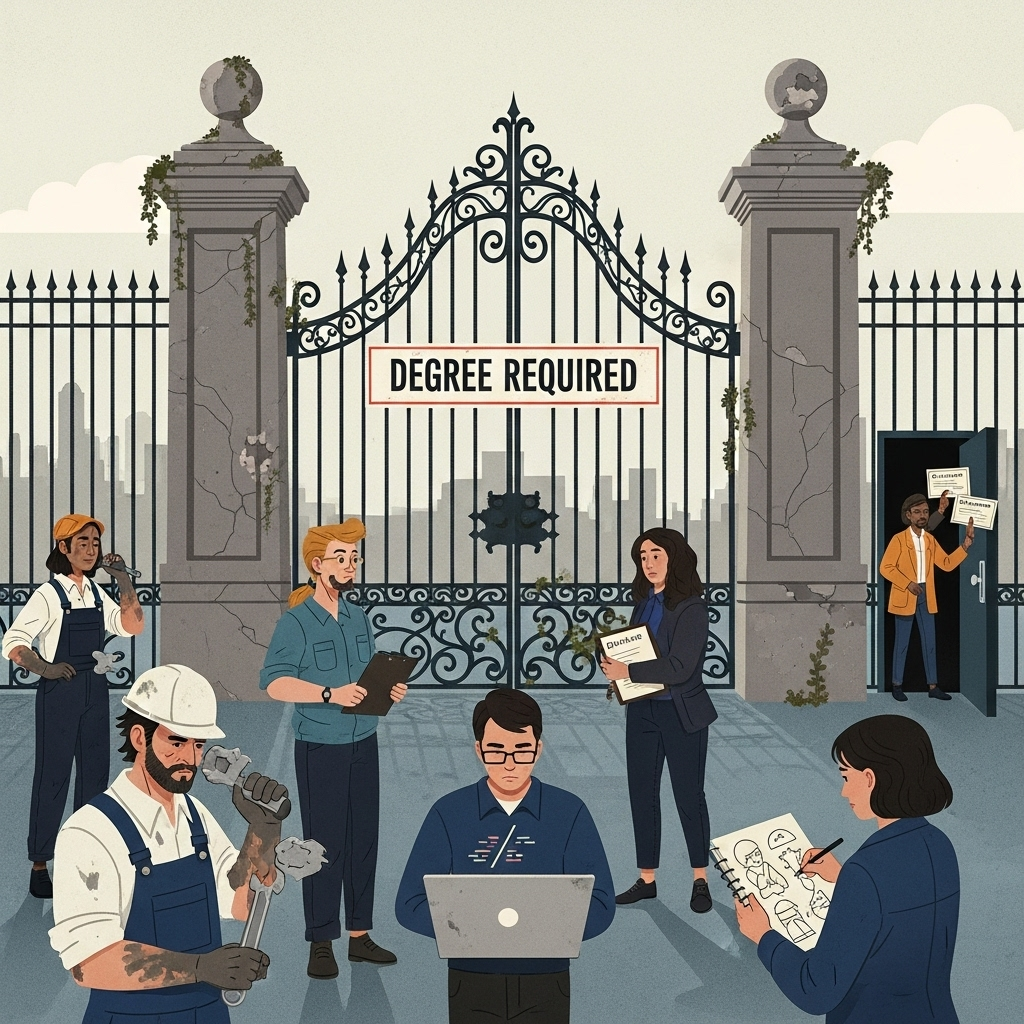
Imagine this: a 2014 study in the United States found that **65%** of job postings for executive secretaries and executive assistants now call for a bachelor’s degree, yet only **19%** of those currently employed in these roles actually have one [1]. This isn’t about a sudden surge in the cognitive demands of scheduling meetings; it’s about a **systemic exclusion**.
This degree inflation disproportionately affects the **62 percent of Americans without four-year degrees** [10]. These are often highly skilled, experienced individuals who, despite their capabilities, are “dismissed by degrees.” The societal consequences are profound, exacerbating economic inequality and creating significant barriers to upward mobility. While a bachelor’s degree holder might earn $1.2 million more over their lifetime and be half as likely to be unemployed than a high school graduate, this data often overlooks the **skilled non-degreed workforce** who are **locked out of opportunities** they could excel in [13, 15].
We’ve seen **entry-level office administration positions**, once requiring only a high school diploma, now demanding a Bachelor’s. **Research assistant roles**, traditionally Bachelor’s-level, now often mandate at least a Master’s [17]. This isn’t just an inconvenience; it’s a silent barrier to opportunity.
Implication: Credential Inflation Narrows Talent Pools and Increases Costs.
The pervasive nature of credential inflation means employers are missing out on a vast pool of skilled talent, while job seekers face unnecessary barriers, driving up costs and inefficiency for all.
The Hidden Costs and Systemic Barriers of Traditional Hiring
If credential inflation is the disease, then traditional, credential-centric hiring practices are the vectors spreading it. This approach, often rooted in convenience and outdated assumptions, creates significant **hiring barriers** and fuels the **overqualification problem**, leading to inefficiencies and a less diverse workforce.
Identifying and Analyzing Unnecessary Job Requirements
The first step in dismantling this problem is to identify the **unnecessary job requirements** lurking in your job descriptions. These are the “must-haves” that aren’t truly essential for job performance, often serving as arbitrary filters. How can you spot them?
Start by **auditing your existing job descriptions**. Ask yourself:
- Is this degree *truly* necessary for the core functions of this role, or is it a proxy for skills that could be gained through experience, certifications, or alternative education?
- Are we asking for five years of experience for an entry-level role?
- Are we demanding specific software proficiency when the underlying skill (e.g., data analysis, project management) is what matters?
A common flaw is to simply **copy-paste requirements** from old job descriptions or industry templates, perpetuating outdated norms. This contributes directly to **labor shortages** by artificially shrinking your talent pool. By **streamlining job requirements** and focusing on **demonstrable abilities**, you gain access to a wider, more diverse talent pool [10]. This isn’t just about being “nice”; it’s a **strategic business move**.
The Overqualification Trap: Missed Opportunities and Morale Impacts
Then there’s the **overqualification problem**. This is when a candidate possesses **more qualifications**—be it degrees, experience, or skills—than a job demands. While it might seem counterintuitive to reject someone “too good” for a role, employers often hesitate due to concerns about **high turnover, boredom, or a perceived threat** to existing team dynamics [19, 20].
However, this hesitation is a **missed opportunity**. Overqualified candidates often bring a **wealth of experience, problem-solving abilities, and a broader perspective** that can significantly benefit an organization. The **psychological effects** of being overqualified for a job can be profound for job seekers, leading to **frustration, decreased self-esteem, and a sense of being undervalued** despite their capabilities. It’s a demoralizing cycle.
Employers can **strategically utilize overqualified talent** by focusing on their **potential for growth, mentorship, and future leadership roles** [18]. Instead of seeing them as a flight risk, view them as an investment. Job seekers, on the other hand, must learn to **frame their “overqualification” as an asset**, highlighting how their **extensive skills directly translate to superior performance and commitment** to the specific role during interviews.
Systemic Hiring Barriers: From Bias to Inefficiency
Beyond specific job requirements, broader **hiring barriers** plague the recruitment landscape. **Inefficient hiring processes**, characterized by **lengthy application forms, slow response times, and opaque decision-making**, can **deter top talent** and **increase time-to-hire** [11]. It’s like trying to run a marathon with lead weights on your ankles.
**Unconscious bias** is another pervasive barrier. Whether it’s bias against **non-traditional educational paths, older workers, or certain demographic groups**, these biases can unconsciously creep into **resume screening and interview processes**, limiting diversity and perpetuating **homogeneous workforces** [23]. A Fed Communities survey revealed that **workers often face multiple barriers to employment**, highlighting the complex web of obstacles individuals navigate [21].
While **remote work** has opened doors to global talent pools, it also introduces **new barriers** related to time zones, cultural nuances, and the need for robust remote onboarding processes. The good news is that **technology, particularly AI**, can be a **powerful ally** in dismantling these barriers. **AI-powered tools** can help **identify bias in job descriptions, anonymize resumes, and conduct skills-based assessments**, leading to **fairer and more efficient hiring**.
Implication: Traditional Hiring Perpetuates Inefficiency and Limits Diversity.
Outdated, credential-focused hiring practices lead to significant inefficiencies, perpetuate biases, and actively exclude capable talent, hindering organizational growth and diversity.
Rethinking Job Qualifications: A Strategic Imperative
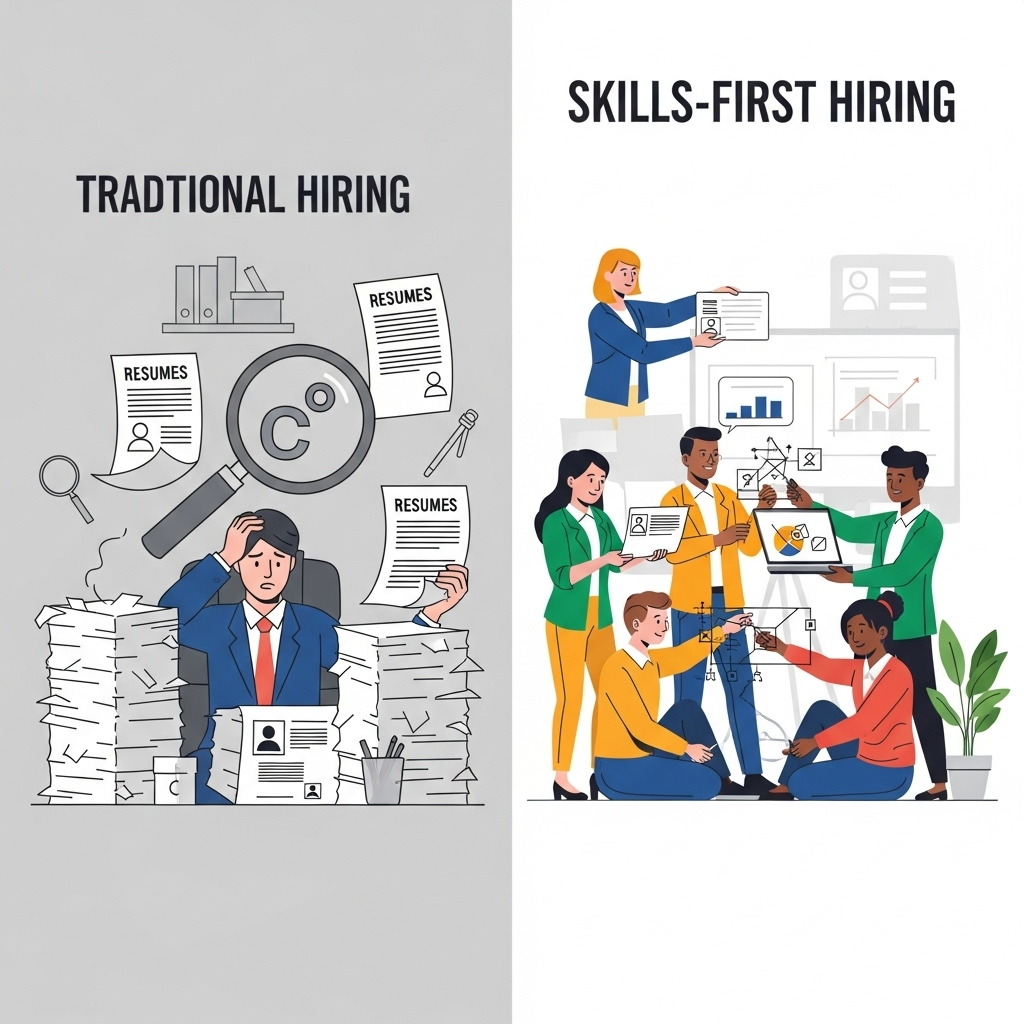
The time for incremental tweaks is over. If you want to unlock true talent, you must **fundamentally rethink** your approach to **job qualifications**. This isn’t just about removing a degree requirement here or there; it’s about a **strategic imperative** to move beyond static, degree-centric requirements to more **dynamic, skill- and competency-based models**. This is how you **future-proof your workforce**.
Crafting Effective Job Requirements for the Modern Workforce
So, what do **effective job requirements** look like in 2025 and beyond? They’re clear, concise, and focused on what a person *does* and *achieves*, not just what they *have*. The Harvard Business Review emphasizes this shift, advocating for a “new approach to writing job descriptions” that prioritizes outcomes and responsibilities [29].
Here’s the breakdown:
- Differentiate “Must-Have” from “Nice-to-Have”: Be brutally honest. What skills are absolutely non-negotiable for success in this role from day one? What can be learned on the job?
- Focus on Skills, Not Credentials: Instead of “Bachelor’s degree required,” consider “Demonstrated proficiency in statistical analysis” or “Proven ability to manage complex projects.”
- Emphasize Outcomes: What will this person achieve in their first 30, 60, 90 days? What problems will they solve?
- Use Action-Oriented Language: Describe responsibilities with strong verbs.
- Provide Examples: Instead of just listing “communication skills,” describe *how* those skills will be used (e.g., “Ability to present complex data to non-technical stakeholders”).
Toggl offers excellent templates for well-structured job requirement sections, guiding you to attract the right talent by focusing on what truly matters [4]. Remember, the role of job requirements is not just to screen out; it’s to attract. By clearly articulating the **actual skills and responsibilities**, you draw in candidates who are genuinely a **good fit**, **regardless of their credentialing pathway** [28].
Beyond Degrees: Prioritizing Skills and Competencies
This is where the rubber meets the road. Moving beyond traditional degrees and experience in your qualification criteria means a **fundamental shift in mindset**. It’s about recognizing that **competence can be acquired through diverse pathways**: bootcamps, apprenticeships, self-study, military service, and on-the-job experience.
The World Economic Forum highlights this shift, emphasizing that prioritizing skills over credentials is a direct response to mitigating credential inflation [7]. This **flexible approach** to job qualifications isn’t just progressive; it’s pragmatic. It **increases diversity** by opening doors to a **broader talent pool**, and it ensures you’re hiring for **actual capability**, not just a piece of paper. ResearchGate, for instance, showcases innovative recruitment strategies that prioritize demonstrable abilities, moving away from rigid credentialism [30].
**HR tech innovators and organizational development specialists** are at the forefront of this movement, advocating for systems that assess **what candidates *can do* rather than what they *have done*** in a formal academic setting. This isn’t about devaluing education; it’s about **valuing *all* forms of relevant learning and experience**.
Implication: Strategic Qualification Redesign is Key to Future-Proof Talent Acquisition.
By strategically rethinking job qualifications, organizations can unlock broader talent pools, enhance efficiency, and build a workforce truly aligned with future needs, moving beyond outdated credentialism.
Embracing Skills-First and Competency-Based Hiring Methodologies
This is the core of the solution. If you’re serious about dismantling credential inflation and building a truly high-performing workforce, you must embrace **skills-first hiring** and **competency-based hiring**. These aren’t just buzzwords; they are methodologies that drive **real, measurable value**.
The Harvard Business School and The Burning Glass Institute’s joint report, “Skills-Based Hiring: The Long Road from Pronouncements to Practice,” provides compelling evidence. While acknowledging the slow adoption rate, their analysis shows that for firms that *do* embrace it, skills-based hiring yields tangible benefits: non-degreed workers hired into roles that formerly asked for degrees have a **10 percentage points higher retention rate** than their degree-holder colleagues, and they experience a **25 percent salary increase on average** [1, 34, 35, 36]. This isn’t virtue signaling; it’s a strategic advantage.
The U.S. Department of Labor and Commerce are actively promoting this shift, releasing a skills-first hiring guide to help employers. As Acting Secretary of Labor Julie Su stated,
“Skills-first hiring practices can be a way of helping workers get ahead through good jobs… Our Starter Kit provides the blueprint for employers to take concrete steps to begin skills-first hiring and provide economic opportunity for workers who face barriers – not because they are not highly skilled – but because of where they attained those skills” [3, 26].
This is a clear directive from the top. US Department of Labor: Skills-First Hiring Guide

The Principles and Benefits of Skills-Based Hiring
**Skills-based hiring** is precisely what it sounds like: prioritizing a candidate’s **demonstrable abilities and knowledge** over their formal educational credentials or previous job titles. It’s about asking, “**Can they *do* the job?**” rather than “Do they *have* the degree?”
Its core principles include:
- Focus on Job Tasks: Deconstruct roles into the specific tasks and skills required.
- Objective Assessment: Utilize assessments that directly measure skills, not proxies.
- Broader Sourcing: Look beyond traditional talent pipelines to discover hidden gems.
The benefits are manifold for both employers and job seekers. For employers, it means:
- Wider Talent Pool: Access to the **62% of the workforce without a four-year degree** [10].
- Reduced Bias: Objective skill assessments help mitigate unconscious biases inherent in resume screening.
- Improved Efficiency: Faster time-to-hire by focusing on direct relevance.
- Better Retention & Performance: As the HBS study shows, non-degreed hires often stay longer and perform exceptionally [1].
For job seekers, it offers fairer access to opportunities, recognition of diverse learning pathways, and a chance to compete based on their **actual capabilities**. This approach directly addresses the issues of credential inflation and the overqualification problem by valuing what a person *can do* [27]. The SHRM Foundation’s research consistently highlights the growing value and recognition of skilled credentials in the modern workforce [33].
Implementing Competency-Based Recruitment: A Practical Blueprint
**Competency-based hiring** is a structured, systematic approach that builds upon skills-first principles. It involves defining the **specific competencies** (a combination of skills, knowledge, and behaviors) required for success in a role and then designing the recruitment process to assess those competencies directly.
Here’s a practical blueprint for implementation:
- Define Core Competencies: Work with hiring managers to identify the critical skills, knowledge, and behavioral traits (e.g., problem-solving, adaptability, collaboration) essential for success in each role. Don’t just list generic soft skills; define what they look like in action for *this* specific job. HeadStart.gov provides excellent guidance on defining competencies for various roles [32].
- Develop Competency-Based Assessments: Move beyond traditional interviews. Implement:
- Skills Tests: Coding challenges, writing samples, design tasks, data analysis exercises.
- Work Sample Tests: Ask candidates to perform a task similar to what they’d do on the job.
- Behavioral Interviews: Use the STAR method (Situation, Task, Action, Result) to ask candidates how they’ve demonstrated specific competencies in past experiences.
- Simulations/Role-Playing: For roles requiring specific interactions (e.g., sales, customer service).
- Integrate with Talent Management: Competencies defined during hiring should flow into performance reviews, training, and career development, creating a holistic talent strategy.
- Leverage Technology: AI and recruitment software can significantly facilitate competency-based hiring. Tools like Colleva report that companies adopting competency-based hiring interview **3x more candidates while spending less time on screening**, reduce bias, and find “hidden gem” candidates they would have previously overlooked [31]. Recruiterflow also highlights the role of AI in streamlining this process [8].
Mass.gov: Introduction to Skills-Based Hiring
Navigating the Skills-First Landscape: Advice for Job Seekers
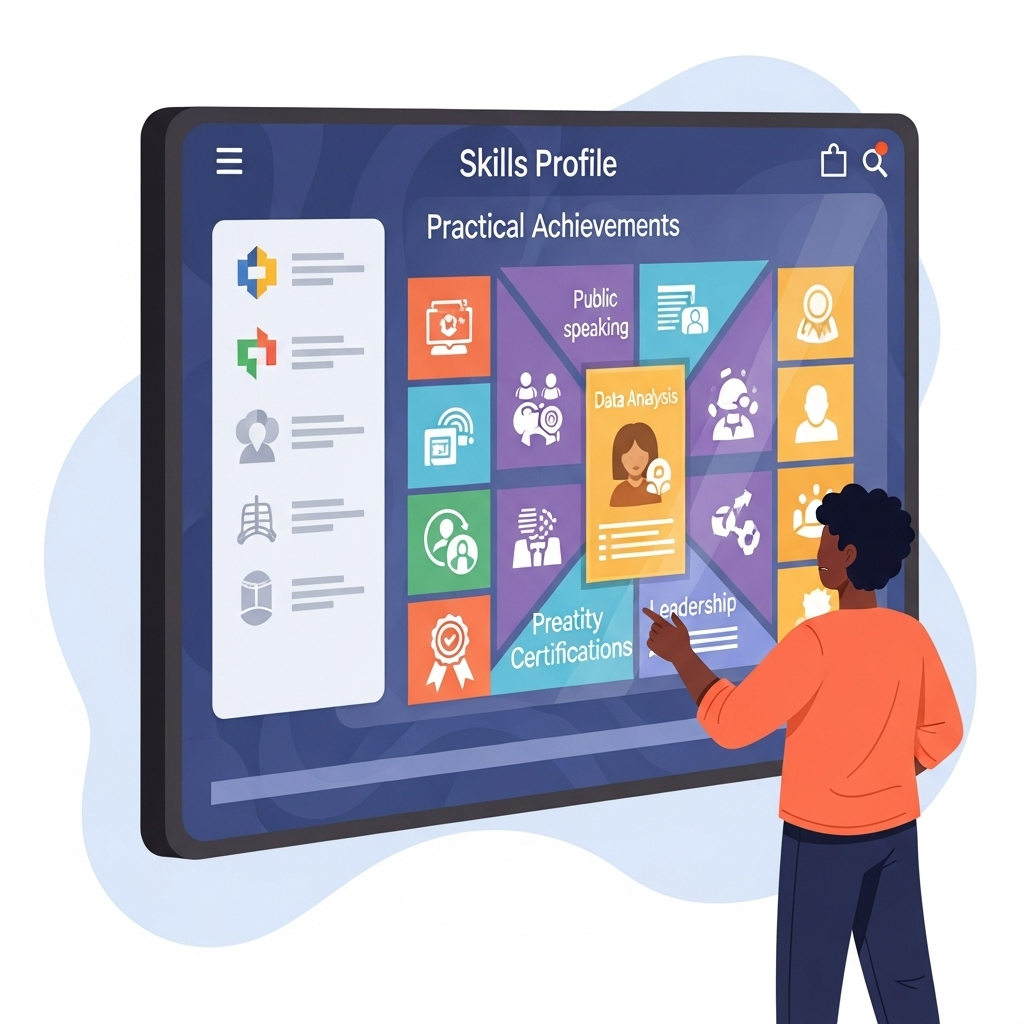
This isn’t just for employers. If you’re a job seeker, particularly one without a traditional degree or facing the overqualification trap, you need a **new playbook**. The skills-first landscape is your **opportunity to shine**.
- Translate Experience into Skills: Don’t just list job duties on your resume. For every role, identify the core skills you used and the quantifiable results you achieved. Instead of “Managed social media,” say “**Developed and executed social media strategy, increasing engagement by 25% (Marketing, Content Creation, Data Analysis).**”
- Build a Skills-Based Portfolio: For many roles, a portfolio of your work (e.g., writing samples, design projects, code repositories, case studies) is far more powerful than a degree. This is your **tangible proof of capability**.
- Embrace Certifications and Micro-credentials: Online courses, industry certifications (e.g., Google Analytics, Salesforce, project management certifications), and bootcamps are excellent ways to **validate specific skills** and demonstrate a **commitment to continuous learning**.
- Prepare for Behavioral Interviews: Anticipate questions that ask for specific examples of when you demonstrated problem-solving, teamwork, adaptability, or leadership. Use the **STAR method** to structure your answers.
- Address Overqualification Proactively: If you’re “overqualified,” **frame your extensive experience as an asset**. Emphasize your **desire for the specific role**, your **commitment to the company’s mission**, and how your **broad skill set will allow you to hit the ground running** and contribute immediately. Focus on **what you *can do* for *this* company**, not just what you’ve done elsewhere.
Implication: Skills-First Hiring is the Future of Equitable and Efficient Talent Acquisition.
Adopting skills-first and competency-based approaches is not just a trend but a fundamental shift towards building more diverse, high-performing, and resilient workforces, benefiting both employers and job seekers.
Key Takeaways
- Credential inflation and degree creep are systemic issues creating unnecessary barriers for job seekers and limiting talent pools for employers.
- Traditional, credential-centric hiring leads to hidden costs, inefficiencies, and contributes to the ‘overqualification problem’ and hiring biases.
- Rethinking job qualifications to prioritize demonstrable skills and competencies over arbitrary degrees is a strategic imperative for modern organizations.
- Skills-based and competency-based hiring methodologies offer a blueprint for building more equitable, efficient, and future-ready workforces.
- Both employers and job seekers must adapt: employers by implementing skills-first strategies, and job seekers by effectively showcasing their capabilities.
The “Data-Driven Coach” in me knows that change is hard. You will have **Effort Shock**. But the **data is clear**: the **old ways are stifling talent and limiting potential**. By embracing skills-first and competency-based hiring, you’re not just optimizing a process; you’re **unlocking true talent**, creating a **more equitable, efficient, and future-ready workforce** for all. This isn’t just about finding the right person for the job; it’s about finding the **right job for the right person, regardless of their academic journey**.
Ready to transform your hiring strategy or navigate the skills-first job market? Explore our resources for actionable frameworks and expert guidance to embrace the future of talent.
Frequently Asked Questions
- What is ‘credential inflation’ and how does it differ from ‘degree creep’?
- Credential inflation refers to the overall rising educational requirements for jobs, often beyond what’s functionally necessary. Degree creep is a specific form of this, describing the gradual increase in degree requirements for roles that previously did not require them, or for which a lower degree sufficed. While related, degree creep is a symptom of the broader credential inflation phenomenon.
- How does credential inflation impact job seekers without a college degree?
- Credential inflation significantly limits job opportunities for skilled individuals without traditional degrees, even if they possess the necessary experience and abilities. This can lead to increased unemployment, underemployment, and a sense of being ‘dismissed by degrees,’ despite their competence. Joseph Fuller’s research indicates millions of workers are affected.
- What are the main benefits of adopting skills-based hiring for employers?
- Skills-based hiring offers numerous benefits for employers, including access to a wider and more diverse talent pool, reduced time-to-hire, increased employee retention (especially for non-degreed workers in roles that previously required degrees), and the ability to focus on actual job performance rather than arbitrary credentials. It also helps mitigate bias and improve overall workforce efficiency.
- How can job seekers effectively showcase their skills if they don’t have a traditional degree?
- Job seekers can showcase their skills by creating **skills-based resumes and portfolios** that highlight demonstrable abilities, projects, and achievements. Focus on quantifiable results and use action verbs. Prepare for behavioral interviews by using the **STAR method** (Situation, Task, Action, Result) to illustrate how you’ve applied your skills. Consider **certifications, online courses, and apprenticeships** to validate your expertise.
This article provides general information and recommendations regarding hiring practices. It is not legal advice. Employers should consult with legal counsel regarding specific employment laws and regulations. Job seekers should verify information with potential employers.
References
- Sigelman, M., Fuller, J., & Martin, A. (n.d.). Skills-Based Hiring: The Long Road from Pronouncements to Practice. The Burning Glass Institute & Harvard Business School.
- James G. Martin Center for Academic Renewal. (2020, August 12). Credential Inflation: What’s Causing It and What Can We Do About It?
- U.S. Department of Labor. (2024, November 13). US Departments of Labor, Commerce release skills-first hiring guide to help employers hire, promote workers based on skill, knowledge.
- Toggl. (n.d.). Job Requirements: What They Are & How to Write Them.
- TalentLyft. (n.d.). HR Glossary: Job Requirements.
- Recruitee. (n.d.). Job Requirements.
- World Economic Forum. (n.d.). The Future of Jobs Report 2025.
- Recruiterflow. (n.d.). Recruitment Trends.
- U.S. Bureau of Labor Statistics (BLS). (n.d.). Employment Projections program.
- FreeOpp (Foundation for Research on Equal Opportunity). (n.d.). How Unnecessary College Degree Requirements Hurt the Working Class.
- Cypress HCM. (n.d.). Inefficient Hiring Processes: The Silent Killer of Business Growth.
- American Enterprise Institute (AEI). (n.d.). College credentialing and degree inflation tend to serve the needs of employers.
- University of Texas at San Antonio (UTSA Online). (n.d.). Started Your Career? How a College Degree Can Still Benefit You.
- PMC (PubMed Central, NIH National Library of Medicine). (n.d.). Labor Market Effects of Education.
- APLU (Association of Public and Land-grant Universities). (n.d.). Employment & Earnings.
- Forbes. (2023, November 28). College Degree Requirements Creep Into Lower Income Brackets.
- Personality-Psychology.com. (n.d.). Dilution of Academic Degree: Credential Inflation.
- The HR Digest. (n.d.). Smart Strategies for Hiring When It Comes to Overqualified Candidates.
- ScienceDirect. (n.d.). Perceived Overqualification.
- Oxford Research Encyclopedias. (n.d.). Overqualification in the Workplace.
- Federal Reserve Communities (Fed Communities). (2023). Worker Voices: 2023 Barriers to Employment Special Brief.
- Workable. (n.d.). Common Recruiting Challenges.
- RecruitCRM. (n.d.). Diversity Hiring Challenges.
- Stand Together. (n.d.). Skills-Based Hiring Works, But This Works Better.
- Workday. (n.d.). What’s Needed: Skills-Based Hiring to Hold and Transform Organization.
- U.S. Department of Labor. (n.d.). Skills-First Hiring.
- Jobs for the Future. (n.d.). Workforce Development and Education.
- Indeed. (n.d.). Modern Recruitment Techniques.
- Harvard Business Review (HBR). (2023, October). A New Approach to Writing Job Descriptions.
- ResearchGate. (n.d.). Innovative Recruitment Strategies: Beyond Traditional Methods in Talent Acquisition.
- Colleva. (n.d.). The Future of Hiring: Why Competency-Based Recruitment Is Essential in 2025.
- HeadStart.gov. (n.d.). Introduction to Competency-Based Hiring.
- SHRM Foundation. (n.d.). Skills-First Research.
- The Burning Glass Institute. (n.d.). About Us.
- Sigelman, M. (n.d.). Matt Sigelman’s Credentials.
- Martin, A. (n.d.). Alex Martin’s Credentials.


