
Key Takeaways
- The financial impact of ransomware is projected to cost victims approximately $265 billion annually by 2031, with a new attack occurring every 2 seconds.
- The average cost of a data breach reached a new high of $4.88 million in 2024, according to IBM, setting a grim baseline for 2025’s ransomware incidents.
- The threat landscape is dominated by sophisticated groups like Qilin, which executed 81 attacks in a single month, and RansomHub, a top group by leak site posts.
- Paying the ransom is a failed strategy; a Semperis study found that while 78% of victims pay, full data recovery is not guaranteed and often requires multiple payments.
- The true cost of an attack far exceeds the ransom, with an average downtime of 22 days, plus massive expenses for recovery, legal fees, and reputational damage.
- Proactive defense is critical. Strategic frameworks from CISA and a disciplined approach to risk mitigation are proven to reduce both the likelihood and cost of an attack.
By 2031, ransomware will cost its victims an estimated $265 billion annually. Let that sink in. It’s a number so large it feels abstract, a rounding error in a global economy. But behind that figure is a brutal reality: a new attack will strike a business, a hospital, or a school every two seconds.
For any business leader, the core problem isn’t a lack of information; it’s a deluge of it. You’re drowning in fragmented statistics, overly technical threat reports, and conflicting advice that fails to paint a clear picture of the actual business risk. You have the data points, but you don’t have the briefing.
This is that briefing.
Welcome to the 2025 Ransomware Boardroom Briefing. This is not another list of scary numbers. It is a single, synthesized source of truth designed for decision-makers. We will connect the dots—linking the threat actors, their evolving tactics, and the true, multi-faceted financial impact—to provide an actionable framework for building enterprise-wide resilience.
We will move from the high-level landscape to the granular costs, profile the adversaries you’re actually facing, and conclude with a strategic playbook for defense.

The 2025 Ransomware Landscape: Key Statistics and Emerging Trends
To build a sound defense, you first need an accurate map of the battlefield. The 2025 ransomware landscape is not a simple story of rising attack numbers. It’s a nuanced environment defined by a “boom and bust” cycle, the mainstreaming of cybercrime as a critical business risk, and the weaponization of artificial intelligence.
Overall Attack Volume: The ‘Boom and Bust’ Cycle Explained
Are ransomware attacks increasing or decreasing? The answer, frustratingly, is yes.
While some reports noted a 23% drop in overall attack volume in 2022, this is a dangerously misleading metric. This “bust” was largely the result of law enforcement takedowns and the implosion of major groups. The subsequent “boom” has been characterized by fewer, but far more sophisticated and higher-impact, attacks.
The threat has not diminished; it has concentrated. As analysis from Akamai’s 2025 ransomware report highlights, threat actors have used these periods to retool, form new alliances, and refine their tactics. Focusing on raw volume is like measuring the strength of a military by the number of bullets it fires, rather than by its strategic capability. The capability of ransomware operators is only increasing.
The Escalating Global Threat: A Top-Tier Business Risk
Ransomware has officially graduated from the server room to the boardroom. It is no longer just an IT problem; it is a critical enterprise risk on par with supply chain disruption and geopolitical instability.
The World Economic Forum’s Global Cybersecurity Outlook 2025 provides stark context, finding that a staggering 71% of chief risk officers anticipate severe organizational disruptions due to cyber risks. The potential for damage is immense, underscored by the largest IT outage in history in 2024, which caused an estimated $5 billion in losses. Cyber insecurity is a direct threat to operational continuity and financial stability.
The Rise of AI in Ransomware Attacks
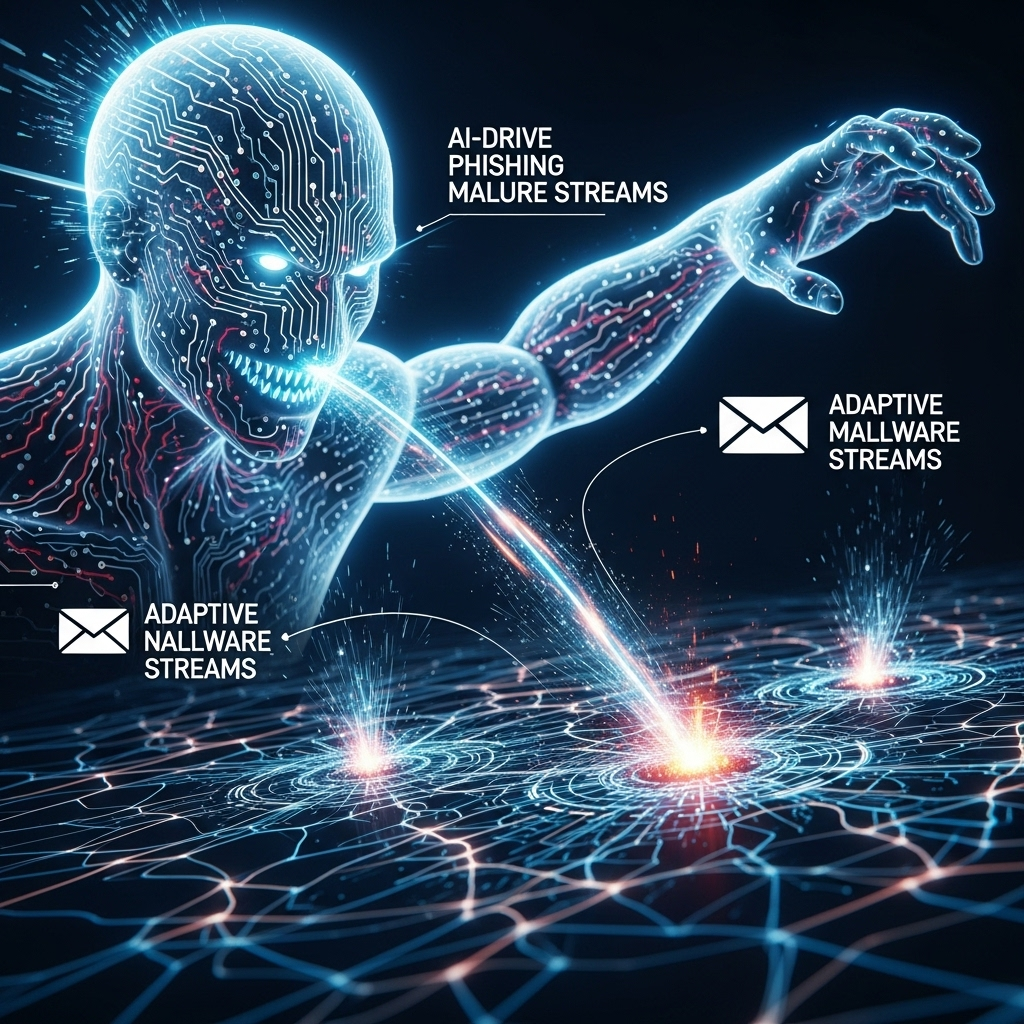
The conversation around Artificial Intelligence has been dominated by its potential for productivity. Its potential for destruction is just as profound. Threat actors are now early adopters, leveraging AI to industrialize and scale their attacks.
Ransomware-as-a-Service (RaaS) groups like Black Basta are using AI to craft hyper-realistic phishing emails that bypass traditional training, automate the discovery of network vulnerabilities, and develop adaptive malware that can change its behavior to evade detection. This isn’t a future threat; it’s a present reality. The adoption of AI by these groups means that defenses built for yesterday’s attacks are already becoming obsolete.
For any executive, understanding this landscape is paramount; a drop in attack volume doesn’t signal safety, but rather a shift to more targeted and devastating strikes that demand a more intelligent, risk-based defense strategy.
Quantifying the Full Financial Impact: The True Cost of an Attack in 2025
Threats become priorities when they are attached to a price tag. The financial impact of a successful ransomware attack is a multi-layered catastrophe that extends far beyond the initial ransom demand. Understanding this true, all-in cost is the first step toward building a legitimate business case for security investment. You can find additional context from the official cybercrime loss data from the FBI’s IC3.
The Headline Number: Average Cost of a Data Breach Surpasses $4.8 Million
The single most reliable benchmark for the financial fallout of a cyber incident comes from IBM. For 19 consecutive years, their research has quantified the cost of a breach, providing the hard data leaders need.
The latest findings are grim. According to the 2024 IBM Cost of a Data Breach Report, the global average cost has reached a new all-time high of $4.88 million. This isn’t just the ransom. This comprehensive figure accounts for the four key stages of a breach: detection and escalation, notification, post-breach response, and lost business. It is the most realistic P&L estimate for a worst-case scenario.
Beyond the Ransom: A Breakdown of Hidden Costs
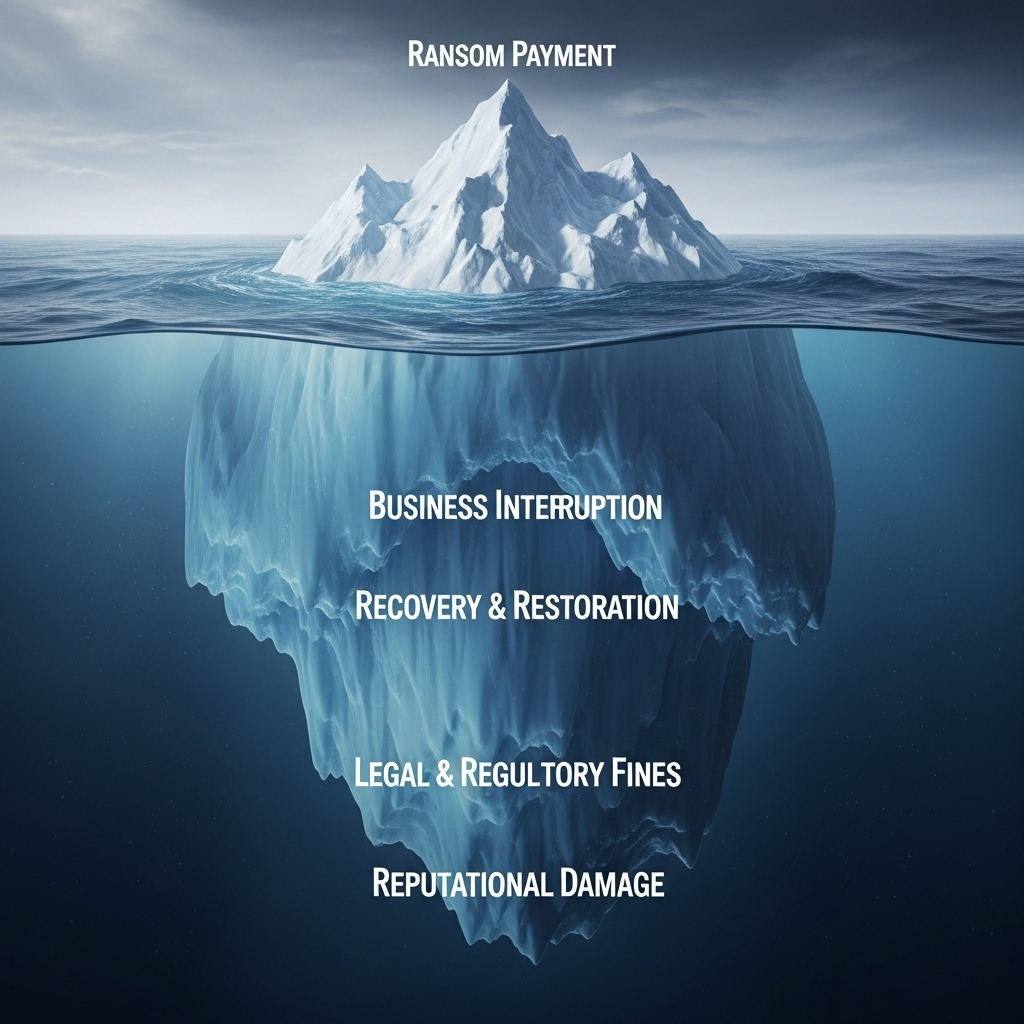
The ransom demand is the most visible cost. It is rarely the largest. The true financial pain comes from the cascading operational and reputational consequences that follow.
Think of the ransom as the tip of the iceberg. As analysis from cybersecurity firm Halcyon.ai points out, the payment itself often accounts for less than 15% of the total cost. The bulk of the damage is hidden below the surface:
- Business Interruption: With an average downtime of 22 days, this is often the single greatest expense. Every hour systems are offline translates to lost revenue, missed deadlines, and contractual penalties.
- Recovery and Restoration: The cost to rebuild systems, restore data from backups (if they work), and conduct a full forensic investigation is massive. The average recovery cost alone can reach $1.82 million, excluding any ransom paid.
- Legal and Regulatory Fines: Depending on the data stolen, organizations can face significant fines from regulatory bodies for compliance failures.
- Reputational Damage: This is the long-tail cost that can cripple a business. As experts at Thomson Reuters note, the loss of customer trust can lead to churn and brand devaluation that takes years to rebuild.
Ransomware Attack Statistics by Industry: A Sector-Specific Risk Profile
While no industry is immune, threat actors are strategic, focusing their efforts where they can inflict maximum pain for maximum profit.
- Healthcare: This sector is a perennial target. Ransomware now accounts for 8% of all healthcare cyber claims. The combination of life-or-death urgency, valuable patient data, and often-outdated IT infrastructure makes hospitals a prime target.
- Government: Public sector entities are highly vulnerable due to their critical role in civil society. The 2022 attack on the government of Costa Rica by the Conti group, which involved a $20 million ransom demand and crippled public services, serves as a stark case study of the potential for national disruption.
- Manufacturing: The rise of smart factories and connected OT/ICS systems has created a massive new attack surface. For manufacturers, downtime isn’t just an inconvenience; it halts production lines and can have catastrophic supply chain impacts.
The Ransom Payment Dilemma: Does It Pay to Pay?
In the heat of a crisis, the temptation to pay the ransom and “make it go away” is immense. The data proves this is a deeply flawed strategy.
A groundbreaking 2024 study from Semperis revealed that a shocking 78% of targeted organizations paid the ransom. Even more telling, 72% paid multiple times. Yet, paying is no guarantee of a clean recovery. Organizations often receive faulty decryption keys, find their data has been corrupted, or discover the attackers have left backdoors in their network for a future attack.
Paying the ransom doesn’t solve your problem. It funds the criminals’ R&D and marks you as a willing target for the next extortion attempt.
The numbers tell a stark story: a ransomware attack is not an IT expense, it’s a catastrophic business event that must be modeled and mitigated with the same rigor as any other major financial risk.
Threat Actor Spotlight: Profiling the Adversaries Behind the Attacks
To win a fight, you have to know your opponent. The perpetrators of modern ransomware attacks are not lone hackers in hoodies. They are sophisticated, professional, and highly organized criminal enterprises. Understanding their business models and tactics is fundamental to building an effective defense.
The Ransomware-as-a-Service (RaaS) Model: The Business of Extortion
The explosion of ransomware can be largely attributed to the rise of the Ransomware-as-a-Service (RaaS) model. Think of it as a dark-web franchise. A core group of developers creates and maintains the ransomware malware and infrastructure, then licenses it out to “affiliates” in exchange for a percentage of the profits.
This model dramatically lowers the barrier to entry, allowing less-skilled criminals to launch sophisticated attacks. It has created a hyper-competitive criminal marketplace where RaaS operators offer 24/7 support, dashboards, and even negotiation services. According to threat intelligence from Rapid7, there were 75 active ransomware groups in 2024, demonstrating the scale of this underground economy.
2025’s Most Active Groups: A Profile on Qilin and RansomHub
While dozens of groups operate at any given time, a few elite players are responsible for the majority of the damage.
- Qilin: This group had a meteoric rise in 2025. Data from Fortinet and Cyfirma shows Qilin became the most active group by mid-year, executing a stunning 81 attacks in a single month. Their rapid ascent highlights the dynamic and volatile nature of the threat landscape.
- RansomHub & LockBit: These are the established behemoths. Rapid7’s analysis of data leak sites—where gangs post stolen data to pressure victims—identifies RansomHub and the notorious LockBit gang as two of the most prolific groups. Their consistent, high-volume activity makes them a persistent and dangerous threat to organizations globally.
| Threat Actor | Primary Tactics | Preferred Targets |
|---|---|---|
| Qilin | Double Extortion, Phishing | Critical Infrastructure, Manufacturing |
| RansomHub | Data Leak Site Extortion, RaaS | Varies by Affiliate (Opportunistic) |
| LockBit | RaaS, Exploiting Vulnerabilities | Government, Healthcare, Education |
Evolving Extortion Tactics: Beyond Simple Encryption
The earliest ransomware attacks were simple: encrypt files and demand a key. Today’s tactics are far more sadistic and designed to maximize psychological pressure on the victim’s leadership.
The modern standard is double extortion. First, attackers exfiltrate large volumes of sensitive data. Then, they encrypt the network. Now they have two levers of extortion: they can sell you the decryption key, and they can threaten to leak your sensitive corporate files, customer data, or intellectual property on their public leak site.
Some groups are now pioneering triple extortion, adding a third layer of pressure. This can involve launching DDoS attacks to cripple the victim’s public-facing websites or even directly contacting customers, shareholders, and journalists to inform them of the breach, creating a PR nightmare that forces the leadership’s hand.
Recognizing that you’re facing a professional, organized adversary—not a lone hacker—is a critical mindset shift; it forces your defense to move from a simple technical checklist to a comprehensive strategic counter-intelligence operation.
A Strategic Framework for Ransomware Resilience and Cost Mitigation
Knowledge of the threat is necessary, but insufficient. Action is required. Building true resilience against a sophisticated adversary is not about finding a single silver-bullet technology. It’s about implementing a strategic, multi-layered framework grounded in authoritative best practices. This is the playbook for moving from a reactive to a proactive defense posture. For a complete set of resources, visit the CISA’s StopRansomware.gov Hub.
Foundational Prevention: Aligning with CISA’s Authoritative Guidance
You don’t need to reinvent the wheel. The U.S. government’s Cybersecurity and Infrastructure Security Agency (CISA) provides the definitive, consensus-driven guidance for ransomware prevention. Aligning your strategy with these recommendations is the single most effective first step.
Key pillars of CISA’s guidance include:
- Timely Patching: The vast majority of ransomware attacks exploit known, unpatched vulnerabilities. A rigorous patch management program is your first line of defense.
- Identity and Access Management: Implement multi-factor authentication (MFA) everywhere possible. Enforce principles of least privilege to ensure users only have access to the data they absolutely need.
- User Education: A well-trained workforce is a human firewall. Continuous training on identifying and reporting phishing attempts is critical.
- Network Segmentation: Divide your network into smaller, isolated zones. This contains the blast radius of an attack, preventing an intruder from moving laterally from a compromised workstation to your critical data servers.
CISA’s proactive efforts have shown tangible results. Their Pre-Ransomware Notification Initiative (PRNI), which warns organizations of early-stage intrusions, conducted 2,131 notifications in FY24 alone, giving businesses a chance to evict attackers before encryption occurs.
Implementing the Cybersecurity Risk Mitigation Lifecycle
Effective risk management isn’t a one-time project; it’s a continuous, cyclical process. Adopting a structured lifecycle, based on the principles of frameworks like the NIST Cybersecurity Framework (CSF), ensures your defenses evolve with the threat.
The five stages are:
- Identify: You cannot protect what you do not know you have. Maintain a comprehensive inventory of all hardware, software, and data assets.
- Assess: Conduct regular vulnerability assessments and penetration tests to understand your weaknesses from an attacker’s perspective.
- Prioritize: Not all risks are created equal. Focus your resources on mitigating the vulnerabilities that pose the greatest threat to your most critical business functions.
- Mitigate: Apply the appropriate security controls to address prioritized risks. This includes the CISA best practices outlined above.
- Monitor: Continuously monitor your network for anomalous activity and regularly re-evaluate your risk posture.
Proven Cost Reduction Strategies: AI, Encryption, and Incident Response
While prevention is the goal, you must also plan for failure. Specific investments have been proven to dramatically reduce the financial damage of a breach when it does occur.
The IBM data breach report consistently finds that organizations with mature security programs fare far better. Technologies like AI-powered security tools significantly shorten the time to detect and contain a breach, which is the single biggest factor in reducing cost. Likewise, robust end-to-end encryption can render stolen data useless to attackers.
However, the most effective tool for cost containment isn’t a technology, but a plan. A well-documented and, most importantly, well-tested incident response plan allows your organization to act decisively in a crisis, minimizing chaos and controlling recovery costs.
The 3-2-1-1-0 Backup Rule: Your Last Line of Defense
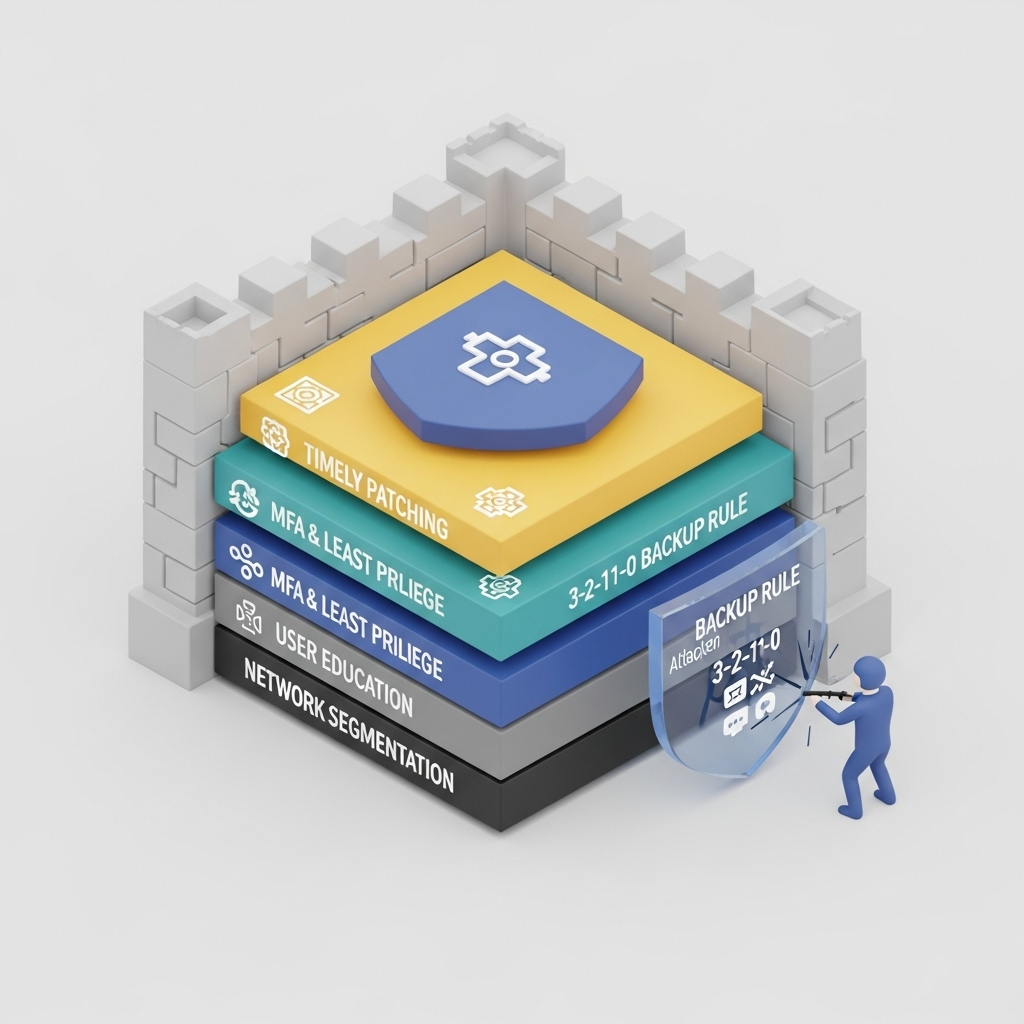
When all other defenses fail, your ability to recover depends entirely on your backups. The 3-2-1 rule has long been a best practice, but the modern threat requires an update. Implement the 3-2-1-1-0 Backup Rule.
- 3 copies of your data.
- On 2 different types of media.
- With 1 copy stored off-site.
- And 1 copy that is air-gapped (physically disconnected) or immutable (cannot be altered or deleted).
- With 0 errors after performing regular, full-scale recovery tests.
This last step is the one most organizations miss. A backup you haven’t tested is not a backup; it’s a prayer.
Resilience isn’t a product you can purchase off a shelf; it’s a strategic process that must be woven into the fabric of the organization, continuously managed and refined just like any other critical business function.
Conclusion
The 2025 ransomware threat is professional, strategic, and more financially devastating than ever before. The statistics paint a clear picture: the cost of a successful attack, benchmarked by IBM’s $4.88 million average, is a catastrophic business event. Threat actors like Qilin are operating with brutal efficiency, and the old strategy of paying the ransom has been proven a failure.
But data without a plan leads to paralysis. The purpose of this briefing was to move beyond fear and toward action.
Armed with this synthesized intelligence, you are now equipped to have the right conversations in your organization. You understand the true financial risks, you can profile the adversaries you face, and you have a strategic, process-driven playbook for building a defense. The work is hard, but the path is clear. The time to build your resilience is now, before you become the next statistic.
The statistics are clear, but your path to resilience is unique. Contact us to discuss your specific cybersecurity requirements and how we can help you build a robust defense against the threats of 2025 and beyond.
Frequently Asked Questions
What is the average cost of a ransomware attack in 2025?
While projections vary, the most reliable benchmark is IBM’s 2024 ‘Cost of a Data Breach Report,’ which found the average cost to be $4.88 million. This figure includes expenses like detection, response, downtime, and lost business, providing a comprehensive view of the potential financial impact.
Which industry is most targeted by ransomware?
The healthcare industry consistently ranks as one of the most targeted sectors. This is due to a combination of factors, including their reliance on legacy IT systems, the critical nature of their operations (which increases pressure to pay), and the high value of their sensitive patient data on the dark web.
What is the most active ransomware group right now?
Based on recent 2025 data, the Qilin ransomware group has shown a dramatic increase in activity, becoming one of the most prolific threats. Other highly active and dangerous groups include RansomHub and LockBit, who are responsible for a significant percentage of publicly disclosed attacks via data leak sites.
Should my organization pay the ransom if we are attacked?
The overwhelming consensus from cybersecurity experts and government agencies like the FBI and CISA is no. Data shows that paying the ransom does not guarantee the return of your data (a 2024 Semperis study found recovery is often incomplete), it marks you as a willing payer for future attacks, and it directly funds criminal organizations.
References
- Akamai. (2025). Ransomware Trends Report 2025. Akamai Technologies. Retrieved from https://www.akamai.com/lp/soti/ransomware-trends-2025
- AAG IT Services. (n.d.). The Latest Ransomware Statistics For Business. Retrieved from https://aag-it.com/the-latest-ransomware-statistics/
- Boyd, C. (2025, January 27). The 2024 Ransomware Landscape: Looking back on another painful year. Rapid7 Blog. Retrieved from https://www.rapid7.com/blog/post/2025/01/27/the-2024-ransomware-landscape-looking-back-on-another-painful-year/
- Cybersecurity and Infrastructure Security Agency. (2024). 2024 Year in Review. CISA. Retrieved from https://www.cisa.gov/about/2024YIR
- Cybersecurity Ventures. (2023). Global Ransomware Damage Costs Predicted To Exceed $265 Billion By 2031. Retrieved from https://cybersecurityventures.com/ransomware-report-2023/
- Fortinet. (n.d.). Ransomware Statistics: What You Need To Know For 2025. Fortinet. Retrieved from https://www.fortinet.com/resources/cyberglossary/ransomware-statistics
- GetAstra. (n.d.). Ransomware Attack Statistics You Should Be Aware of in 2025. Astra Security. Retrieved from https://www.getastra.com/blog/security-audit/ransomware-attack-statistics/
- Halcyon.ai. (n.d.). Beyond Ransoms: The Financial Impact of Ransomware Attacks. Halcyon.ai Blog. Retrieved from https://www.halcyon.ai/blog/beyond-ransoms-the-financial-impact-of-ransomware-attacks
- IBM. (2024, July 30). IBM Report: Escalating Data Breach Disruption Pushes Costs to New Highs [Press Release]. IBM Newsroom. Retrieved from https://newsroom.ibm.com/2024-07-30-ibm-report-escalating-data-breach-disruption-pushes-costs-to-new-highs
- PurpleSec. (2025). The Average Cost Of Ransomware Attacks (Updated 2025). PurpleSec. Retrieved from https://purplesec.us/learn/average-cost-of-ransomware-attacks/
- Semperis. (2024). Semperis 2024 Ransomware Study Reveals 78% of Targeted Organizations Paid the Ransom [Press Release]. Semperis. Retrieved from https://www.semperis.com/press-release/semperis-2024-ransomware-study/
- Thomson Reuters Legal Solutions. (n.d.). The cost of data breaches: financial, operational, and reputational. Thomson Reuters. Retrieved from https://legal.thomsonreuters.com/blog/the-cost-of-data-breaches/
- World Economic Forum. (2025). Global Cybersecurity Outlook 2025. World Economic Forum. Retrieved from https://reports.weforum.org/docs/WEF_Global_Cybersecurity_Outlook_2025.pdf


