
Key Takeaways
- Journalists respond to only 3% of pitches, highlighting the urgent need for highly targeted and relevant outreach. (Forbes Communications Council)
- 86% of journalists reject PR outreach due to a lack of relevance to their audience or beat, emphasizing the importance of deep research. (Cision’s 2025 State of the Media Report)
- Digital devices are the preferred platform for news consumption for 58% of Americans, far surpassing TV (32%). (Pew Research Center 2024)
- Twitter remains the go-to social media site for 69% of U.S. journalists for work-related tasks, regardless of age. (Pew Research Center)
- Mass, generic pitching is considered a ‘scourge on the industry’ by 21% of study participants, underscoring the demand for personalization. (Prezly Academy)
- Effective modern media relations demand a data-driven approach, leveraging insights from journalist preferences and platform usage to move beyond guesswork and achieve measurable impact.

In the cutthroat arena of public relations, where every pitch counts and attention is the ultimate currency, the traditional “spray and pray” approach to media outreach is not just outdated—it’s actively detrimental. Are you frustrated by abysmal journalist response rates, seeing your carefully crafted stories vanish into the digital void? Do you struggle to find the right journalist contacts, or feel lost navigating the ever-shifting sands of the media landscape? You’re not alone.
The truth is, the gap between conventional PR tactics and the evolving needs of modern journalists has become a chasm. Generic pitches are rejected at an alarming rate, and valuable resources are wasted on ineffective strategies. But what if there was a definitive playbook, a data-driven guide that could transform your PR outreach data into a precision instrument?
This article is your tactical brief. We’re going to equip you with the insights, tools, and strategies to decode journalist preferences, leverage cutting-edge media pitching tools, and craft irresistible pitches that not only command attention but also build lasting connections. Get ready to move beyond guesswork and unlock high-impact media coverage.
The Evolving Media Landscape: Decoding Journalist Needs & Platform Preferences
The media landscape isn’t just changing; it’s undergoing a seismic shift. If you’re still operating with a pre-2020 mindset, you’re already behind. To master modern media relations, you must first understand the fundamental transformation in how journalists operate, consume information, and distribute their work. This is where your journey to optimize PR outreach truly begins.
Journalists are no longer confined to traditional newsrooms or limited by print deadlines. They are digital natives, leveraging a diverse array of platforms for research, reporting, and audience engagement. Ignoring this evolution is a recipe for ineffective media outreach.
Where Journalists Engage: Key Platforms & Their Purpose
To effectively engage with journalists, you must first know where they live online. It’s no longer just about email; it’s about understanding their digital habitats and how they use each one.
Consider the audience: a staggering 58% of Americans prefer to get their news on a digital device, significantly more than the 32% who still opt for TV. This fundamental shift dictates where journalists focus their efforts and, consequently, where your outreach should land.
When it comes to social media, Twitter (now X) remains the undisputed champion, with 69% of U.S. journalists using it for work-related tasks. This isn’t just for the younger crowd; 83% of journalists aged 18-29 use Twitter, but a substantial 45% of those 65 and older also rely on it as one of their top two social media sites for work. It’s the digital water cooler for breaking news, networking, and source finding.
Facebook is still relevant for 52% of journalists, particularly those focusing on community, city, or county news. Instagram (19%), LinkedIn (17%), and YouTube (14%) are used less frequently for work tasks, but still hold niche utility. For instance, LinkedIn can be invaluable for professional networking and understanding a journalist’s career trajectory and interests, while Instagram might be relevant for visually driven stories.
Beyond social media, the rise of independent journalism platforms is a game-changer. Journalists are increasingly leveraging platforms like beehiiv, Substack, Ghost, and Medium to publish and monetize their content directly. These platforms offer autonomy, direct audience connection, and often, a more specialized focus. Understanding a journalist’s presence on these platforms can reveal their true beat and interests, providing a direct avenue for highly relevant pitches.
What Journalists Really Want: Avoiding Common Pitching Pitfalls

If you’ve experienced low response rates, it’s not always about what you’re pitching, but how you’re pitching it. Journalists are inundated. They receive hundreds of pitches every week, and their inboxes are a battlefield.
The data doesn’t lie: 86% of journalists reject PR outreach because it lacks relevance to their audience or beat, according to Cision’s 2025 State of the Media Report. This isn’t a minor issue; it’s the number one reason for journalist pitch rejection. It means your research into their past work, their publication’s focus, and their specific interests is either insufficient or non-existent.
Furthermore, 78% of surveyed journalists would block a PR professional for spamming them with irrelevant pitches. This is the equivalent of being blacklisted. It’s a critical error that can permanently damage your ability to connect.
Other common PR pitching challenges include pitches that sound like marketing brochures (a challenge for 58% of journalists), inaccurate or unsourced information (56%), and repeated, irrelevant follow-ups (52%). As Prezly Academy highlights, 21% of study participants consider mass, generic pitching a “scourge on the industry.” This isn’t about being polite; it’s about respecting their time and their craft.
To avoid these journalist frustrations, your focus must shift from “what can I get?” to “what can I give?” Provide genuine value. Be concise. Be relevant. And for the love of earned media, do your homework.
Understanding the evolving digital habits and core frustrations of journalists is no longer optional; it’s the bedrock of modern PR success. Without this foundational knowledge, even the most well-intentioned outreach efforts will continue to fall flat, lost in a sea of irrelevant noise.
Data-Driven PR: Leveraging Insights & Tools for Targeted Outreach
You’ve heard it before: “Data is the new oil.” In PR, it’s not just oil; it’s the GPS, the fuel, and the engine all rolled into one. Relying solely on intuition in PR is like navigating a dense fog without a compass. The stakes are too high. Remember, journalists respond to only 3% of pitches. That’s a brutal reality, but it’s also a clear signal: you need to optimize PR outreach with surgical precision.
As Michael Brito, a digital marketing and communications expert, aptly puts it, the shift from guesswork to data-driven PR isn’t just a trend; it’s a necessity. It’s about moving from a numbers game to a strategy game. This requires a commitment to data collection and analysis, a practice that Forbes Communications Council emphasizes for maximizing impact.
To truly elevate your PR strategy, you need to understand how to apply research methods for data-driven PR and leverage the right tools. This isn’t just about vanity metrics; it’s about understanding the entire ecosystem, from journalist preferences to campaign ROI. Insights from sources like PR Newswire, Driveresearch, Adobe, Sprout Social, and Spiralytics provide a broad understanding of the industry, but your specific PR outreach data is where the magic happens. This is how you transform your efforts from a shot in the dark to a strategic bullseye, mirroring the success seen in broader data-driven marketing strategies and benefits.
Top Journalist Request Platforms: A Comparative Analysis
When journalists are actively seeking sources, they often turn to journalist request platforms. These are your golden tickets, but knowing which one to use and how to use it effectively is paramount. This is where data on journalist request platforms becomes invaluable.
The most prominent player has long been HARO (Help A Reporter Out). It’s a daily deluge of queries, offering a wide range of opportunities. However, its popularity means fierce competition. This has led to the rise of robust HARO alternatives like Qwoted, which often provides more curated, higher-quality requests and a more streamlined interface.
Other notable platforms include:
- Response Source: Popular in the UK, offering a similar service to HARO.
- Featured: A newer entrant focusing on connecting experts with journalists.
- Source of Sources: Another platform designed to streamline expert sourcing.
- ProfNet: A long-standing service, often used by larger media organizations.
- Press Hunt: Claims an impressive 80% valid email rate and a database of 580,000 journalists, making it a powerful tool for finding journalist contacts.
- JournoLink, Gorkana/Cision, PressQuest, PressPlugs, SourceBottle: Each offers unique strengths and target audiences.
The key is not to sign up for all of them. Instead, use a data-driven approach. Analyze which platforms consistently deliver relevant queries for your expertise. BuzzStream Blog and JustReachOut Blog offer valuable insights into platform usage and tips for standing out. Consider creating a comparative table for features, pricing (if applicable), and journalist types (e.g., local vs. national) to guide your strategy. For example, if your target is local news, Response Source or specific regional platforms might be more effective than a global behemoth like HARO.
Essential Media Pitching Tools for Streamlined Success
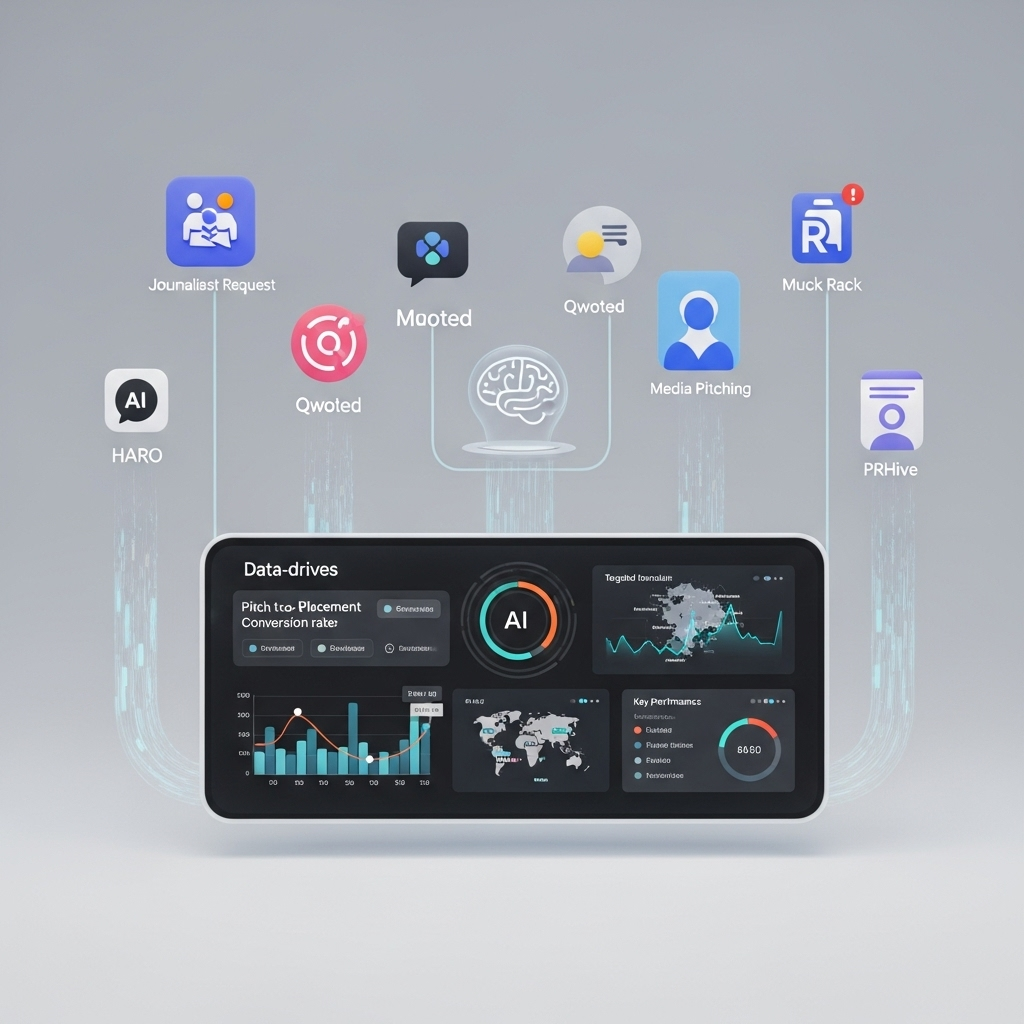
Beyond journalist request platforms, a suite of media pitching tools can revolutionize your outreach. These aren’t just glorified email clients; they are sophisticated platforms designed to streamline your workflow, enable deep personalization, and track performance, addressing the core problem of ineffective media outreach.
Leading the charge are tools like:
- Muck Rack: A comprehensive platform offering media databases, monitoring, and relationship management. Its strength lies in its extensive, up-to-date journalist database and robust analytics.
- NinjaOutreach: Known for its influencer and blogger outreach capabilities, it also serves as a powerful tool for traditional media.
- PRHive: Focuses on simplifying the PR workflow, from contact management to press release distribution.
- Norbert: Primarily an email verification tool, essential for maintaining clean media lists and reducing bounce rates.
- JustReachOut: Combines journalist search with pitch templates and follow-up reminders.
- Journorequest: A platform specifically for journalists to submit requests and for PRs to respond.
- PressPal.ai: An emerging player leveraging AI-powered pitch generation to assist with drafting compelling outreach.
When evaluating these PR software for outreach, look for key features:
- Media Databases: Up-to-date, searchable databases of journalists, their beats, and contact information.
- PR CRM features: Tools to manage your relationships, track interactions, and segment contacts.
- Analytics & Reporting: Capabilities to track open rates, response rates, placements, and ultimately, the ROI of your efforts.
- Personalization Features: Tools that help you tailor pitches at scale, beyond just mail merge.
- Integration Capabilities: How well do they integrate with your existing marketing and communication stack?
ContentGrip and PRLab both offer valuable recommendations and guides on selecting the best tools. Remember, the right tool isn’t just about features; it’s about how it empowers you to be more efficient, more precise, and ultimately, more successful in your PR outreach.
In a landscape where only 3% of pitches land, relying on intuition is a recipe for irrelevance; embracing data and the right tools transforms PR from a numbers game into a strategic, targeted operation. This shift empowers professionals to not only find the right contacts but also to understand and engage them with unparalleled precision, driving measurable impact.
Crafting High-Impact Pitches & Building Enduring Media Relationships
You’ve decoded the media landscape. You’re armed with data and cutting-edge tools. Now, it’s time for the true artistry: crafting pitches that resonate and building relationships that last. This is where you move beyond the transactional and into the transformational, directly addressing the pain points of low response rates and the desire to improve media relations.
The numbers are stark, but they serve as your North Star: 86% of journalists reject pitches due to irrelevance, and only 3% of pitches receive a response. This isn’t a call for more pitches; it’s a demand for better ones. It’s about precision, not volume.
As Kristin Marquet Chester, owner of Marquet Media, LLC, advises, patience is a virtue in media outreach. Building genuine connections takes time, but it’s an investment that pays dividends far beyond a single placement. It’s about earning trust, which is the bedrock of all effective PR relationship building. This also means understanding ethical data use in PR strategies and leveraging marketing industry data resources to inform your approach without compromising integrity.
The Science of the Irresistible Pitch: Data-Informed Strategies
An irresistible pitch isn’t a magic formula; it’s a data-informed strategy built on understanding, relevance, and respect for a journalist’s time. This is how you move past ineffective media outreach.
First, personalization is non-negotiable. As Cision’s 2025 State of the Media Report highlights, journalists are challenged by pitches that sound like marketing brochures (58%) and inaccurate or unsourced information (56%). Your pitch must demonstrate you’ve done your homework. Research their recent articles, their beat, and their publication’s audience. Prezly Academy emphasizes avoiding mass pitching precisely because it signals a lack of research and personalization.
Here’s a “do’s and don’ts” checklist for crafting PR pitches:
DO:
- Be Concise: Get to the point immediately. Journalists are busy.
- Be Relevant: Tailor your pitch to their beat and recent work. Show, don’t just tell, that you understand their audience.
- Highlight Newsworthiness: Why is this story important now? What’s the unique angle?
- Provide Value: Offer exclusive data, expert insights, or a compelling human story.
- Include Key Information: Who, what, when, where, why, and how.
- Suggest a Clear Call to Action: “Would you be interested in an interview with X?” or “Can I send you a press kit?”
DON’T:
- Send Generic Pitches: No “Dear Journalist” or “To Whom It May Concern.”
- Be Overly Promotional: Avoid marketing jargon or sales-speak.
- Bury the Lede: Don’t make them dig for the core story.
- Attach Large Files: Unless requested, link to an online press kit.
- Send Inaccurate Information: Fact-check everything.
- Over-Follow Up: As Cision notes, 52% of journalists are challenged by repeated follow-ups.
For effective media pitches, think like a journalist. What would you want to receive? What would make your job easier? This empathetic approach, backed by data, is the true science of the irresistible pitch.
Cultivating Trust: Nurturing Long-Term Journalist Connections

A single placement is good. A lasting relationship is gold. The most successful PR professionals understand that building media relationships is an ongoing process of trust and mutual respect.
Agility PR stresses the importance of responsiveness and reliability. If a journalist reaches out, respond promptly. If you promise information, deliver it. Be a reliable source they can count on, not just for your own news, but for general industry insights or connections.
Journalist relationship management extends beyond the pitch.
- Provide Value Proactively: Share relevant news or insights even when you don’t have a story to pitch.
- Respect Deadlines: Always ask about their deadlines and adhere to them.
- Offer Exclusives (When Appropriate): This builds loyalty and trust.
- Be Transparent: If there’s a conflict of interest or a specific angle you’re pushing, be upfront.
- Thank Them: A simple thank you goes a long way.
Regarding follow-ups, remember that 52% of journalists find repeated follow-ups challenging. One polite follow-up is usually sufficient. If they don’t respond, it’s likely a “no” or “not now.” Move on. Your time is valuable, and so is theirs.
This long-term approach to PR best practices ensures that when you do have a truly newsworthy story, you’re not just another unknown sender in their inbox. You’re a trusted contact, a valuable resource, and a partner in their pursuit of compelling stories.
In an era of overwhelming inboxes, a well-crafted pitch is merely the opening act; true PR mastery lies in cultivating genuine, trust-based relationships that transform one-off placements into a continuous stream of high-impact coverage and lasting media partnerships.
Conclusion
The landscape of media relations has irrevocably changed. The days of generic, mass PR outreach are long gone, replaced by a demand for precision, relevance, and genuine connection. As we’ve seen, journalists are bombarded with pitches, and their primary criteria for engagement are relevance and value. With only 3% of pitches receiving a response and 86% rejected for irrelevance, the message is clear: data-driven PR isn’t an option; it’s the only path to high-impact media coverage.
By embracing the insights from this guide—understanding journalist platform preferences, leveraging cutting-edge journalist request platforms and media pitching tools, and mastering the art of the irresistible, personalized pitch—you can transform your PR strategy. Move beyond guesswork and into a realm of strategic, measurable, and impactful media relations. This is your definitive playbook for decoding journalist needs, commanding attention, and building the lasting connections that will elevate your brand’s story.
Ready to transform your PR strategy with data-driven insights and achieve unparalleled media coverage? Contact us today for a personalized consultation and discover how our expertise can elevate your brand’s story.
***
This article provides general information and insights into public relations and media outreach strategies. While based on research and expert opinion, individual results may vary. Always consult with a qualified PR professional for specific campaign advice.
Frequently Asked Questions
What are the most effective journalist request platforms?
Platforms like HARO (Help A Reporter Out), Qwoted, and Response Source are highly effective for connecting with journalists actively seeking sources. Effectiveness varies by industry and query type, so a data-driven approach to platform selection is key.
How can I get featured on journalist request platforms?
To get featured, provide highly relevant, concise, and unique responses. Focus on offering expert insights, proprietary data, or compelling case studies. Avoid generic, marketing-heavy language and ensure your profile is complete and professional.
What are the key metrics for PR outreach success?
Beyond traditional metrics like media mentions, focus on data-driven KPIs such as pitch-to-placement conversion rates, website traffic from earned media, backlink acquisition, brand sentiment shifts, and ultimately, business impact (e.g., leads, sales). Measuring journalist response rates (which average 3%) is also crucial for optimizing your approach.
Why do journalists reject most PR pitches?
Journalists primarily reject pitches due to a lack of relevance (86% rejection rate), pitches sounding like marketing brochures (58%), inaccurate or unsourced information (56%), and excessive, irrelevant follow-ups (52%). Personalization and understanding a journalist’s beat are critical.
Which social media platforms do journalists use most for work?
Twitter (X) is the go-to social media site for 69% of U.S. journalists for work-related tasks. Facebook is also widely used by 52% of journalists, especially those focused on community news. LinkedIn, Instagram, and YouTube are used less frequently for work-related tasks.
How important is personalization in modern PR outreach?
Personalization is paramount. With journalists receiving hundreds of pitches weekly and rejecting 86% due to irrelevance, a tailored approach that demonstrates an understanding of their beat and audience is essential. Generic, mass pitching is widely considered ineffective and can lead to being blocked.
References
- Agility PR. (n.d.). Media Relationship Management Strategies for Building and Maintaining Strong Connections. Retrieved from https://www.agilitypr.com/pr-news/content-media-relations/media-relationship-management-strategies-for-building-and-maintaining-strong-connections/
- beehiiv Blog. (n.d.). Best Platforms for Journalists. Retrieved from https://blog.beehiiv.com/p/best-platforms-for-journalists
- BuzzStream Blog. (n.d.). Journalist Requests. Retrieved from https://www.buzzstream.com/blog/journalist-requests/
- Cision. (n.d.). 7 Journalist-Approved Tips to Improve PR and Media Relations. Retrieved from https://www.cision.com/resources/articles/tips-improve-pr-media-relations/
- Cision. (n.d.). PR Lessons: State of the Media. Retrieved from https://www.cision.com/resources/articles/pr-lessons-state-of-the-media/
- ContentGrip. (n.d.). Best Tools for Media Relations. Retrieved from https://www.contentgrip.com/best-tools-for-media-relations/
- Forbes Communications Council. (2024, November 12). Maximizing Impact: Data-Driven Approaches in Public Relations. Retrieved from https://councils.forbes.com/blog/data-driven-approaches-in-public-relations
- JustReachOut Blog. (n.d.). Journalist Requests. Retrieved from https://blog.justreachout.io/journalist-requests/
- Pew Research Center. (2022, June 27). Twitter is the go-to social media site for U.S. journalists, but not for the public. Retrieved from https://www.pewresearch.org/short-reads/2022/06/27/twitter-is-the-go-to-social-media-site-for-u-s-journalists-but-not-for-the-public/
- Pew Research Center. (2024). News Platform Fact Sheet, 2024. Retrieved from https://www.pewresearch.org/journalism/fact-sheet/news-platform-fact-sheet/
- PRLab. (n.d.). Media Pitching Guide with Examples. Retrieved from https://prlab.co/blog/media-pitching-guide-with-examples/
- Press Hunt. (n.d.). Homepage. Retrieved from https://presshunt.co/
- Prezly Academy. (n.d.). Media Outreach Strategy. Retrieved from https://www.prezly.com/academy/media-outreach-strategy
- Prowly Magazine. (n.d.). How to Build Media Relations. Retrieved from https://prowly.com/magazine/how-to-build-media-relations/


