
Welcome to the global packaging arena, where the rules of engagement are not just changing; they’re performing a relentless, multi-jurisdictional tango. For business leaders, supply chain managers, and compliance officers operating across borders, this isn’t merely a dance; it’s a labyrinth. The overwhelming complexity and rapid evolution of global packaging regulations, coupled with a frustrating lack of standardization and rampant fragmentation, present a significant compliance burden. Ignoring this intricate web is not an option; it’s a direct path to crippling fines and irreversible brand damage.
But what if you could not only navigate this labyrinth but master it? This article is your strategic guide. We’re here to show you how to transform these daunting compliance challenges into powerful drivers for sustainable business advantages, effectively future-proofing your operations. We’ll dissect the dynamic global landscape, expose the core challenges of regulatory complexity, and arm you with strategic solutions, including the indispensable role of international packaging regulation databases and innovative approaches. Prepare to turn regulatory headaches into competitive triumphs.

Table of Contents
Key Takeaways
- Global packaging regulations are rapidly evolving and highly fragmented, requiring constant vigilance from international businesses.
- The EU, with its ambitious PPWR targets, leads the charge in sustainability mandates, setting a benchmark for global compliance.
- Extended Producer Responsibility (EPR) schemes are a growing global trend, shifting the burden of packaging waste management to producers.
- Non-compliance carries significant risks, including substantial financial penalties and severe reputational damage.
- Specialized international packaging regulation databases and compliance software are crucial tools for effective, proactive management.
- Proactive engagement with compliance can transform regulatory challenges into opportunities for innovation, competitive advantage, and enhanced brand trust.
The Dynamic Global Landscape of Packaging Regulations
The world of packaging regulations is a living, breathing entity, constantly shifting and expanding. It’s not a static rulebook but a dynamic landscape driven by an undeniable global imperative: sustainability and circularity. This rapid evolution, however, comes with a significant caveat: fragmentation. What’s permissible, or even mandatory, in one market can be a non-starter in another. Understanding this inherent complexity is the first step in mastering global packaging regulations.
Regional Variations: EU, US, and Asia’s Distinct Approaches
When you look at the global map of packaging compliance, three major economic blocs stand out, each with its own distinct philosophy and regulatory framework. The lack of global standardization is stark, making a clear, comparative overview essential for any business engaged in international trade.
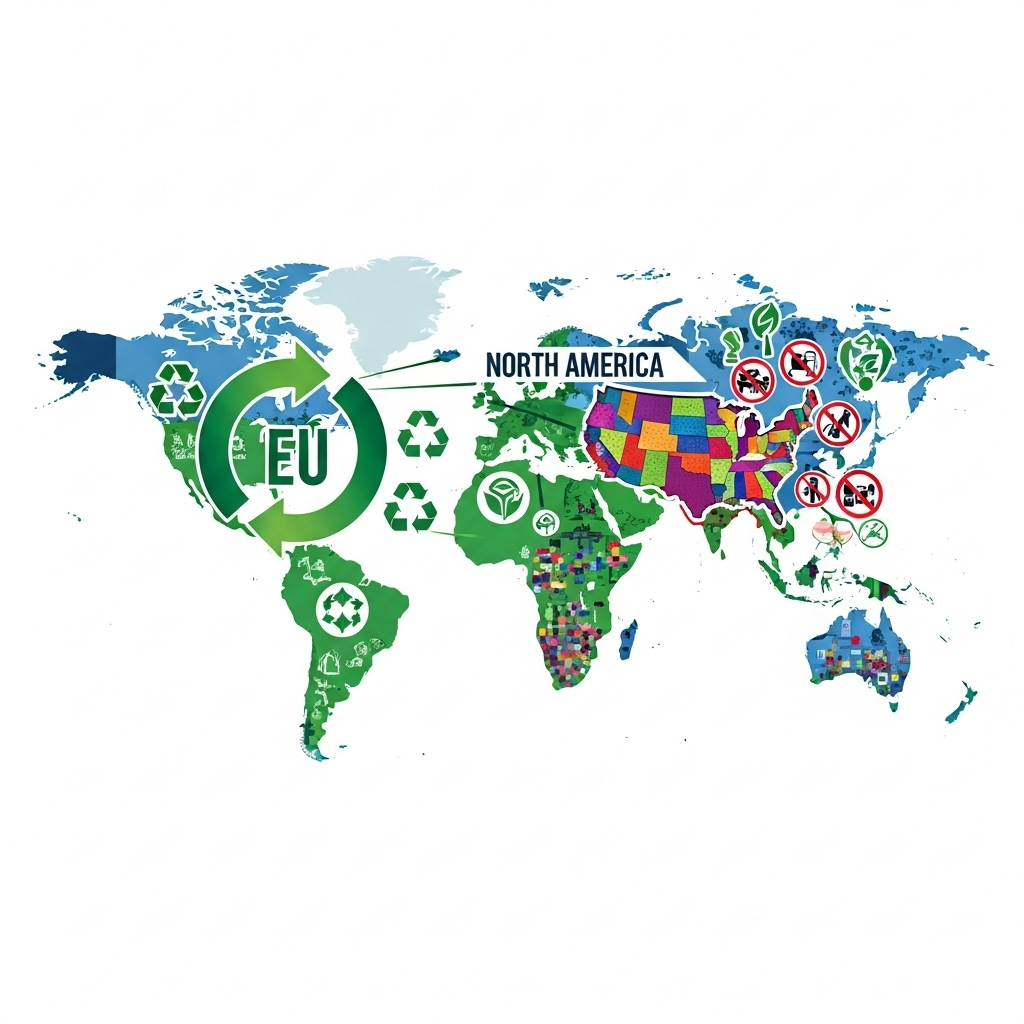
The European Union stands as a global frontrunner, setting ambitious benchmarks for sustainability and circularity. Its proactive stance is epitomized by the Packaging and Packaging Waste Regulation (PPWR), adopted in November 2023. This directive isn’t just about incremental change; it sets formidable reduction targets: 5% by 2030, 10% by 2035, and a staggering 15% by 2040 for all packaging. For plastic packaging specifically, the EU aims for a 20% reduction by 2040, alongside a mandate for all plastic packaging on the EU market to be recyclable by 2030. These are not suggestions; they are legally binding targets from the European Union Parliament and Commission.
Across the Atlantic, the United States presents a far more fragmented picture. While federal efforts are emerging, such as the US Environmental Protection Agency (EPA)’s National Recycling Strategy, the bulk of plastic recycling laws and packaging regulations remain at the state level. This patchwork approach means what’s compliant in California might not be in Texas, creating a significant challenge for national, let alone international, businesses.
Meanwhile, Asia offers a diverse and rapidly evolving landscape. Countries like Chile with its Law 21368 (August 6, 2021) and Peru with Law 30884 (December 2018) have implemented outright bans on single-use plastics, with Peru additionally requiring plastic bottles to contain 15% recycled materials. These examples highlight a growing trend towards stringent measures across the continent, often mirroring or even surpassing European ambitions in specific areas.
The Global Shift to Extended Producer Responsibility (EPR) Schemes
One of the most significant and rapidly expanding global packaging regulations is the adoption of Extended Producer Responsibility (EPR) schemes. This isn’t just a regulatory tweak; it’s a fundamental paradigm shift. As Mitch Webster, Marketing & Sustainability Lead at The Packaging School, succinctly puts it, “Extended Producer Responsibility (EPR) refers to a regulatory approach in which the producers of packaging (and other products) in a defined territory are made responsible for managing the waste and externalities associated with their products—shifting the burden of packaging waste management from consumers and municipalities to the producers themselves.”
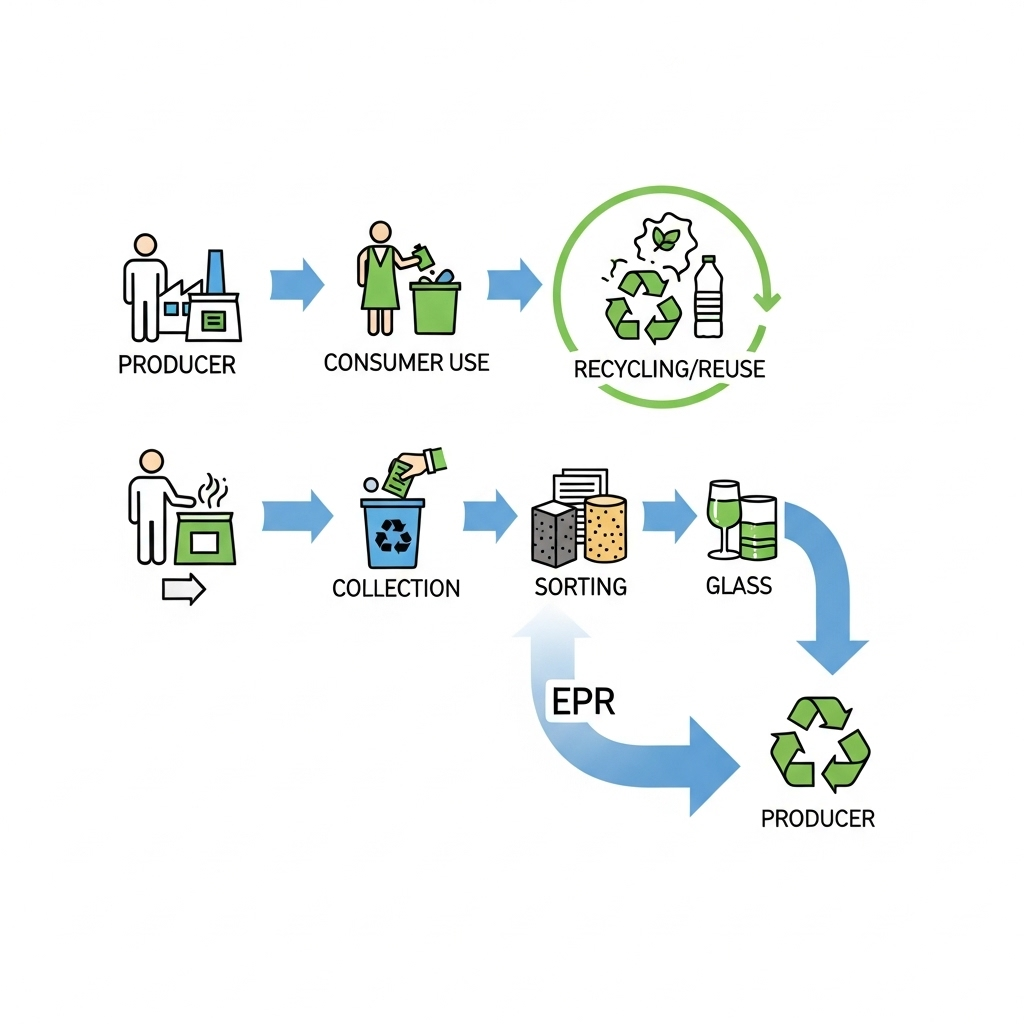
This means that the companies placing packaged goods on the market are increasingly accountable for the entire lifecycle of that packaging, from its design to its end-of-life management, including collection, sorting, and recycling costs. A large percentage of EPR legislation includes requirements for identified producers to join a Producer Responsibility Organization (PRO)—often an industry-led non-profit focused on working collectively to meet targets, collect and allocate fees, and more. This global trend, recognized by the OECD on Extended Producer Responsibility, aligns directly with circular economy goals, pushing businesses to design for recyclability and reusability from the outset.
Understanding these diverse and evolving regional regulations isn’t merely about ticking boxes; it’s about proactively shaping your supply chain and product design to thrive in a world where sustainability is non-negotiable, ensuring your business remains competitive and compliant across borders.
Decoding Regulatory Complexity: Challenges and Risks for Global Businesses
If the global regulatory landscape is a dynamic tango, then the complexity within it is the ever-tightening grip of a boa constrictor. For businesses with international operations, navigating these complex packaging regulations is not just an administrative task; it’s a strategic imperative fraught with significant challenges and substantial risks.
The primary drivers behind this increasing complexity are clear: climate change, the urgent need for a circular economy, and the sheer volume of plastic waste. These global crises necessitate stringent measures, but the lack of standardization across jurisdictions leads to regulatory fragmentation, turning compliance into a multi-dimensional puzzle.
The Burden of Varied Definitions and Standards
Perhaps one of the most insidious challenges in packaging compliance is the burden of varied definitions and standards. What constitutes “recyclable” in one country might not in another, creating a compliance nightmare. This isn’t just a semantic issue; it has direct operational and financial implications.
Consider the diverse technical standards and eco-design requirements. Europe’s EN 13427 is a European standard for essential packaging requirements aimed at promoting sustainability. The EU’s PPWR plans to impose even more stringent eco-design standards, mandating specific material compositions and reusability criteria. In the US, the complexity is compounded by a mosaic of federal and state-level requirements. The Fair Packaging and Labeling Act (FPLA) and the Uniform Packaging and Labeling Regulation (UPLR) dictate labeling specifics, while the Child Product Safety Improvement Act (CPSIA) imposes strict tracking label requirements for children’s products. Furthermore, California’s Proposition 65 mandates warnings for products containing certain chemicals.
These regulations are enforced by various bodies, including the Federal Trade Commission (FTC), the Food and Drug Administration (FDA), and the National Institute of Standards and Technology (NIST), all contributing to the intricate web. The result? A significant operational burden and increased compliance costs for businesses that must meticulously track and adapt to these local nuances for every product and every market. The sheer variety of requirements across different packaging materials—be it plastic, metal, wood, or glass—adds further layers of complexity, demanding a granular understanding of each material’s specific regulatory landscape.
The High Stakes: Penalties and Reputational Damage
The consequences of non-compliance with global packaging regulations are not to be underestimated. This isn’t merely about a slap on the wrist; it’s about significant financial penalties, legal actions, and, perhaps most damagingly, severe reputational harm.
Consider the scale of potential fines: for failing to comply with digital regulations, companies can be fined up to £18 million or 10% of worldwide revenue. While this specific example relates to digital compliance, it illustrates the magnitude of financial risk in the regulatory sphere. Packaging non-compliance can similarly lead to substantial financial penalties, product recalls, and even market access restrictions.
Beyond the monetary costs, the impact on brand reputation and consumer trust can be irreversible. In an era where consumers are increasingly conscious of environmental impact and ethical business practices, a lapse in packaging compliance can quickly erode public confidence. As Paramount Global and Compliance & Risks emphasize, proactive compliance is not just about avoiding penalties; it’s about safeguarding your brand’s integrity and fostering consumer loyalty. The global plastic crisis, highlighted by UNEP Plastic Pollution Initiatives, means consumers are more attuned than ever to how companies manage their packaging waste.
Ignoring the intricate web of global packaging regulations is not an option; it’s a direct path to crippling fines and irreversible brand damage, making robust compliance a non-negotiable pillar of international business longevity.
Strategic Compliance: Leveraging Databases and Innovation for Future-Proofing
The good news? The very complexity that creates challenges also presents unparalleled opportunities. Mastering global packaging regulations isn’t about merely reacting to mandates; it’s about adopting a strategic, proactive stance that leverages cutting-edge tools and fosters innovation. This approach transforms compliance from a burdensome cost center into a powerful driver for sustainable competitive advantage and long-term resilience.
The Power of International Packaging Regulation Databases
In this intricate regulatory environment, manual tracking is akin to navigating a global ocean with a paper map. It’s simply not feasible. This is where specialized international packaging regulation databases become indispensable. These powerful tools provide centralized, regularly updated information on global packaging laws, streamlining the complex task of managing diverse compliance requirements for businesses operating worldwide.

Leading providers like YNP Global offer databases backed by experienced teams, providing not just data but dedicated support. McKinsey’s Sustainable Packaging Hub, for instance, includes a regulatory database spanning 57 countries and over 20 packaging substrates. Similarly, Trayak’s EcoImpact-COMPASS LCA software features a comprehensive and regularly updated database.
These databases are far more than simple repositories. They offer critical features such as:
- Legislative Updates: Real-time alerts on new laws, amendments, and effective dates across Europe, Asia, Australia, New Zealand, and beyond.
- Compliance Schemes: Detailed information on Extended Producer Responsibility (EPR) schemes, including fees, reporting requirements, and Producer Responsibility Organizations (PROs).
- Specific Regulatory Measures: Guidance on single-use plastic bans, recycled content mandates, and eco-design principles.
- Expert Support: Many subscriptions include access to compliance experts who can provide tailored advice.
The benefits of using such web-based tools over manual tracking are profound. They significantly reduce the operational burden, minimize the risk of human error, and ensure proactive compliance by providing a single source of truth for all your global packaging compliance needs. This efficiency translates directly into cost savings and peace of mind, allowing businesses to focus on innovation rather than administrative headaches. For example, the UK’s National Packaging Waste Database (NPWD), supported by the Environment Agency, SEPA, and Defra, demonstrates how government-backed initiatives can centralize data for national compliance.
Beyond Compliance: Driving Innovation and Competitive Advantage
This is where the “Data-Driven Coach” truly shines. Compliance is not a ceiling; it’s a springboard. Proactive engagement with evolving packaging regulations can lead to market differentiation, enhanced brand reputation, and long-term business resilience. It’s about transforming compliance into a strategic asset.
By embracing eco-design principles and sustainable materials, businesses can do more than just meet mandates; they can exceed expectations. The increasing value of recyclable plastics like PET due to tightening regulations highlights a clear economic opportunity. Companies that invest in packaging that is genuinely recyclable, reusable, or made from recycled content are not just compliant; they are leaders.
Rigorous regulations can, paradoxically, foster competitive advantages through superior design and sustainability. As APA Engineering notes, complexity can drive innovation. By designing packaging that reduces voids (the EU Packaging Directive plans to impose a 50% void limit by 2030) or minimizes material use, businesses not only comply but also reduce waste and operational costs. This commitment to sustainable packaging regulations fosters consumer confidence and ethical business practices, building invaluable brand trust. This proactive approach to packaging compliance aligns perfectly with broader sustainability goals, such as those outlined by the US EPA Packaging Waste Data. It positions your company as a responsible corporate citizen, appealing to a growing segment of environmentally conscious consumers and investors.
Embracing advanced compliance tools and a proactive mindset doesn’t just keep you out of trouble; it positions your brand as a leader in sustainability, unlocking new market opportunities and building an unshakeable foundation for future growth in an increasingly eco-conscious world.
Conclusion
The global packaging landscape is undeniably complex, fragmented, and relentlessly dynamic. From the ambitious targets of the EU’s PPWR to the patchwork of US state-level laws and the outright bans in parts of Asia, the challenges for international businesses are significant. The burden of varied definitions, the operational costs of compliance, and the severe penalties for non-compliance are real and present dangers.
However, as we’ve explored, this labyrinth is not insurmountable. By adopting a strategic, proactive approach—leveraging the power of international packaging regulation databases and embracing innovation in eco-design and sustainable materials—businesses can transform these challenges into powerful drivers for sustainable business advantage. Mastering this regulatory environment isn’t just about avoiding risk; it’s about future-proofing your operations, enhancing brand trust, and unlocking new market opportunities. The choice is clear: be overwhelmed by the complexity, or master it and lead the way.
For tailored strategies to navigate your specific global packaging compliance challenges, leverage these insights, and future-proof your business, contact us today for expert consultation.
This article provides general information and does not constitute legal advice. Businesses should consult with legal and compliance professionals for specific regulatory guidance tailored to their operations.
Frequently Asked Questions
What are the key differences in packaging regulations between the EU, US, and Asia?
The EU leads with comprehensive, ambitious directives like the PPWR, setting strict reduction and recyclability targets. The US has a fragmented state-level approach, with varied laws on recycling and single-use plastics, though federal efforts are emerging. Asia presents a diverse landscape, with some countries implementing outright bans on single-use plastics and others developing their own EPR schemes.
How do varying definitions of ‘recyclable’ impact global compliance?
Inconsistent definitions of ‘recyclable’ across different countries and regions create significant compliance challenges. What is considered recyclable in one market may not be in another, leading to increased complexity, higher operational costs, and potential non-compliance if businesses don’t meticulously track and adapt to local standards.
What is the role of Extended Producer Responsibility (EPR) in plastic recycling laws?
EPR is a regulatory approach that shifts the financial and/or operational responsibility for managing packaging waste from municipalities and consumers to the producers who place packaging on the market. Producers often join Producer Responsibility Organizations (PROs) to collectively meet targets, collect fees, and manage waste, driving circularity and reducing environmental impact.
How can businesses effectively track and adapt to new global packaging laws?
Businesses can effectively track and adapt to new global packaging laws by leveraging specialized international packaging regulation databases and compliance software. These tools provide centralized, regularly updated information, streamline monitoring, and often offer expert support, significantly reducing the burden of manual tracking and ensuring proactive compliance.
What are the penalties for non-compliance with global packaging regulations?
Penalties for non-compliance can be severe and multifaceted, including substantial financial fines (which can be significant, potentially reaching millions or a percentage of global revenue), legal actions, product recalls, and significant reputational damage. Non-compliance can also lead to loss of consumer trust and market access restrictions.
References
- Adapetaion.net. (n.d.). Global Plastic Regulations. Retrieved from https://adapetation.net/global-plastic-regulations/
- APA Engineering. (n.d.). Packaging Regulations: Essential Guide for Industry Professionals. Retrieved from https://apaengineering.com/compliance-blog/packaging-regulations-essential-guide-for-industry-professionals/
- Compliance & Risks. (n.d.). Packaging Regulatory Compliance. Retrieved from https://www.complianceandrisks.com/topics/packaging/
- ComplianceGate. (n.d.). Packaging Materials Regulations in the United States. Retrieved from https://www.compliancegate.com/packaging-materials-regulations-united-states/
- Environment Agency (UK). (n.d.). National Packaging Waste Database (NPWD). Retrieved from https://npwd.environment-agency.gov.uk/
- European Commission. (n.d.). Packaging and packaging waste. Retrieved from https://environment.ec.europa.eu/topics/waste-and-recycling/packaging-waste_en
- McKinsey & Company. (n.d.). Sustainable Packaging Hub. Retrieved from https://www.mckinsey.com/industries/packaging-and-paper/how-we-help-clients/sustainable-packaging-hub
- Paramount Global. (n.d.). Stay Ahead of Packaging Regulations. Retrieved from https://www.paramountglobal.com/knowledge/stay-ahead-packaging-regulations/
- Skillcast. (n.d.). Top 10 Compliance Challenges 2025. Retrieved from https://www.skillcast.com/blog/top-10-compliance-challenges-2025
- The Packaging School. (n.d.). Extended Producer Responsibility Laws for Packaging Around The World. Retrieved from https://packagingschool.com/lessons/extended-producer-responsibility-laws-for-packaging-around-the-world
- Trayak. (n.d.). Navigating Packaging Laws in 10 Regions Worldwide. Retrieved from https://trayak.com/navigating-packaging-laws-in-10-regions-worldwide/
- U.S. Environmental Protection Agency (EPA). (n.d.). National Recycling Strategy. Retrieved from https://www.epa.gov/recyclingstrategy
- YNP Global. (n.d.). Global Packaging Regulation Database. Retrieved from https://ynpglobal.com/global-packaging-regulation-database/


