
Infrastructure is the bedrock of any thriving nation, underpinning economic prosperity, public health, and quality of life. For decades, the narrative surrounding U.S. infrastructure has often focused on decline, aging systems, and chronic underinvestment. However, as we move into 2025, a more nuanced picture emerges, one marked by significant federal commitment and tangible progress, yet still grappling with persistent challenges and a crucial need for modernization.
This article offers a data-driven deep dive into the 2025 infrastructure landscape, moving “Beyond the Grade” to explore the transformative impact of recent federal investments, unpack the persistent gaps that remain, and benchmark America’s path to global competitiveness. Through a comprehensive infrastructure analysis, we aim to provide policy analysts, civil engineering professionals, economics students, and engaged citizens with the nuanced, evidence-based insights necessary to understand complex trends and inform critical discussions on national development.
- The Current State: Unpacking the 2025 U.S. Infrastructure Report Card
- Federal Investments in Action: Tangible Impacts and Transformative Projects
- U.S. Infrastructure in a Global Context: Benchmarking Competitiveness
- Persistent Gaps and Future Challenges: The Road Ahead
- Charting the Course: Strategies for Sustainable Infrastructure Development
- Conclusion
- References
The Current State: Unpacking the 2025 U.S. Infrastructure Report Card
Understanding the current state of U.S. infrastructure begins with the authoritative assessment provided by the American Society of Civil Engineers (ASCE). Their “2025 Report Card for America’s Infrastructure” offers a comprehensive evaluation, revealing a significant shift towards progress.
Overall Grade and Key Takeaways: A Shift Towards Progress
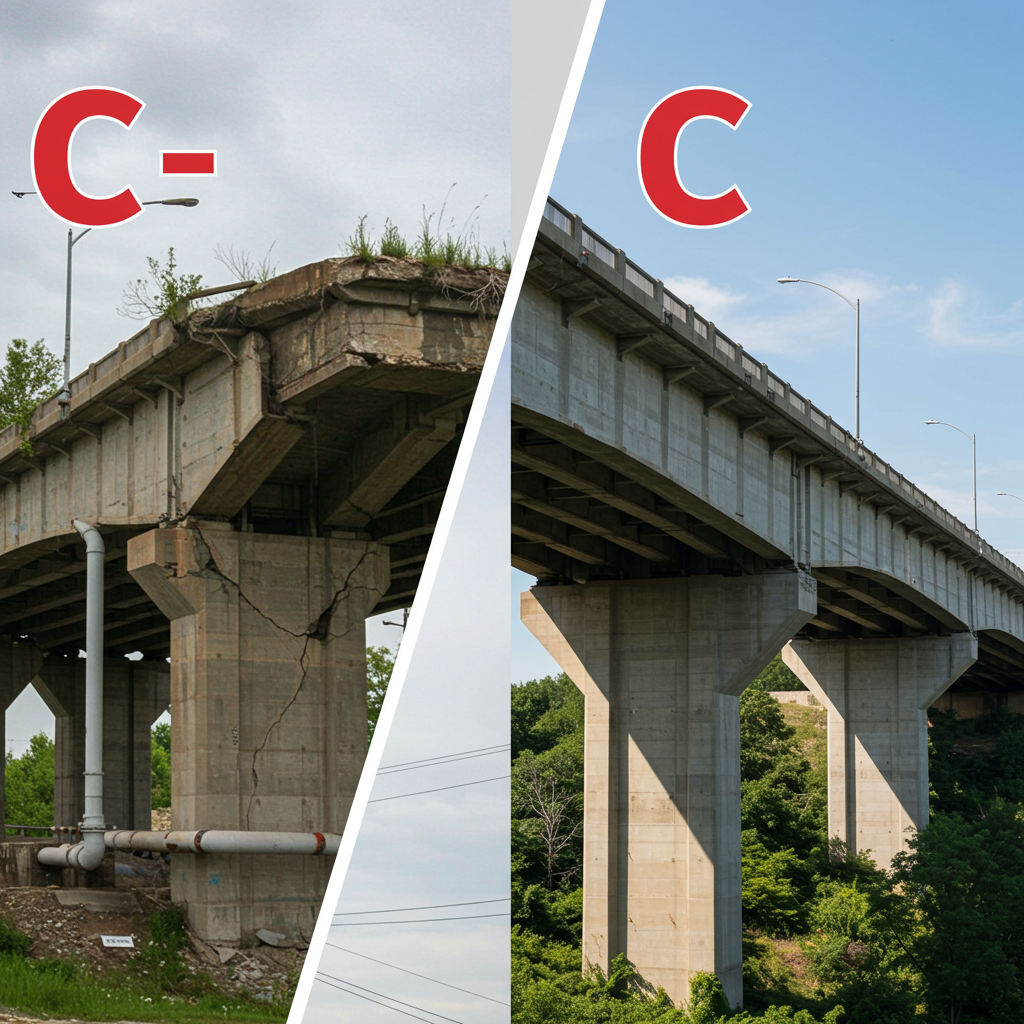
For the first time since its inception in 1998, the ASCE Report Card has shown a notable improvement, with the overall U.S. infrastructure grade rising from a C- to a C [1]. This positive infrastructure progress signals a new era of investment and attention. The ASCE highlights this as “upward momentum” in infrastructure, a reflection of concerted efforts to address long-standing deficiencies [7]. Crucially, the 2025 report marks a historic milestone: no Report Card categories were rated D−, indicating that the most critical, failing infrastructure systems are finally seeing some level of intervention and improvement [1].
Categorical Breakdown: Where We’ve Improved (and Why)
The 2025 ASCE Report Card assessed 18 distinct infrastructure categories, with eight of them seeing grade increases [1]. This granular view reveals where federal investments and local efforts are making the most significant impact. For instance, ports received a B grade, reflecting strategic investments in modernizing facilities and improving efficiency. This improvement is often attributed to targeted federal funding aimed at enhancing supply chain resilience and global trade capabilities.
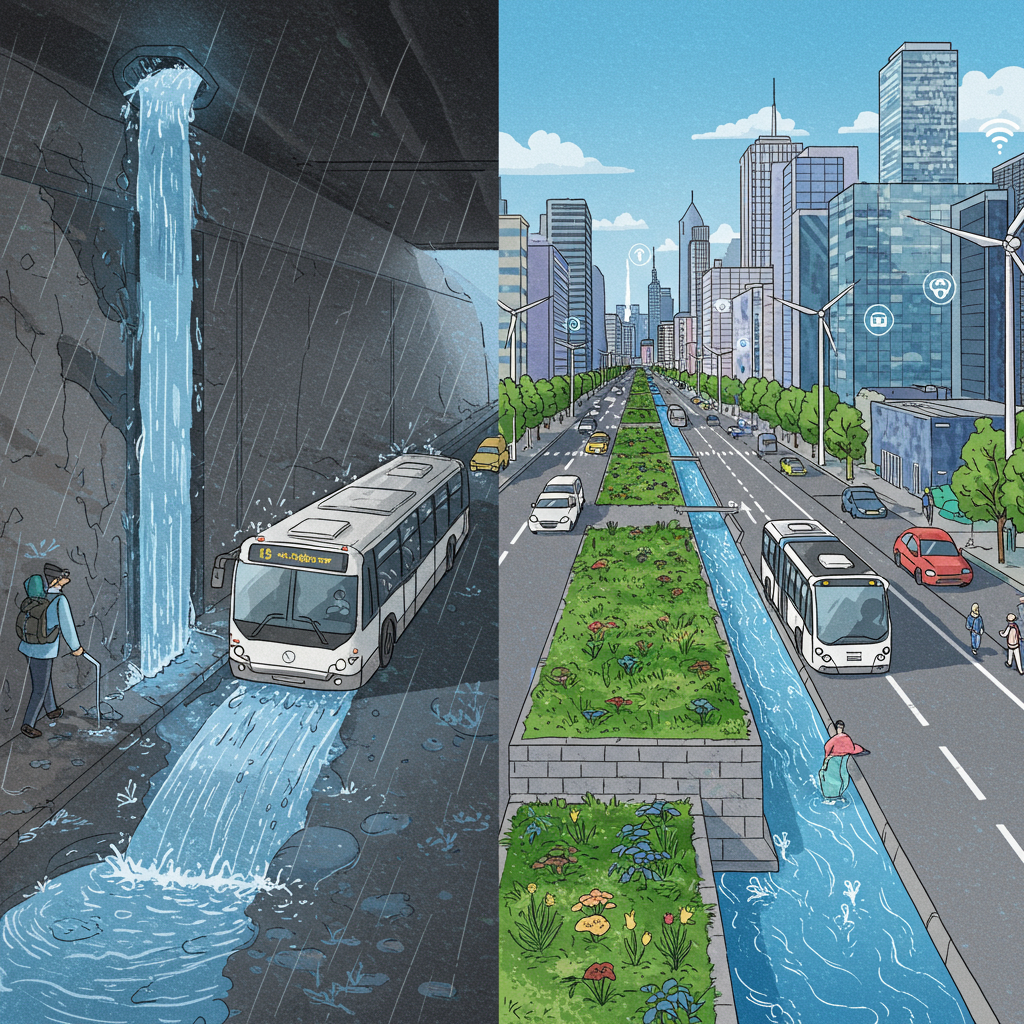
However, the report also underscores areas where significant challenges persist. Categories like stormwater and transit continue to receive D grades, indicating substantial deficiencies and a pressing need for further investment and innovative solutions [1]. These sectors often face complex funding mechanisms, aging systems, and increasing demands driven by population growth and climate change.
ASCE’s Grading Methodology: A Look Behind the Scores
The ASCE’s ASCE grading methodology is a rigorous, data-driven process that provides a transparent and authoritative infrastructure assessment. Civil engineers volunteer their expertise to evaluate each infrastructure category based on eight key criteria:
- Capacity: The ability of the infrastructure to meet current and future demands.
- Condition: The physical state of the infrastructure.
- Funding: The level of investment from all levels of government and the private sector.
- Public Safety: The infrastructure’s ability to protect the public.
- Future Need: The projected investment required to meet future demands.
- Operation and Maintenance: The effectiveness of ongoing maintenance programs.
- Resilience: The ability to withstand and recover from natural and man-made hazards.
- Innovation: The adoption of new technologies and approaches.
By evaluating these factors comprehensively, the ASCE provides a holistic score that goes beyond simple structural integrity, offering a nuanced understanding of the health and sustainability of each infrastructure sector. For a deeper dive into these evaluations, the full ASCE 2025 Report Card is an invaluable resource [6].
Federal Investments in Action: Tangible Impacts and Transformative Projects
The Infrastructure Investment and Jobs Act (IIJA): A Catalyst for Change
Signed into law in 2021, the Infrastructure Investment and Jobs Act (IIJA) represents the largest infrastructure investment in decades, committing historic funding to rebuild and modernize America’s roads, bridges, transit, water pipes, broadband, and more. The ASCE notes that since its passage, the IIJA has already funded over 60,000 projects across the country, demonstrating its broad reach and catalytic effect [1].
The IIJA’s funding mechanisms are designed to address long-standing infrastructure deficits through a combination of formula funds distributed to states, competitive grants for specific projects, and direct federal investments. This multi-pronged approach ensures that funds reach a diverse array of projects, from large-scale national initiatives to crucial local improvements.
Case Studies of Progress: Before & After
The true measure of federal investment lies in its tangible infrastructure improvements on the ground. While specific project data is continuously emerging, examples across the nation illustrate the transformative impact:
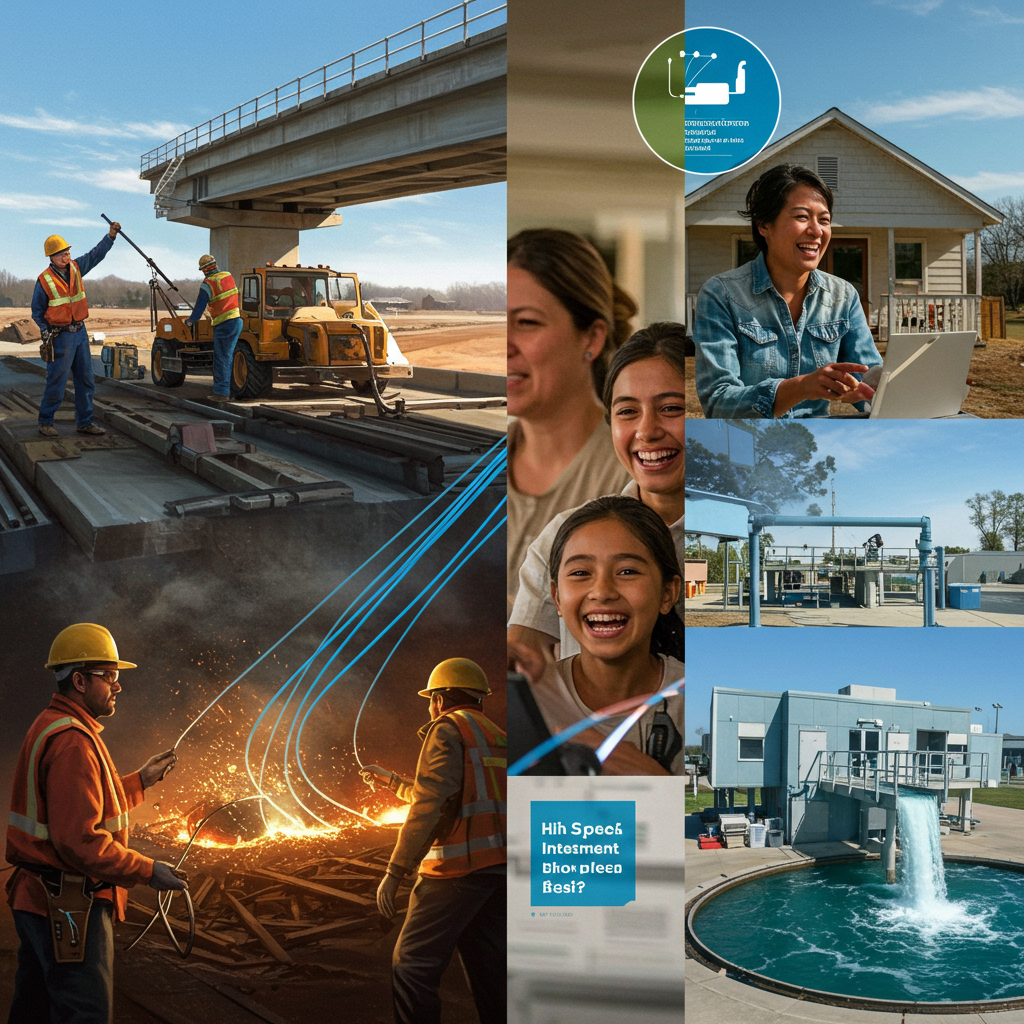
- Bridge Repair and Replacement: In states like Pennsylvania and Ohio, IIJA funds have accelerated the repair and replacement of structurally deficient bridges, reducing commute times, enhancing safety, and supporting local economies. For instance, a critical bridge on a major interstate, previously under weight restrictions, has been fully modernized, allowing for increased commercial traffic and safer passage for commuters.
- Water Infrastructure Upgrades: Communities grappling with aging water pipes and contaminated systems are seeing vital upgrades. Federal grants, often channeled through the U.S. Environmental Protection Agency (EPA), are funding projects to replace lead service lines, improve water treatment plants, and enhance wastewater management, directly improving public health and environmental quality.
- Broadband Expansion: In rural areas, where high-speed internet access has been a persistent challenge, IIJA investments are closing the digital divide. Projects overseen by agencies like the U.S. Department of Energy (DoE) and Department of Defense (DoD) (for critical infrastructure resilience) are extending fiber optic networks to previously underserved communities, unlocking economic opportunities, improving educational access, and enhancing telehealth services.
These projects, while diverse in scope, collectively demonstrate how federal investments are translating into concrete benefits, addressing long-standing needs and preparing communities for the future. Official insights into these federal spending initiatives are continuously updated by the U.S. Treasury on Infrastructure Investment.
Economic Ripple Effects: Jobs, GDP, and Local Growth
Beyond direct improvements, infrastructure spending has profound economic impact infrastructure wide. The Council on Foreign Relations (CFR) highlights that the IIJA is expected to create 1.5 million jobs annually, a significant boost to the labor market [3]. These jobs span various sectors, from construction and engineering to manufacturing and logistics, fostering widespread economic revitalization.
While total public infrastructure spending has increased, its share of Gross Domestic Product (GDP) has seen fluctuations. In 2023, infrastructure spending as a share of GDP was 2.32%, a slight decrease from 2.46% in the 2010s and 2.49% in the 2000s [4]. This trend underscores the need for sustained and strategic investment to ensure infrastructure spending keeps pace with economic growth and national needs.
However, the IIJA’s significant investment is not without its fiscal considerations. The Congressional Budget Office (CBO) has estimated that the IIJA will add $256 billion to the federal deficit over the next ten years, a point noted by the CFR [3]. This highlights the ongoing challenge of balancing critical infrastructure needs with fiscal responsibility.
U.S. Infrastructure in a Global Context: Benchmarking Competitiveness
To truly understand the state of U.S. infrastructure, it’s crucial to compare it against global peers. This U.S. infrastructure global comparison provides vital insights into America’s infrastructure competitiveness and identifies areas where other developed nations might outperform.
Comparative Spending: U.S. vs. Global Peers
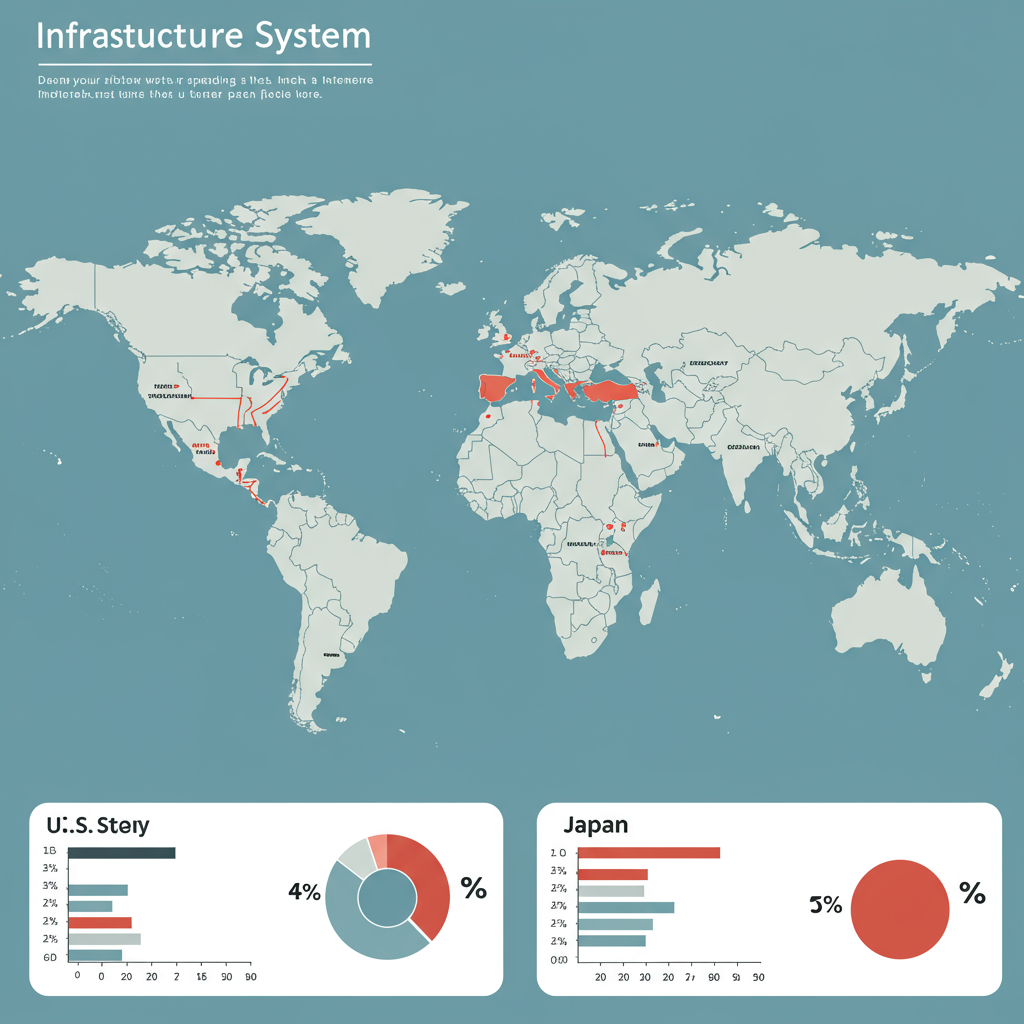
While the U.S. has made strides in recent years, its historical infrastructure spending as a percentage of GDP has often lagged behind other developed nations. As noted, U.S. infrastructure spending as a share of GDP was 2.32% in 2023 [4]. Many European nations and Asian economic powerhouses consistently invest a higher percentage of their GDP in infrastructure, often exceeding 3-4%. This sustained higher investment translates into more modern, efficient, and resilient infrastructure systems, giving these nations a competitive edge in global trade and quality of life. The implications of these spending patterns are clear: consistent, long-term investment is paramount for maintaining and enhancing infrastructure quality.
Systemic Differences: Centralized vs. Decentralized Approaches
A key differentiator in global infrastructure rankings lies in systemic approaches to planning and funding. The U.S. employs a largely decentralized infrastructure system, with significant responsibility and funding resting with state and local governments. While this allows for local responsiveness, it can also lead to fragmented planning, inconsistent standards, and challenges in coordinating large-scale national projects.
In contrast, countries like Australia, Canada, France, and the United Kingdom have developed more robust national infrastructure frameworks. As the Council on Foreign Relations observes, these frameworks enable central governments to direct and prioritize projects more effectively, ensuring strategic alignment and efficient resource allocation in a way that the United States’ more decentralized system has historically struggled to do [3]. This centralized approach often facilitates faster decision-making, greater economies of scale, and a more cohesive national infrastructure strategy.
Lessons from Leading Nations: What the U.S. Can Learn
Examining nations with highly-rated infrastructure reveals several infrastructure best practices that the U.S. could adapt:
- Long-Term Vision and Planning: Many leading nations operate with multi-decade infrastructure master plans that transcend political cycles, ensuring consistent investment and development.
- Dedicated Funding Streams: Implementing stable, dedicated funding mechanisms, such as national infrastructure banks or specific taxation, reduces reliance on annual appropriations and political whims.
- Emphasis on Maintenance: Prioritizing ongoing maintenance and repair, rather than waiting for catastrophic failures, proves more cost-effective in the long run.
- Innovation and Technology Adoption: Embracing smart technologies, advanced materials, and digital twins for infrastructure management optimizes performance and extends asset life.
Insights from civil engineering and policy experts often emphasize that while the U.S. has unique challenges, a more integrated approach to planning and funding, coupled with a commitment to innovation, can significantly enhance its global competitiveness. For a broader global context on U.S. infrastructure, refer to The State of U.S. Infrastructure (Council on Foreign Relations).
Persistent Gaps and Future Challenges: The Road Ahead
Despite recent progress and significant federal investments, the U.S. still faces substantial infrastructure challenges and a considerable infrastructure funding gap. Addressing these persistent deficiencies is critical for avoiding a return to the narrative of aging U.S. infrastructure.
The Remaining Investment Gap: A Trillion-Dollar Challenge
Even with the IIJA’s historic funding, the ASCE identifies a persistent $3.6 trillion investment gap over the next ten years [1]. This infrastructure investment gap represents the difference between current spending and what is needed to bring all infrastructure categories to a state of good repair and prepare for future demands. This infrastructure funding shortfall has profound implications for economic growth, public safety, and environmental quality. Unaddressed, it could lead to increased maintenance costs, service disruptions, and a decline in national competitiveness.
Critical Categories Still Lagging
While eight categories saw grade increases, almost half of the 18 assessed categories did not, or saw only minimal change, highlighting areas of persistent infrastructure deficiencies [1]. As mentioned, stormwater and transit continue to receive D grades, indicating they are in poor to fair condition and mostly inadequate [1].
- Stormwater Systems: Often overlooked, aging stormwater systems struggle to cope with increasingly intense rainfall events, leading to flooding, water pollution, and public health risks.
- Transit: Many public transit systems face deferred maintenance backlogs, outdated equipment, and insufficient funding to expand services to meet growing demand. This impacts urban mobility, environmental sustainability, and equitable access to opportunities.
These lagging infrastructure sectors require targeted, sustained investment and innovative solutions to overcome their unique challenges.
Climate Resilience and Modernization Imperatives
The increasing frequency and intensity of extreme weather events underscore the urgent need for climate resilient infrastructure. Existing infrastructure, often designed for past climate patterns, is vulnerable to rising sea levels, severe storms, droughts, and wildfires. Building resilience means designing and constructing infrastructure that can withstand these impacts, recover quickly, and adapt to changing environmental conditions.
Furthermore, the imperative for smart infrastructure is growing. Integrating advanced technologies like the Internet of Things (IoT), artificial intelligence (AI), and data analytics can optimize infrastructure performance, enable predictive maintenance, and enhance operational efficiency. For instance, smart grids can better manage energy flow, while intelligent transportation systems can reduce congestion and improve safety. Governmental agencies like the U.S. Environmental Protection Agency (EPA) and U.S. Department of Energy (DoE) are increasingly focusing on these aspects, recognizing their importance for long-term sustainability and national security.
Charting the Course: Strategies for Sustainable Infrastructure Development
Addressing the persistent gaps and future challenges requires a multi-faceted approach, encompassing robust infrastructure investment strategies, a commitment to sustainable infrastructure development, and forward-thinking future infrastructure policy.
Policy Recommendations for Raising the Grade
The ASCE outlines three critical pillars for “How to Raise the Grade” for U.S. infrastructure, which serve as key infrastructure policy recommendations:
- Sustain Investment: Continue and expand the current level of investment from federal, state, and local governments, as well as the private sector, to close the remaining $3.6 trillion gap. This includes exploring dedicated funding sources and long-term financial commitments.
- Prioritize Resilience: Integrate climate resilience and sustainability into all infrastructure planning, design, and construction. This means building systems that can withstand future shocks and stresses, reducing long-term costs and protecting communities.
- Advance Policy and Innovation: Streamline permitting processes, encourage public-private partnerships, and foster innovation in materials, design, and construction techniques. Embracing new technologies and collaborative models can accelerate project delivery and enhance efficiency.
Innovative Funding Models and Public-Private Partnerships
Beyond traditional government appropriations, exploring alternative and sustainable infrastructure funding models is crucial. Public-private partnerships (PPPs) infrastructure projects offer a promising avenue, leveraging private sector capital, expertise, and efficiency to deliver complex projects. While not a panacea, well-structured PPPs can accelerate project delivery, transfer risk, and bring innovative solutions to the table.
Other models include:
- Infrastructure Banks: Entities that provide low-interest loans or credit enhancements for infrastructure projects.
- User Fees: Revenue generated directly from infrastructure use (e.g., tolls, utility fees) can provide a dedicated and stable funding stream.
- Value Capture: Mechanisms that allow public entities to capture a portion of the increase in private land values resulting from public infrastructure investments.
Economic think tanks like the Brookings Institution and the Council on Foreign Relations frequently analyze the effectiveness and challenges of these various funding models, offering valuable insights for policymakers.
Prioritizing Resilience and Smart Infrastructure
Future infrastructure development must fundamentally focus on resilient infrastructure against climate change and natural disasters. This involves:
- Nature-Based Solutions: Utilizing natural systems like wetlands and green infrastructure to manage stormwater and protect coastlines.
- Hardened Infrastructure: Designing structures to withstand specific threats, such as higher wind speeds or increased floodwaters.
- Early Warning Systems: Implementing advanced monitoring and data analytics to provide real-time information on infrastructure health and potential threats.
The integration of smart infrastructure solutions is equally vital. Technologies like IoT sensors can monitor bridge integrity, smart traffic lights can optimize flow, and AI-powered predictive maintenance can identify issues before they become critical failures. Governmental agencies like the Federal Emergency Management Agency (FEMA) and the U.S. Department of Defense (DoD) emphasize the critical role of resilient infrastructure for national security and disaster preparedness, underscoring the urgency of these modernization efforts. For further insights into these future priorities, the ASCE Analysis of Infrastructure Momentum provides valuable perspectives [7].
Conclusion
The 2025 state of U.S. infrastructure presents a compelling narrative of progress, driven by historic federal investments, particularly through the Infrastructure Investment and Jobs Act. The overall improvement in the ASCE Report Card grade, coupled with tangible project outcomes, signals a positive shift from decades of underinvestment. This data-driven analysis has moved “Beyond the Grade” to reveal the transformative impact of these efforts, from job creation and economic revitalization to specific improvements in critical sectors like ports and bridges.
However, our deep dive also illuminates the persistent challenges that remain. A substantial investment gap, coupled with lagging categories like stormwater and transit, underscores the significant journey ahead. Furthermore, benchmarking against global peers highlights systemic differences and lessons to be learned in achieving true infrastructure competitiveness. The imperative for climate resilience and smart modernization is clear, demanding forward-looking strategies and innovative funding models.
Understanding U.S. infrastructure requires this nuanced perspective—acknowledging progress while confronting persistent gaps and striving for global leadership. We encourage policy analysts, civil engineers, and engaged citizens to delve deeper into the referenced sources, engage in the ongoing dialogue, support informed policy decisions, and advocate for sustainable, resilient, and globally competitive U.S. infrastructure. The nation’s future prosperity depends on it.
References
- American Society of Civil Engineers (ASCE). (2025). Report Card for America’s Infrastructure. Retrieved from https://infrastructurereportcard.org/
- Kane, J. W., & Tomer, A. (2023). At its two-year anniversary, the bipartisan infrastructure law continues to rebuild all of America. Brookings Institution. Retrieved from https://www.brookings.edu/articles/at-its-two-year-anniversary-the-bipartisan-infrastructure-law-continues-to-rebuild-all-of-america/
- Council on Foreign Relations (CFR). (N.D.). The State of U.S. Infrastructure. Retrieved from https://www.cfr.org/backgrounder/state-us-infrastructure
- Kane, J. W., Tomer, A., & Swedberg, B. (2024). Four recent trends in US public infrastructure spending. Brookings Institution. Retrieved from https://www.brookings.edu/articles/four-recent-trends-in-us-public-infrastructure-spending/
- U.S. Department of the Treasury. (N.D.). Infrastructure Investment in the United States. Retrieved from https://home.treasury.gov/news/featured-stories/infrastructure-investment-in-the-united-states
- American Society of Civil Engineers (ASCE). (2025). Report Card for America’s Infrastructure. Retrieved from https://infrastructurereportcard.org/
- American Society of Civil Engineers (ASCE). (2025, March). Infrastructure’s upward momentum reflected in report card. Civil Engineering Source. Retrieved from https://www.asce.org/publications-and-news/civil-engineering-source/civil-engineering-magazine/issues/magazine-issue/article/2025/03/infrastructures-upward-momentum-reflected-in-report-card


