
The bedrock of any thriving nation lies in its infrastructure—the intricate network of roads, bridges, water systems, energy grids, and communication channels that underpin economic activity and societal well-being. In the United States, the condition of this vital foundation has long been a subject of concern, often characterized by underinvestment and aging systems. Yet, as we navigate 2025, a fascinating paradox emerges: despite significant federal investments and an improved overall grade, a substantial investment gap persists.
This article aims to provide a definitive, nuanced analysis of this complex reality. We will delve into the current health of U.S. infrastructure, dissecting the impact of recent legislative efforts, exploring the enduring challenges beyond mere funding, and articulating the profound economic and societal imperative for robust systems. By unpacking this paradox, we illuminate the strategic path forward, offering insights into modernizing infrastructure analysis and development for a more resilient future.
- America’s Infrastructure in 2025: A Grade of Progress, A Reality of Gaps
- The Persistent $3.7 Trillion Gap: Funding Mechanisms and Unmet Needs
- Beyond the Balance Sheet: Non-Financial Hurdles to Infrastructure Progress
- The Imperative: Economic & Societal Impact of Robust Infrastructure
- Strategic Path Forward: Modernizing Infrastructure Analysis & Development
- Conclusion
- References
America’s Infrastructure in 2025: A Grade of Progress, A Reality of Gaps
The American Society of Civil Engineers (ASCE), the nation’s foremost authority on civil engineering, has released its 2025 Report Card for America’s Infrastructure, offering a critical assessment of the nation’s foundational systems. The findings reveal a landscape of incremental but undeniable progress, yet underscore the monumental task still at hand.
The overall grade for U.S. infrastructure has improved from a C- in 2021 to a C in 2025, marking the highest grade ever awarded by the ASCE since it began issuing the Report Card quadrennially in 1998 [1]. This upward trend reflects the impact of concerted efforts and significant federal investments. The ASCE’s 2025 Executive Summary highlights that nearly half of the 18 assessed categories saw increased grades, signaling positive momentum across various sectors [2]. This progress, however, exists alongside a stark reality: a persistent and even widening investment gap.
From C- to C: A Snapshot of 2021 vs. 2025 Infrastructure Health
To truly understand the current state of infrastructure, it’s crucial to examine the trajectory of its health. In 2021, the ASCE Report Card assigned U.S. infrastructure an overall grade of C-, identifying an estimated $2.6 trillion investment gap over the subsequent decade [3]. This assessment highlighted the urgent need for comprehensive intervention.
Fast forward to 2025, and while the grade has incrementally improved to a C, the projected investment gap has, paradoxically, widened. The ASCE now estimates a staggering $3.7 trillion investment gap over the next decade to bring the nation’s infrastructure to a state of good repair [1], [2]. This increase, even amidst grade improvements, directly addresses the user’s confusion about the “paradox of progress.” The initial investments, particularly those spurred by the Bipartisan Infrastructure Law (BIL), have indeed driven grade improvements in certain areas by addressing immediate deficiencies and initiating long-overdue projects. However, the sheer scale of decades of underinvestment, coupled with evolving demands and the rising costs of materials and labor, means that while progress is being made, the overall financial need continues to grow. This longitudinal comparison underscores the “aging US infrastructure” challenge, where maintenance and modernization needs outpace current funding capacities, even with historic infusions.

For a deeper dive into the official summary of these findings, refer to the ASCE 2025 Infrastructure Report Card Overview.
Key Categories: Where Progress is Visible and Where Deterioration Persists
A national grade of “C” provides an overall picture, but the “state of infrastructure” varies significantly across its diverse categories. The ASCE’s detailed analysis reveals areas of notable improvement alongside persistent challenges, offering a granular view of the “infrastructure improvement areas” and “infrastructure deterioration.”
Categories like ports, rail, and broadband have seen significant grade improvements, reflecting targeted investments and modernization efforts. For instance, the expansion of broadband infrastructure, now recognized as a critical component of modern infrastructure, has seen substantial federal support. These advancements demonstrate that focused investment can yield tangible results.
However, several vital “infrastructure categories” continue to struggle, with many remaining in the D or D+ territory. Surface transportation, including roads and transit, continues to face significant challenges due to chronic underfunding and heavy usage. Similarly, critical systems such as drinking water, wastewater, and stormwater infrastructure often grapple with aging pipes, treatment plants, and inadequate capacity, leading to potential health and environmental risks [2]. The energy grid, while seeing some investment, still faces vulnerabilities related to resilience and modernization. These persistent low grades highlight the areas where the “aging US infrastructure” problem is most acute, demanding urgent and sustained attention to prevent further deterioration and ensure public safety and economic stability.
The Persistent $3.7 Trillion Gap: Funding Mechanisms and Unmet Needs
Despite the incremental improvements in the overall U.S. infrastructure grade, the ASCE’s 2025 Report Card emphasizes a critical and growing concern: a projected $3.7 trillion investment gap over the next decade [1], [2]. This figure represents the shortfall between current planned “infrastructure investment USA” and the funding required to bring the nation’s systems to a state of good repair. This significant “infrastructure investment gap” highlights the ongoing “US infrastructure challenges” even in an era of increased federal spending.
The economic implications of this persistent gap are profound. According to ASCE economic studies, if this gap remains unaddressed, the U.S. could face a $10 trillion loss in GDP by 2039 [3]. Conversely, sustained investment can lead to significant economic benefits, including job creation, increased industrial output, and substantial household savings, estimated at around $700 per year per household [6]. BNY Mellon has also provided insights into the broader financial and investment outlook for infrastructure, underscoring the necessity of robust capital flows to meet these needs [5].
For a deeper understanding of the economic impact of infrastructure investment and the persistent gap, explore Understanding the US Infrastructure Investment Gap.
Federal Catalysts: IIJA, CHIPS Act, and Inflation Reduction Act
The recent improvements in U.S. infrastructure grades are largely attributable to historic “federal infrastructure funding” initiatives. The Infrastructure Investment and Jobs Act (IIJA), also known as the Bipartisan Infrastructure Law (BIL), approved in November 2021, stands as the most significant investment in American infrastructure in generations. Since its enactment, the IIJA has funded over 60,000 projects across the nation, addressing critical needs in transportation, water, broadband, and energy [4].
Beyond the IIJA, other “federal infrastructure acts” like the CHIPS and Science Act and the Inflation Reduction Act (IRA) also play crucial roles. The CHIPS Act, primarily focused on boosting domestic semiconductor manufacturing, includes provisions for infrastructure development around new chip fabrication facilities, recognizing that advanced manufacturing requires robust supporting infrastructure. The Inflation Reduction Act, while known for its climate and healthcare provisions, allocates significant funds for clean energy infrastructure, electric vehicle charging networks, and climate resilience projects, further contributing to the modernization of the nation’s energy and transportation systems. These legislative acts represent a multi-pronged approach to addressing the nation’s infrastructure deficit, with the U.S. Department of the Treasury offering insights into their allocation and economic impact [4].
For comprehensive details on the Bipartisan Infrastructure Law, consult the Official Guide to the Bipartisan Infrastructure Law.
Beyond Federal: The Role of Public-Private Partnerships (PPPs)
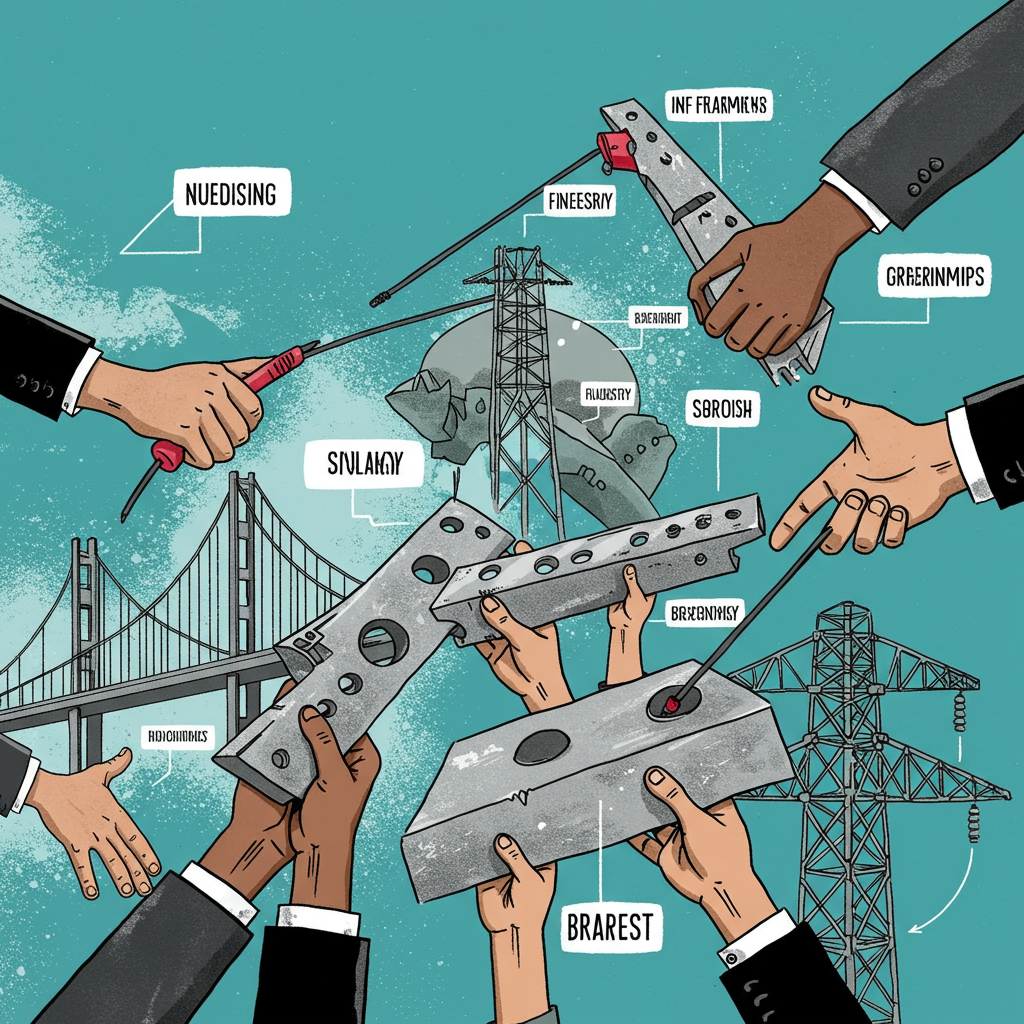
While federal funding provides a crucial foundation, it alone cannot bridge the entire $3.7 trillion “infrastructure investment gap.” This necessitates a broader approach that includes robust “public-private partnerships infrastructure” (PPPs). These collaborations leverage the efficiency, innovation, and capital of the private sector to deliver public infrastructure projects, supplementing government resources.
The “infrastructure funding debates” often revolve around the optimal balance between direct federal spending and the utilization of PPPs. Proponents argue that PPPs can accelerate project delivery, transfer risk to the private sector, and introduce innovative financing and operational models. For example, successful “PPP models” have been implemented in various sectors, from toll roads and bridges to water treatment facilities and broadband networks, demonstrating their capacity to deliver complex projects. These partnerships often involve long-term contracts where private entities design, build, finance, operate, and maintain infrastructure assets, receiving payments based on performance or user fees. By exploring and expanding successful PPP frameworks, the U.S. can tap into additional capital and expertise, ensuring that critical projects are not delayed by funding limitations alone.
Beyond the Balance Sheet: Non-Financial Hurdles to Infrastructure Progress
While funding is undeniably a primary concern, the “US infrastructure challenges” extend far beyond financial shortfalls. Even with significant investments, several non-financial hurdles impede the pace and efficiency of “infrastructure modernization.” Civil engineers and industry experts frequently highlight the “long game” aspect of infrastructure development, explaining why progress can be slow despite substantial investment.
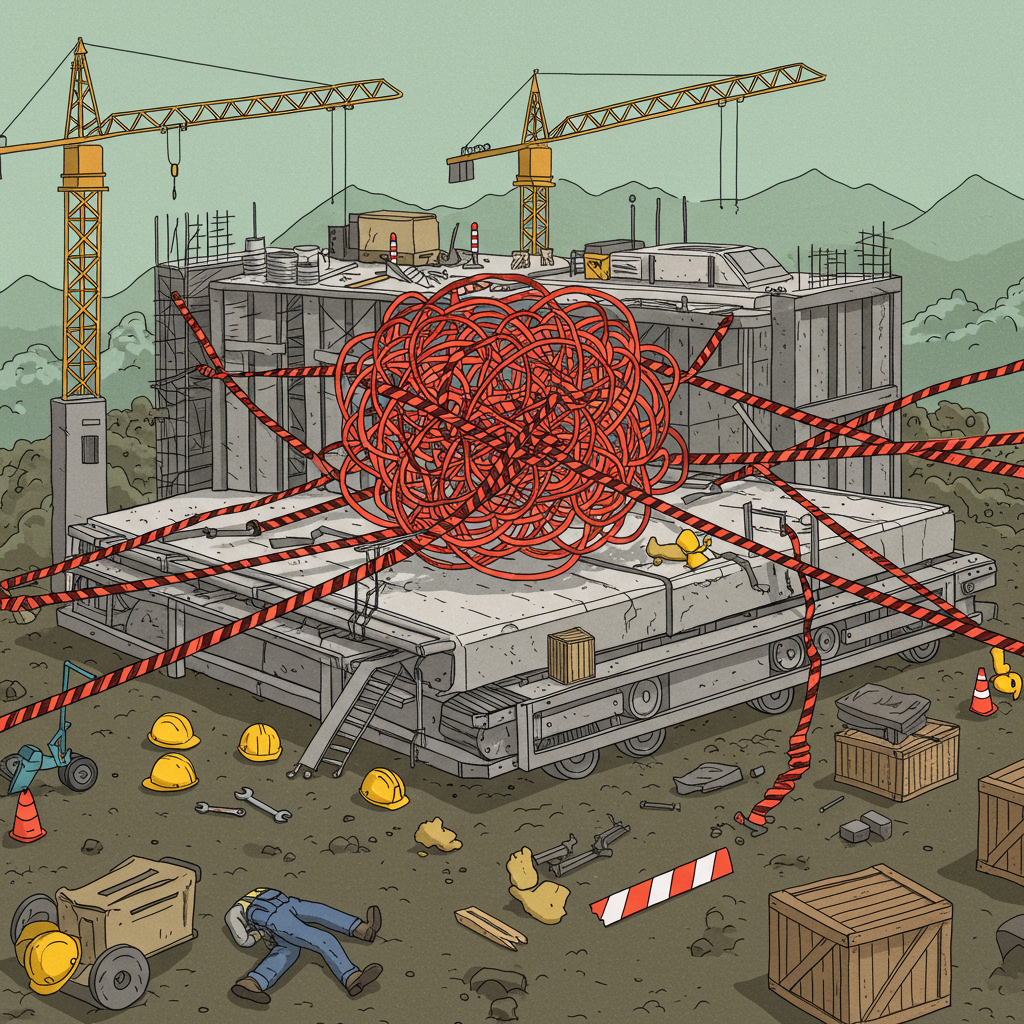
One of the most pressing issues is widespread “workforce shortages infrastructure.” The civil engineering and skilled trades sectors face a looming retirement wave and a deficit of new talent. This shortage impacts everything from project design and management to actual construction and maintenance, leading to delays and increased costs. Without a robust pipeline of qualified professionals and skilled laborers, even fully funded projects can stall.
Another significant barrier is “regulatory delays infrastructure.” The complex and often fragmented permitting processes at federal, state, and local levels can add years to project timelines. Environmental reviews, land acquisition, and various compliance requirements, while necessary, can become bureaucratic bottlenecks. Streamlining these processes without compromising essential safeguards is a critical challenge.
Furthermore, supply chain disruptions, particularly for specialized materials or equipment, can cause unforeseen delays and cost overruns. Political complexities, local opposition, and the challenge of coordinating numerous stakeholders (federal agencies, state DOTs, local governments, utility companies) also contribute to the slow pace of progress. Addressing these multifaceted challenges requires a holistic approach that goes beyond simply allocating funds, focusing on workforce development, regulatory reform, and improved inter-agency coordination.
The Imperative: Economic & Societal Impact of Robust Infrastructure
Infrastructure, at its core, is more than just concrete and steel; it is the fundamental framework that enables economic growth, enhances quality of life, and ensures national competitiveness. It is widely recognized as a “public good,” meaning it provides benefits to society as a whole, often not excludable (everyone benefits) and non-rivalrous (one person’s use doesn’t diminish another’s) [8].
The “infrastructure economic impact” is profound. A well-maintained and modern infrastructure system facilitates the efficient movement of goods and people, reduces transportation costs, and connects businesses to markets. It attracts foreign investment, supports domestic industries, and fosters innovation. Investments in infrastructure directly translate into job creation, not just in construction but across various sectors that benefit from improved connectivity and efficiency. As the Council on Foreign Relations emphasizes, the economic importance of U.S. infrastructure cannot be overstated, directly influencing GDP growth and overall prosperity [3].
Conversely, inadequate infrastructure imposes severe costs. Deteriorating roads lead to vehicle damage and longer commutes, costing consumers billions annually. Aging water systems result in costly leaks and service disruptions. An unreliable energy grid can cause widespread power outages, crippling businesses and endangering lives. These inefficiencies ripple through the economy, reducing productivity, increasing business costs, and ultimately diminishing the quality of life for citizens. Investing in robust infrastructure is not merely an expense; it is a critical investment in the nation’s future economic vitality and societal well-being.
Strategic Path Forward: Modernizing Infrastructure Analysis & Development
To overcome the paradox of progress and persistent gaps, a strategic and innovative approach to “infrastructure modernization” is essential. This involves not only sustained investment but also advanced analytical methodologies and forward-thinking policy frameworks.
At its most basic, “infrastructure analysis” begins with a clear understanding of what constitutes infrastructure. It encompasses both “hard” (physical) infrastructure like roads, bridges, airports, water pipes, and power lines, and “soft” infrastructure, which includes the systems, institutions, and services that enable the physical assets to function, such as regulatory frameworks, public health systems, and educational institutions [7]. Analyzing these components requires diverse methodologies, including cost-benefit analysis to weigh economic returns against investment, lifecycle assessment to evaluate long-term costs and environmental impacts, and risk assessment to identify vulnerabilities and build resilience.
The dual role of infrastructure—as a public good and an investment asset—also requires nuanced analysis. While its societal benefits are paramount, infrastructure increasingly attracts private capital due to its stable, long-term returns and low correlation with other asset classes, offering diversification and lower volatility for investors [9]. This perspective is crucial for attracting the necessary private sector involvement.
The “future infrastructure solutions” will heavily rely on advanced tools and technologies. Geographic Information Systems (GIS) can map existing assets, identify critical needs, and optimize project planning. Predictive modeling, powered by artificial intelligence and big data, can forecast maintenance needs, anticipate failures, and optimize resource allocation, moving from reactive repairs to proactive management. Digital twins, virtual replicas of physical infrastructure, can simulate performance and test interventions before real-world implementation.

The role of government and private entities in infrastructure development and maintenance remains intertwined. Governments set policy, provide foundational funding, and regulate, while the private sector brings innovation, efficiency, and additional capital. Moving forward, a collaborative ecosystem that fosters innovation, streamlines regulatory processes, invests in workforce development, and embraces advanced analytical tools will be paramount. This comprehensive approach is the strategic path to building a truly resilient, efficient, and future-ready U.S. infrastructure.
Conclusion
The 2025 State of U.S. Infrastructure presents a compelling narrative of progress tempered by persistent challenges. While the ASCE’s improved “C” grade and the impact of historic federal investments like the IIJA, CHIPS Act, and Inflation Reduction Act signal a positive shift, the widening $3.7 trillion investment gap underscores the immense work that remains. This paradox—of simultaneous improvement and growing needs—is the defining characteristic of America’s infrastructure landscape.
Our comprehensive analysis has unpacked this complexity, detailing not only the financial requirements but also the critical non-financial hurdles such as workforce shortages and regulatory complexities. We have reinforced the profound economic and societal imperative of robust infrastructure, emphasizing its role as a vital public good. The path forward demands a multi-faceted strategy: sustained, targeted investment from both public and private sources, innovative public-private partnerships, and the adoption of modern analytical tools and technologies. By embracing these strategic solutions, the United States can move beyond the headlines to build a truly resilient, efficient, and future-ready infrastructure that supports prosperity for generations to come.
Share this analysis to foster informed discussions on America’s infrastructure future, or explore the ASCE Report Card for deeper insights into specific categories.
General economic and policy analysis disclaimer: This article provides general information and analysis, not financial, investment, or legal advice. Infrastructure development is subject to change based on policy, funding, and unforeseen circumstances.
References
- American Society of Civil Engineers (ASCE). (2025, March 25). ASCE Report Card Gives U.S. Infrastructure Highest-Ever ‘C’ Grade, Stresses Need for Sustained Investment to Support Economic Growth. Retrieved from https://www.asce.org/publications-and-news/civil-engineering-source/society-news/article/2025/03/25/asce-report-card-gives-us-infrastructure-highest-ever-c-grade
- American Society of Civil Engineers (ASCE). (2025, March). A Comprehensive Assessment of – America’s Infrastructure 2025 (Executive Summary). Retrieved from https://infrastructurereportcard.org/wp-content/uploads/2025/03/Executive-Summary-2025-Natl-IRC-WEB.pdf
- Council on Foreign Relations (CFR). (N.D.). The State of U.S. Infrastructure. Retrieved from https://www.cfr.org/backgrounder/state-us-infrastructure
- U.S. Department of the Treasury. (N.D.). Infrastructure Investment in the United States. Retrieved from https://home.treasury.gov/news/featured-stories/infrastructure-investment-in-the-united-states
- BNY Mellon (BNY Investments). (N.D.). 2025 Infrastructure Outlook APAC. Retrieved from https://www.bny.com/investments/sg/en/individual/news-and-insights/articles/2025-infrastructure-outlook-apac.html
- American Society of Civil Engineers (ASCE). (2024, May 13). Continued federal infrastructure investments will save jobs and grow the economy over the next decade: economic study. Retrieved from https://www.asce.org/publications-and-news/civil-engineering-source/society-news/article/2024/05/13/asce-releases-newest-economic-study
- Wikipedia. (N.D.). Infrastructure. Retrieved from https://en.wikipedia.org/wiki/Infrastructure
- Investopedia. (N.D.). Infrastructure. Retrieved from https://www.investopedia.com/terms/i/infrastructure.asp
- Preqin Academy. (N.D.). Lesson 4: Asset Class 101s – Infrastructure. Retrieved from https://www.preqin.com/academy/lesson-4-asset-class-101s/infrastructure


